

| Sealing Temperature | OFF, 80℃ to 200℃ (increment of 1.0℃) |
| Sealing Time | 0.5s to 10s (increment of 0.1s) |
| Sealing Plate Height | 9 to 48 mm |
| Temperature Accuracy | ±1℃ |
| Temperature Uniformity | ±1℃ |
| Compatible Plate Material |
PP (Polypropylene) |
| Compatible Plate Types |
Standard Assay Plates |
| Compatible Sealing Film Types |
Foil-polypropylene laminate |
| Display | OLED |
| Voltage | AC 110V or 220V, 50 to 60 Hz |
| Dimension (L × B × W) | 370 × 178 × 330 mm |
| Net Weight | 11.46 kg |
Accessory Number Accessory Name Quantity 1 96-well PCR plate adaptor 1 Pc 2 Elisa/Deep-well plate adaptor 1 Pc 3 384 wells plate adaptor 1 Pc
1. What are Semi-Automatic Plate Sealers?
Semi-Automatic Plate Sealers are laboratory units used to seal microplates using controlled heat and pressure. They combine manual plate loading with automated sealing functions for consistent and accurate results. Users can adjust parameters like temperature, time, and pressure to suit various applications. These sealers are ideal for sealing PCR, ELISA, and deep-well plates to protect samples and prevent contamination.
2. How do Semi-Automatic Plate Sealers work?
Semi-Automatic Plate Sealers require users to manually place the microplates and start the sealing process. They automatically manage sealing parameters like temperature, pressure, and time for consistent results. These sealers ensure uniform heat distribution across various plate types. Their design balances manual control with automation for efficient and precise sealing.
3. What are the main functions of Semi-Automatic Plate Sealers?
Semi-Automatic Plate Sealers used to seal various types of microplates for sample protection. They support multiple heat seals for PCR, fluorescence, and long-term storage. Their plate sensing systems ensure even heat and pressure distribution. These sealers help prevent evaporation and reduce contamination risks.
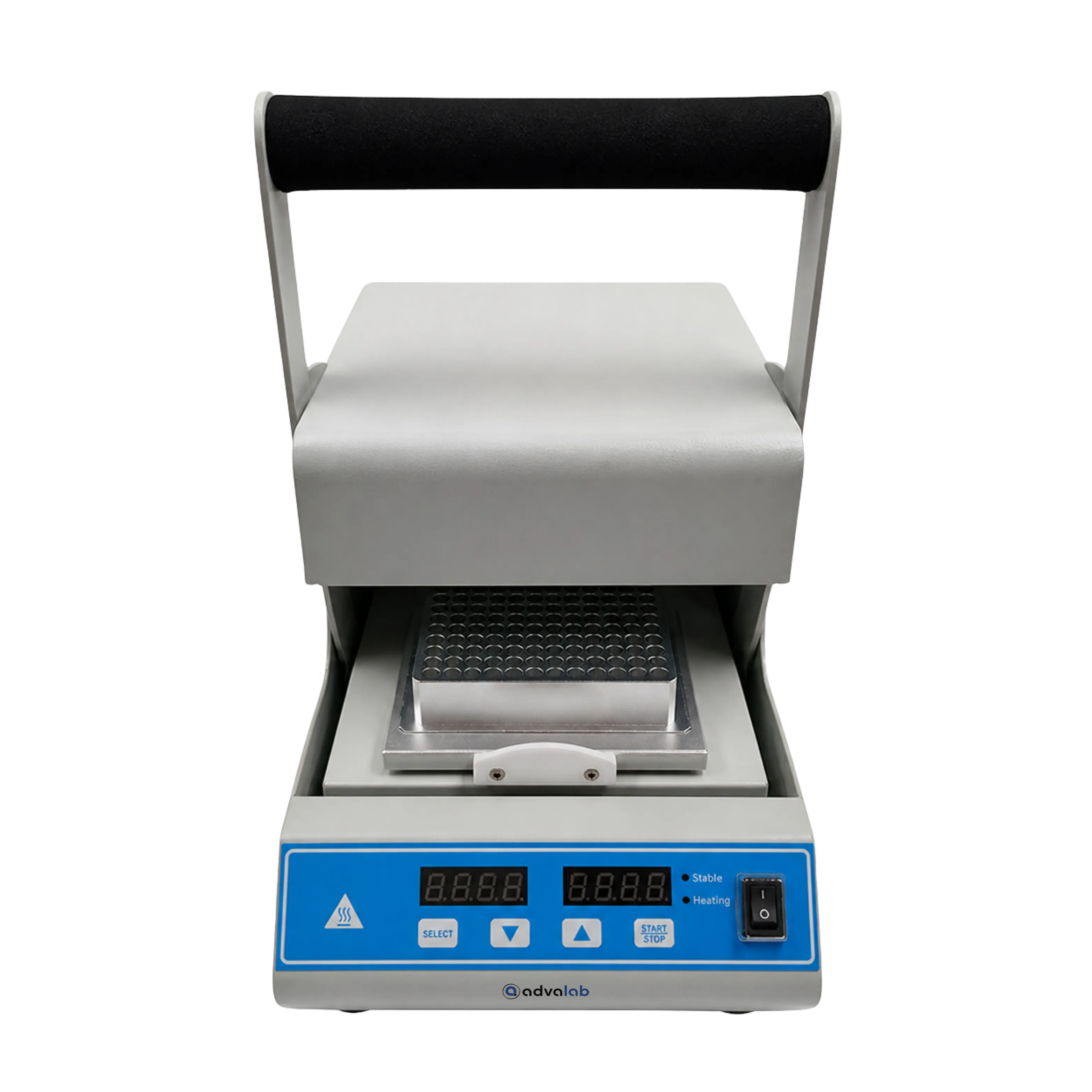
| Sealing Temperature: | 80℃ to 200℃ |
| Sealing Time: | 0.5s to 99s |
| Sealing Plate Height: | 9 to 48 mm |