
| Microplate types | 96 or 48 well plate |
| Wavelength range | 400 nm to 800 nm |
| Standard filters | 405 nm, 450 nm, 492 nm, 630 nm and 4 optional |
| Wavelength Accuracy | ± 0.008 A |
| Resolution | 0.001 A |
| Wavelength Repeatability | ≤ 0.2 % |
| Wavelength stability | ± 0.003 A |
| Photodetector | Silicon Photodiode |
| Light source | 8V/50W controlled tungsten halogen lamp |
| Reading Range | 0.000 to 4.000 A |
| Shaking | Linear shaking, 3 speeds |
| Printer | DVI, VGA, LAN, USB-A, USB-B, USB-C, AUDIO, RS-232 |
| Dimensions (L × W × H) | 460 × 350 × 197 mm |
| Net weight | 8 kg |
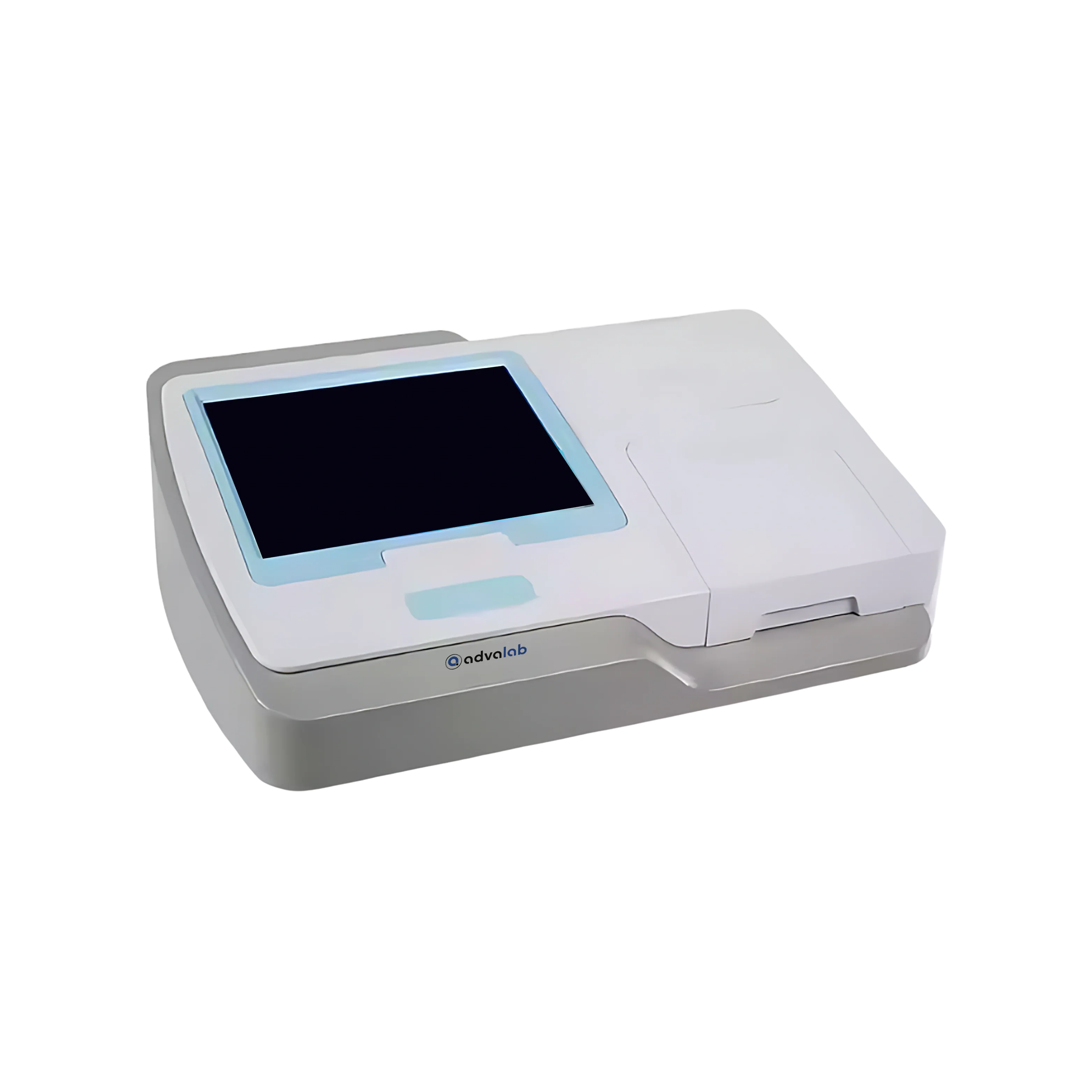
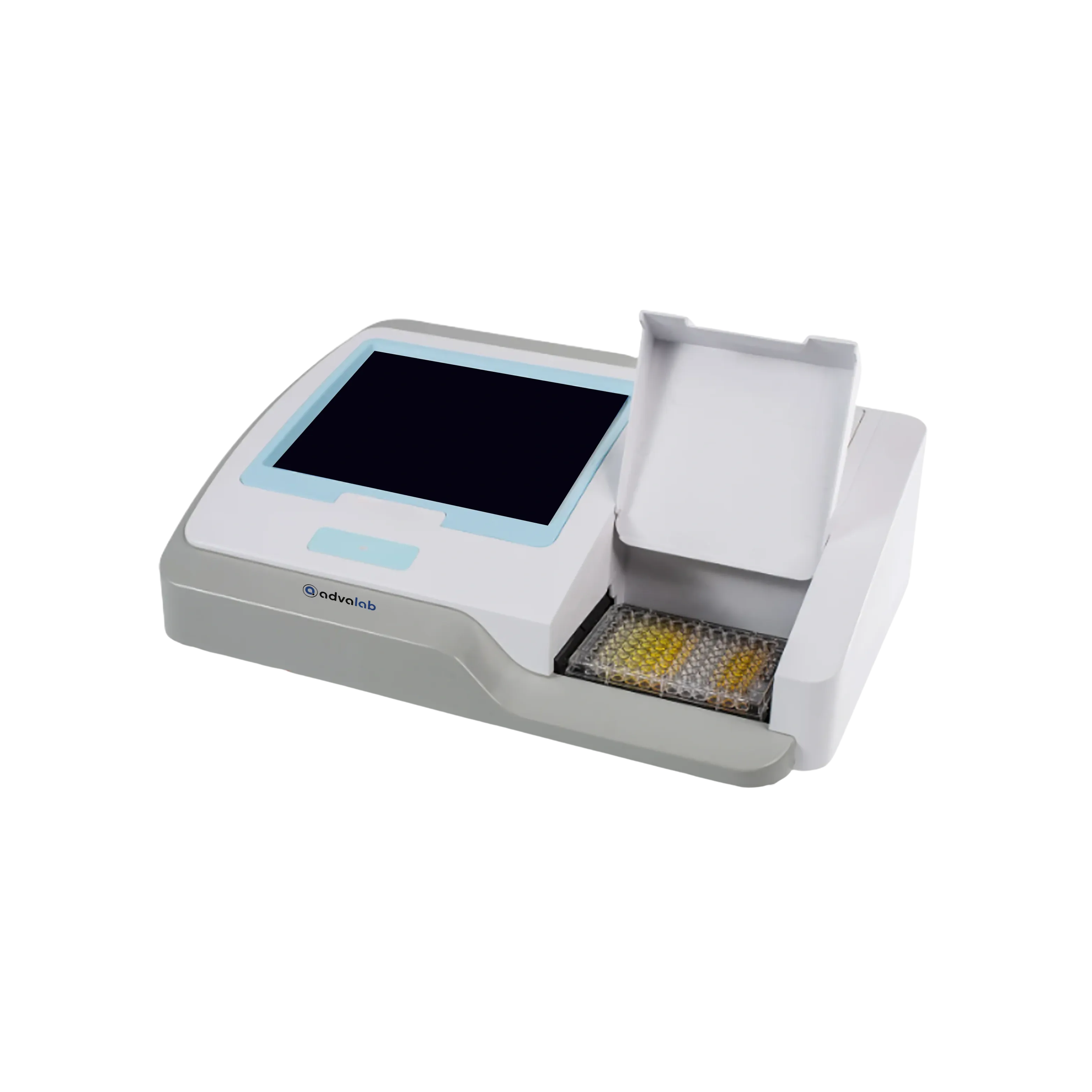
Microplate Reader ADMR-501 is used in clinical diagnostics, pharmaceutical research, and biotechnology to analyse biological samples efficiently. It provides fast and precise measurements that enable high throughput testing and reliable results.
1. What is the application of Microplate Reader ADMR-501?
Microplate Reader ADMR-501 is primarily used for performing ELISA (enzyme-linked immunosorbent assay) and other absorbance-based tests. It is widely applied in clinical diagnostics for detecting hormones, infectious diseases, and tumor markers. This system is also used in food safety, veterinary diagnostics, and environmental testing. It measures the absorbance of samples in multi-well microplates to determine the presence and concentration of analytes.
2. How much data can Microplate Reader ADMR-501 store?
Microplate Reader ADMR-501 has a large internal storage capacity. It can store up to 20 million test records, making it suitable for high-volume laboratories. Additionally, it can save up to 500 different test project settings. This allows users to manage large datasets without the need for constant data export. This system also supports various report formats and data backup options.
3. What type of shaking does Microplate Reader ADMR-501 have?
Microplate Reader ADMR-501 features linear shaking with three adjustable speed settings. This allows for effective mixing of samples in the microplate wells. Proper shaking ensures even distribution and consistent reactions. It is especially useful for ELISA and other enzyme-based assays. The shaking function helps improve test accuracy and reliability.
4. What is the wavelength range and what filters are included in Microplate Reader ADMR-501?
Microplate Reader ADMR-501 has a wavelength range of 400 to 800 nm, suitable for a wide range of absorbance-based assays. It comes with four standard filters: 405 nm, 450 nm, 492 nm, and 630 nm. These filters cover the most frequently used wavelengths in clinical and research applications. The optical system ensures accurate and stable measurements across this range. This makes the device reliable for precise detection and quantification of analytes.
5. What type of photodetector does the Microplate Reader ADMR-501 use?
Microplate Reader ADMR-501 is equipped with a silicon photodiode as its photodetector. This type of detector is known for its high sensitivity and fast response to light. It efficiently converts the light signals passing through samples into electrical signals for accurate measurement. The silicon photodiode ensures reliable and stable absorbance readings across the device’s wavelength range.
6. What are the applications of Microplate Reader?
Microplate Reader are used to measure biological, chemical, or physical reactions in samples placed in microplates. They detect signals like absorbance, fluorescence, or luminescence. These Units help to analyse assays such as ELISA, enzyme activity, and cell viability. They enable high-throughput screening by reading multiple samples quickly. Overall, such Readers are essential tools in research, diagnostics, and drug development.
7. What is the working principle of Microplate Reader?
Microplate Reader work by shining a specific type of light (like UV, visible, or fluorescent) onto samples in the wells of a microplate. The samples absorb or emit light based on their chemical or biological properties. The Reader detects this light using sensors and converts it into measurable signals. These signals correlate with the concentration or activity of the target substance. The data is then processed to provide quantitative or qualitative results for analysis.
8. Can Microplate Reader be used for both qualitative and quantitative analysis?
Microplate Reader can be used for both qualitative and quantitative analysis. They provide qualitative data by detecting the presence or absence of a target molecule. Quantitatively, they measure the intensity of signals like absorbance or fluorescence to determine concentration or activity levels. This versatility makes them useful for a wide range of assays. Accurate data interpretation depends on proper calibration and assay design.