
| Capacity | 10,000 ml |
| Temperature Range | Ambient to 100 °C |
| Precision | ±1% |
| Power Consumption | 1200VA |
| Power Supply | 220V/50Hz or 110V/60Hz |
| Overall Dimensions | 350 × 450 × 510 mm |
| Packaging Dimensions | 510 × 450 × 530 mm |
| Gross Weight | 15 kg |
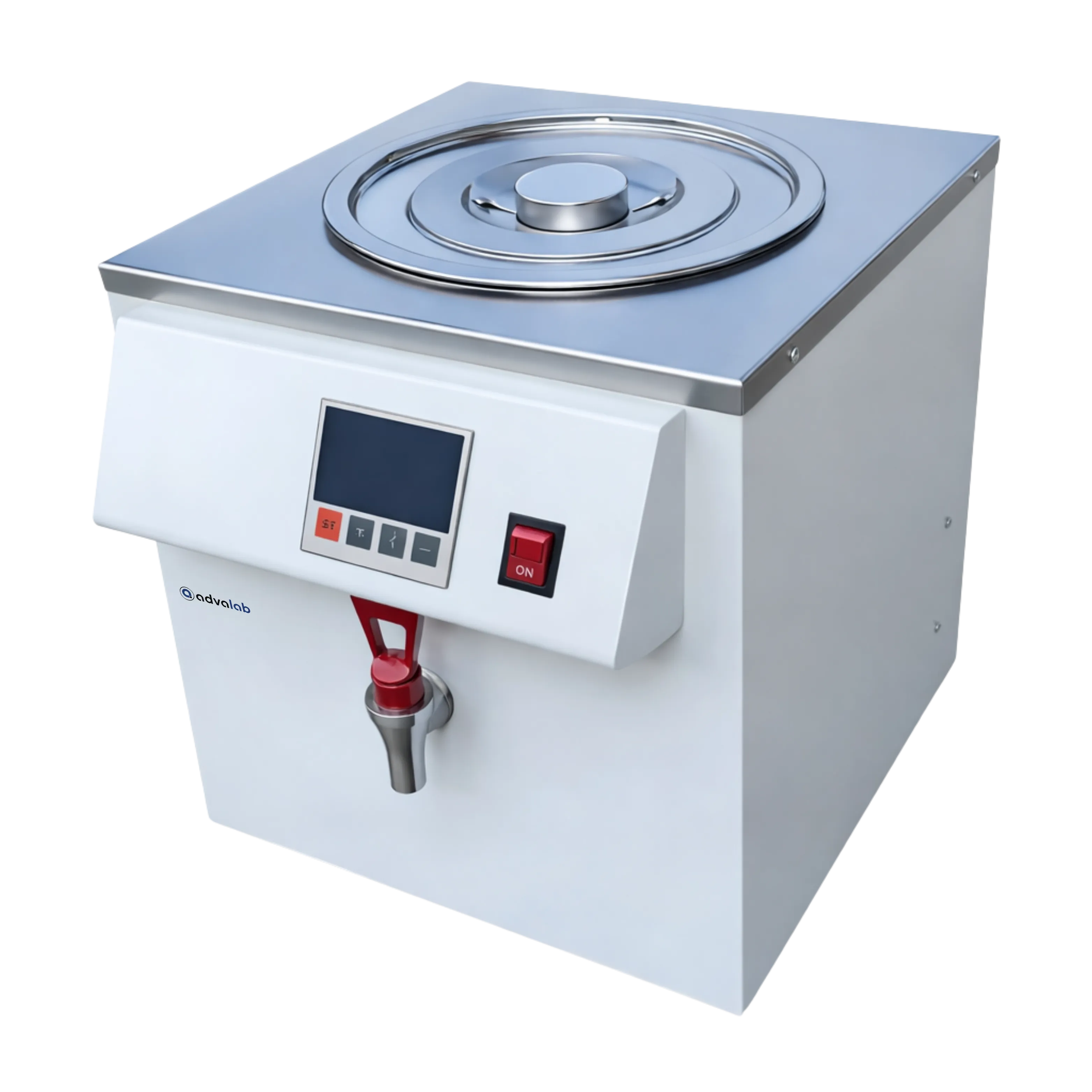
The Paraffin Dispenser ADPFD-501 is used in histology and pathology laboratories to melt and dispense paraffin wax for embedding tissue specimens, ensuring efficient workflow for microscopic examination.
1. What capacity does the Paraffin Dispenser ADPFD-501 offer?
The Paraffin Dispenser ADPFD-501 features a generous 10,000 ml storage volume, supporting high-demand laboratory workflows. Large holding ability enables extended use without constant refilling, saving valuable time. Continuous availability ensures smooth sample handling during peak workloads. Bulk provision reduces operational pauses, increasing productivity in research environments.
2. How does the Paraffin Dispenser ADPFD-501 ensure precise temperature management?
The Paraffin Dispenser ADPFD-501 maintains an adjustable thermal span from ambient to 100 °C with ±1% accuracy. Stable heat conditions protect wax consistency, preventing unwanted textural changes. Reliable regulation guarantees optimal block formation for microscopic analysis. Automatic adjustments respond quickly to fluctuations, maintaining uniformity throughout operation.
3. What advantages does the LED heating display on the Paraffin Dispenser ADPFD-501 provide?
It incorporates a clear LED readout that signals warming phases in real time. Immediate feedback assists technicians in determining readiness for embedding. Visual monitoring eliminates uncertainty, reducing procedural delays. This streamlined communication improves scheduling efficiency during busy processing cycles. Enhanced awareness of operational stages contributes to smoother laboratory coordination.
4. Why is the Paraffin Dispenser ADPFD-501 ideal for tissue embedding procedures?
The Paraffin Dispenser ADPFD-501 melts and dispenses wax seamlessly for specimen preparation in histology. Uniform liquefaction promotes thorough infiltration, resulting in clean, artifact-free sections. Sturdy build supports prolonged performance under frequent usage. Consistent delivery ensures dependable results for diagnostic interpretation. Its ergonomic layout accommodates comfortable handling during long embedding sessions.
5. How is the Paraffin Dispenser ADPFD-501 protected during shipping?
The Paraffin Dispenser ADPFD-501 is enclosed in a strong outer case measuring 510 × 450 × 530 mm to prevent transit damage. Secure cushioning guards against vibration, impact, and environmental exposure. Careful packing preserves calibration integrity, ensuring readiness upon arrival. Compact yet fortified design simplifies transport to laboratories worldwide. This safeguarding process upholds equipment reliability from manufacturer to end-user.
6. What are Paraffin Dispensers?
Paraffin Dispensers are specialized laboratory units designed to melt and release wax for tissue embedding. They offer precise thermal regulation to maintain uniform consistency during operation. These systems feature LED displays and automated heating mechanisms for convenient functionality.
7. What are Paraffin Dispensers used for?
Paraffin Dispensers are employed to liquefy and deliver wax for embedding tissue samples in histopathology and research laboratories. They enable accurate filling of cassettes with minimal waste. These units contribute to standardized laboratory processes by ensuring controlled wax flow. Technicians depend on them to enhance workflow efficiency and improve reproducibility.