
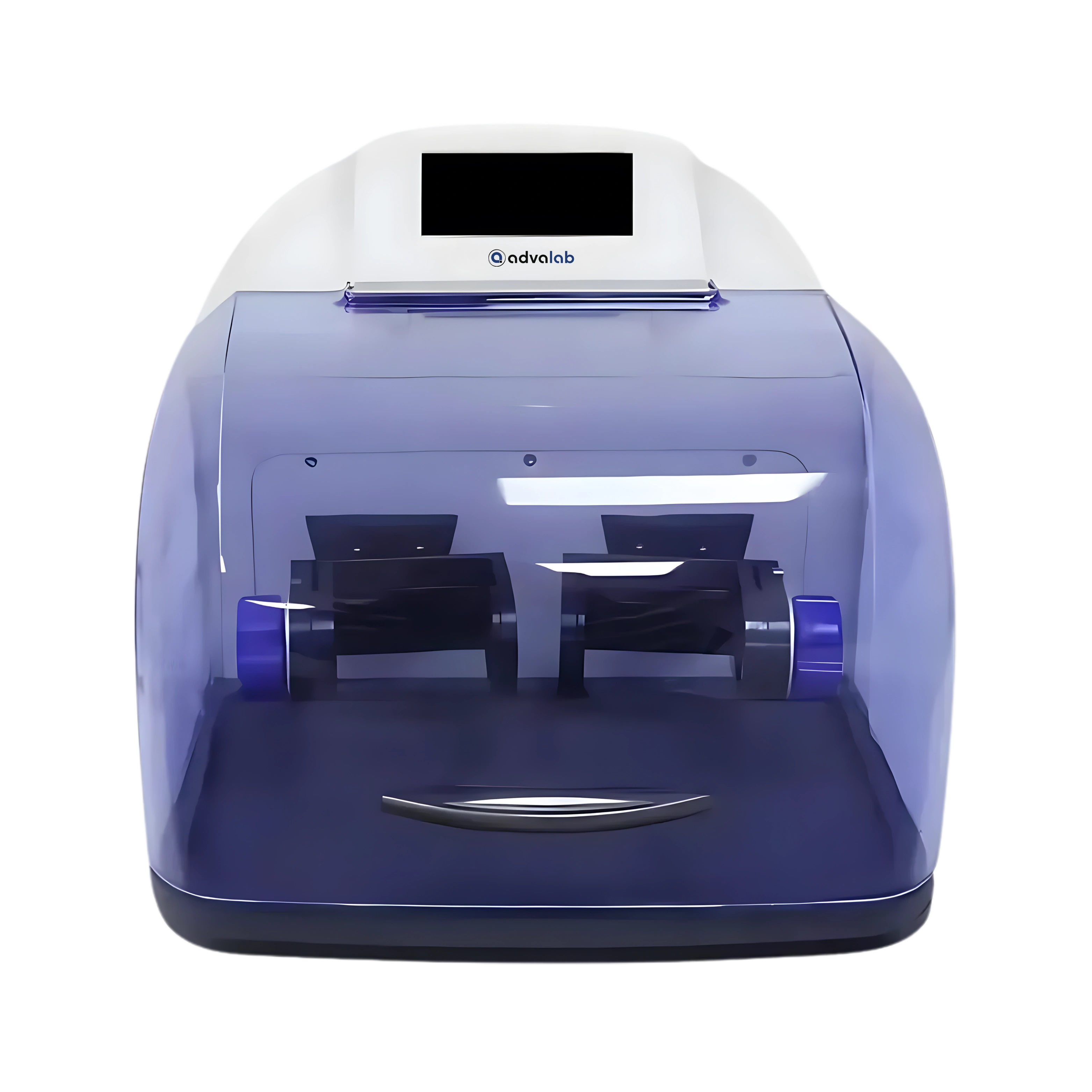
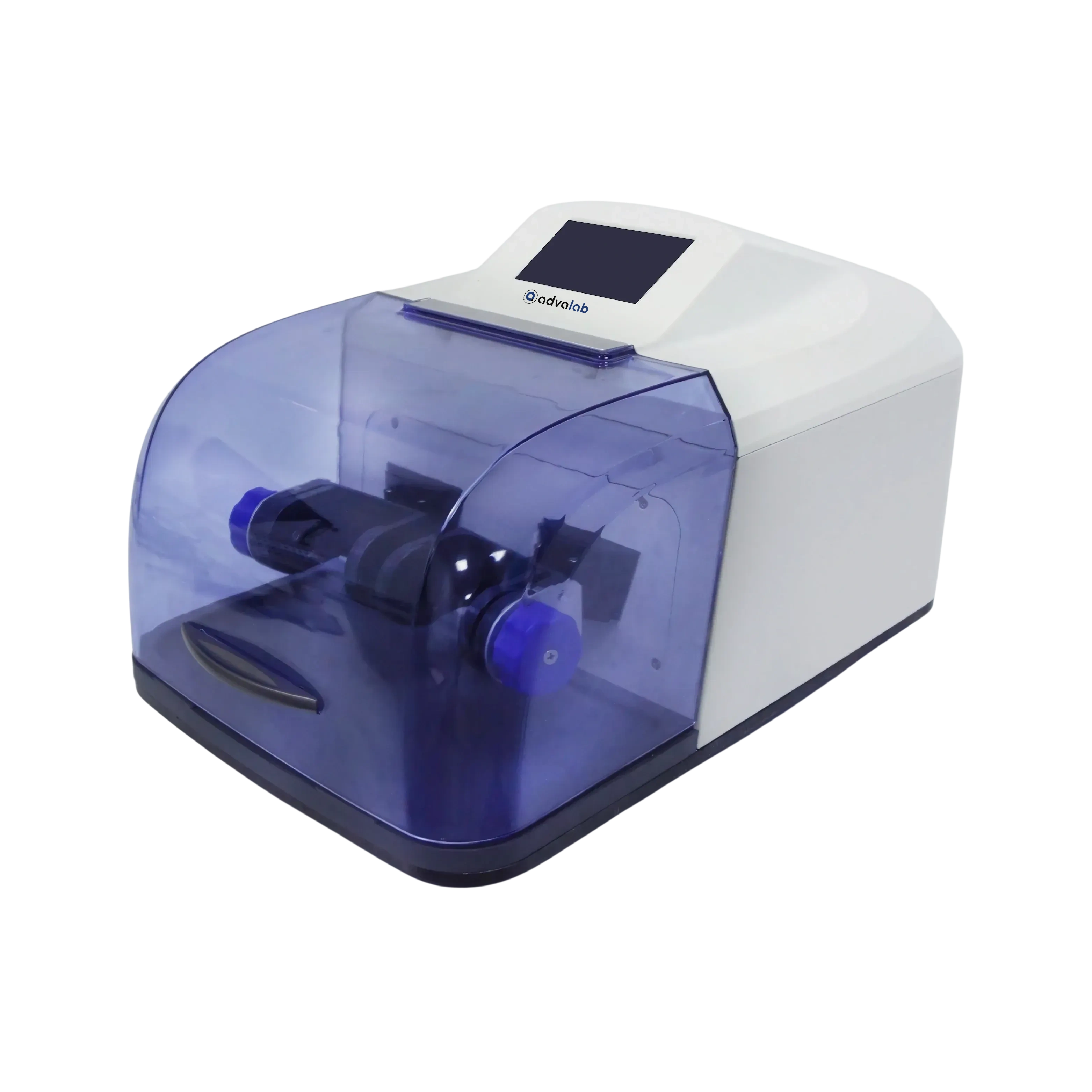
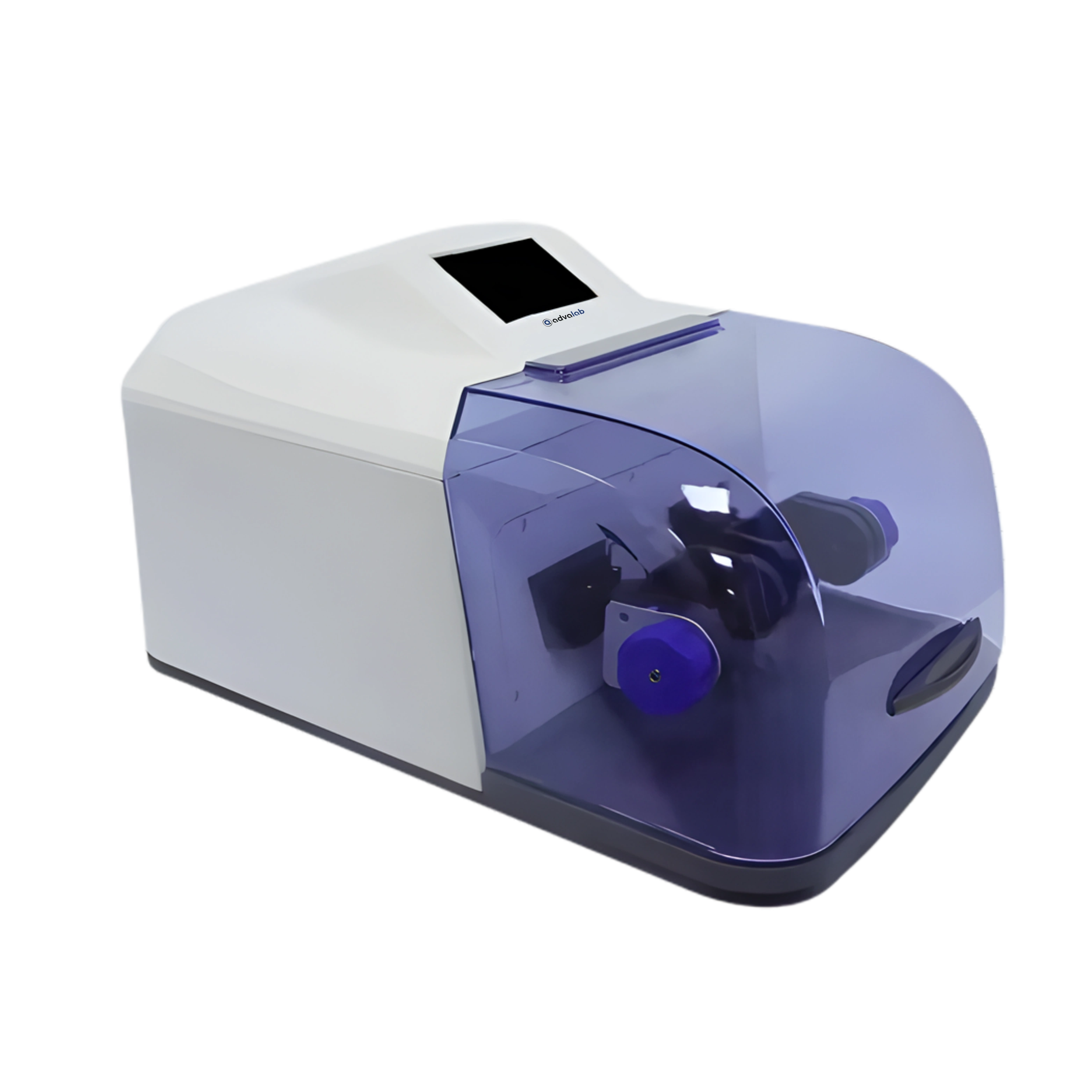
| Speed | 180 rpm to 2100 rpm |
| Sample Capacity |
96×2 ml 64×2 ml 48×2 ml 16×2 ml 10×5 ml |
| Sample Batch | 2 batches |
| Feed Size | According to tube size |
| Final Fineness | 5 µm |
| Grinding Beads Diameter | 0.1 to 30 mm |
| Grinding Method | Dry or wet |
| Acceleration | 2 s |
| Deceleration | 2 s |
| Standard Tubes | 8×50 ml |
| Custom Grinding Tubes | 2×15 ml / 2×25 ml / 2×35 ml / 2×50 ml |
| Custom Grinding Tube Material | Teflon / Stainless Steel |
| Tube Adapter Material | POM / Nylon / Al Alloy |
| Power Consumption | 450 W |
| Dimensions (W×D×H) | 530×350×311 mm |
| Net Weight | 40 kg |
Our Ball Mill Homogenizer ADBAM-501 is ideal for material grinding in labs and educational institutions, commonly used in material science and nanotechnology to achieve fine particle sizes.
Accessory | Maximum tubes quantity | Sample maximum Size and Volume per tube | Grinding beads type and quantity per tube | Quantity |
15 ml Stainless steel grinding tubes 01 | 2 | 5 mm, 2.0-4.0 ml | 10 mm, 1 | 1 Pc |
25 ml Stainless steel grinding tubes 02 | 2 | 6 mm, 4.0-10.0 ml | 15 mm, 1 | 1 Pc |
35 ml Stainless steel grinding tubes 03 | 2 | 6 mm, 6.0-15.0 ml | 15 mm or 20 mm, 1 | 1 Pc |
50 ml Stainless steel grinding tubes 04 | 2 | 8 mm, 8.0-20.0 ml | 20 mm, 1 | 1 Pc |
5 mm Stainless steel grinding beads 01 | - | - | - | 1 Pc |
10 mm Stainless steel grinding beads 02 | - | - | - | 1 Pc |
15 mm Stainless steel grinding beads 03 | - | - | - | 1 Pc |
20 mm Stainless steel grinding beads 04 | - | - | - | 1 Pc |
2ml Plastic grinding tubes 01 | - | - | - | 1 Pc |
5 ml Plastic grinding tubes 02 | - | - | - | 1 Pc |
Knob spanner | - | - | - | 1 Pc |
Tube opener | - | - | - | 1 Pc |
Accessory | Maximum tubes quantity | Sample maximum size | Sample Volume per tube | Grinding beads type | Beads quantity per tube | Quantity |
Tube adapter 01 (8×2 ml) for plastic tubes | 8 (1 adapter) 16 (2 adapters) | 1 mm | 0.2-0.5 ml | 3 mm | 2-3 | 1 Pc |
Tube adapter 02 (24×/2 ml) for plastic tubes | 24 (1 adapter) 48 (2 adapters) | 1 mm | 0.2-0.5 ml | 3 mm | 2-3 | 1 Pc |
Tube adapter 03 (32×2 ml) for plastic tubes | 32 (1 adapter) 64 (2 adapters) | 1mm | 0.2-0.5 ml | 3 mm | 2-3 | 1 Pc |
Tube adapter for (48×2 ml) plastic tubes | 48 (1 adapter) 96 (2 adapters) | 1 mm | 0.2-0.5 ml | 3 mm | 2-3 | 1 Pc |
Tube adapter for (5×5 ml) plastic tubes | 5 (1 adapter) 10 (2 adapters) | 2 mm | 0.5-2.0 ml | 5 mm | 2-3 | 1 Pc |
Tube adapter for (4×50 ml) plastic tubes | 4 (1 adapter) 8 (2 adapters) | 8 mm | 8.0-20.0 ml | 5 mm | 10 | 1 Pc |

1. How do a friendly UI design and preset programs benefit users of a Ball Mill Homogenizer?
In this Ball Mill Homogenizer a user-friendly interface and preset programs make operating much easier and more efficient. They help users save time by simplifying setup, reducing manual adjustments, and ensuring consistent results with minimal effort.
2. Can this Ball Mill Homogenizer handle different sample sizes and types?
Yes, our Ball Mill Homogenizer can process both small and large batch samples, including plant material, animal tissue, and small quantity samples, in either dry or wet conditions. It offers flexibility for a wide range of research and industrial applications. The ability to switch between sample types and volumes makes it ideal for labs with diverse processing needs.
3. How does high-speed vibration enhance the performance of a Ball Mill Homogenizer?
High-speed vibration significantly boosts the mixing and homogenizing efficiency of a Ball Mill Homogenizer, allowing samples to be processed thoroughly in just a few seconds. This rapid action saves time while ensuring uniform results. It is especially useful for time-sensitive workflows and high-throughput laboratories.
4. How does the protective hood ensure safety in a Ball Mill Homogenizer?
The protective hood of a Ball Mill Homogenizer provides an added layer of security by containing any potential spills or debris during operation. It helps prevent accidents by shielding the user from moving parts and reducing exposure to hazardous materials. It ensures stable operation by preventing contamination or loss of sample during high-speed processes.
5. What is the benefit of double-position operation in a Ball Mill Homogenizer?
Double-position operation allows the Ball Mill Homogenizer to process samples in two different orientations, increasing efficiency and flexibility. This feature enables users to easily switch between different sample sizes or types without needing to reposition the entire setup. It also enhances productivity by allowing simultaneous processing of multiple samples with minimal downtime.
6. What is a Ball Mill Homogenizer?
A Ball Mill Homogenizer is a laboratory device used to mix, blend, or homogenize materials by grinding them with small, hard balls inside a rotating cylindrical container. It is typically used for particle size reduction, mixing, or cell disruption in a wide range of applications, including pharmaceuticals, food, cosmetics, and research.
7. What are the benefits of using a Ball Mill Homogenizer?
A Ball Mill Homogenizer is efficient for reducing particle size and ensures uniform mixtures by evenly breaking down materials. It is versatile, handling solids, liquids, and semi-solids, and is scalable for both lab and industrial use. It offers reliable performance for repeated and consistent processing.
8. How does a Ball Mill Homogenizer work?
The Ball Mill Homogenizer works by using a rotating drum that holds a number of small balls. When the drum rotates, the balls collide with the material inside, causing mechanical disruption and homogenization. The material is subjected to high shear forces, breaking it down into smaller particles or evenly mixing the components.
9. Is a Ball Mill Homogenizer easy to clean and maintain?
Yes, Ball Mill Homogenizer are designed for easy cleaning. The grinding chamber, balls, and any associated components are typically made of materials that can be easily cleaned or sanitized. Regular maintenance, such as checking for wear on the balls and ensuring the motor is functioning properly, will extend the lifespan of the homogenizer.
10. What is the difference between a Ball Mill Homogenizer and a regular ball mill?
A Ball Mill Homogenizer specifically refers to a ball mill that is optimized for homogenizing or mixing materials. While a traditional ball mill is primarily designed for grinding or reducing the size of materials, a homogenizer is used to achieve uniform dispersion, emulsification, or consistent blending.
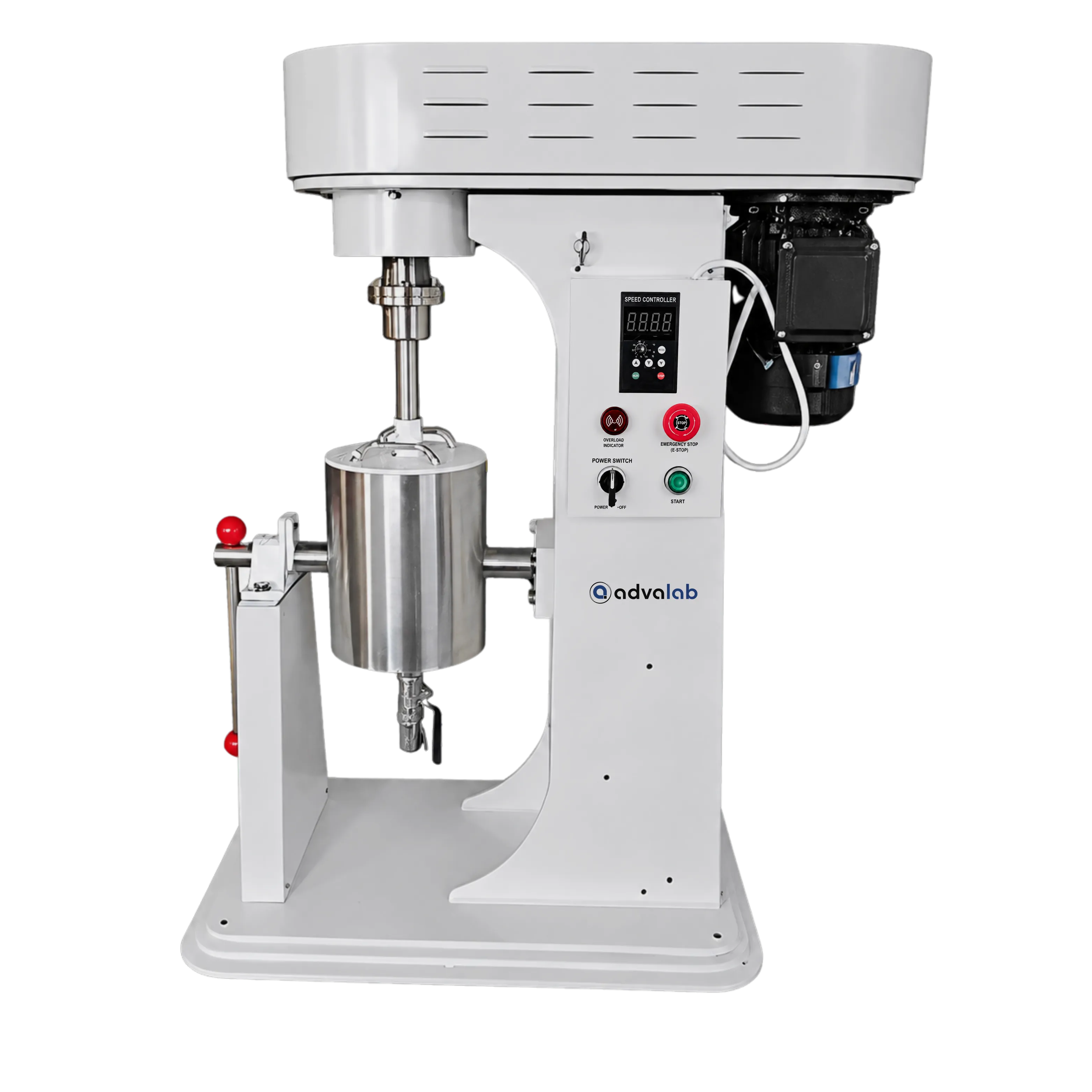
| Rotation speed | 60 to 380 RPM |
| Volume | 15 L |
| Load capacity | 5.25 L |
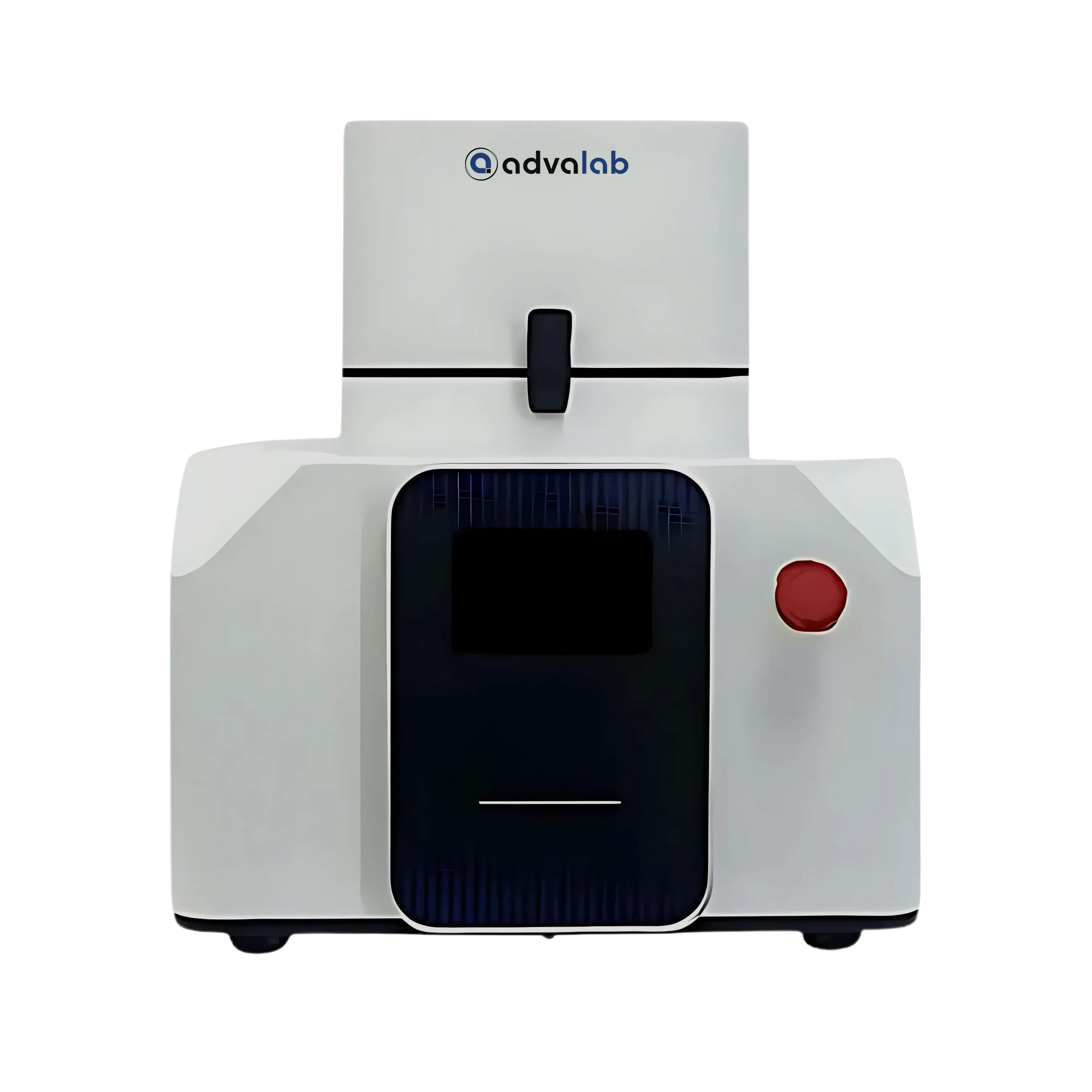
| Frequency Range | 30 Hz to 70 Hz |
| Sample Capacity |
32×2ml 24×2ml 48×2ml 64×2ml 96×2ml 24×5ml 8×15ml 4×25ml 2×50ml |
| Feed Size | According to tube size |
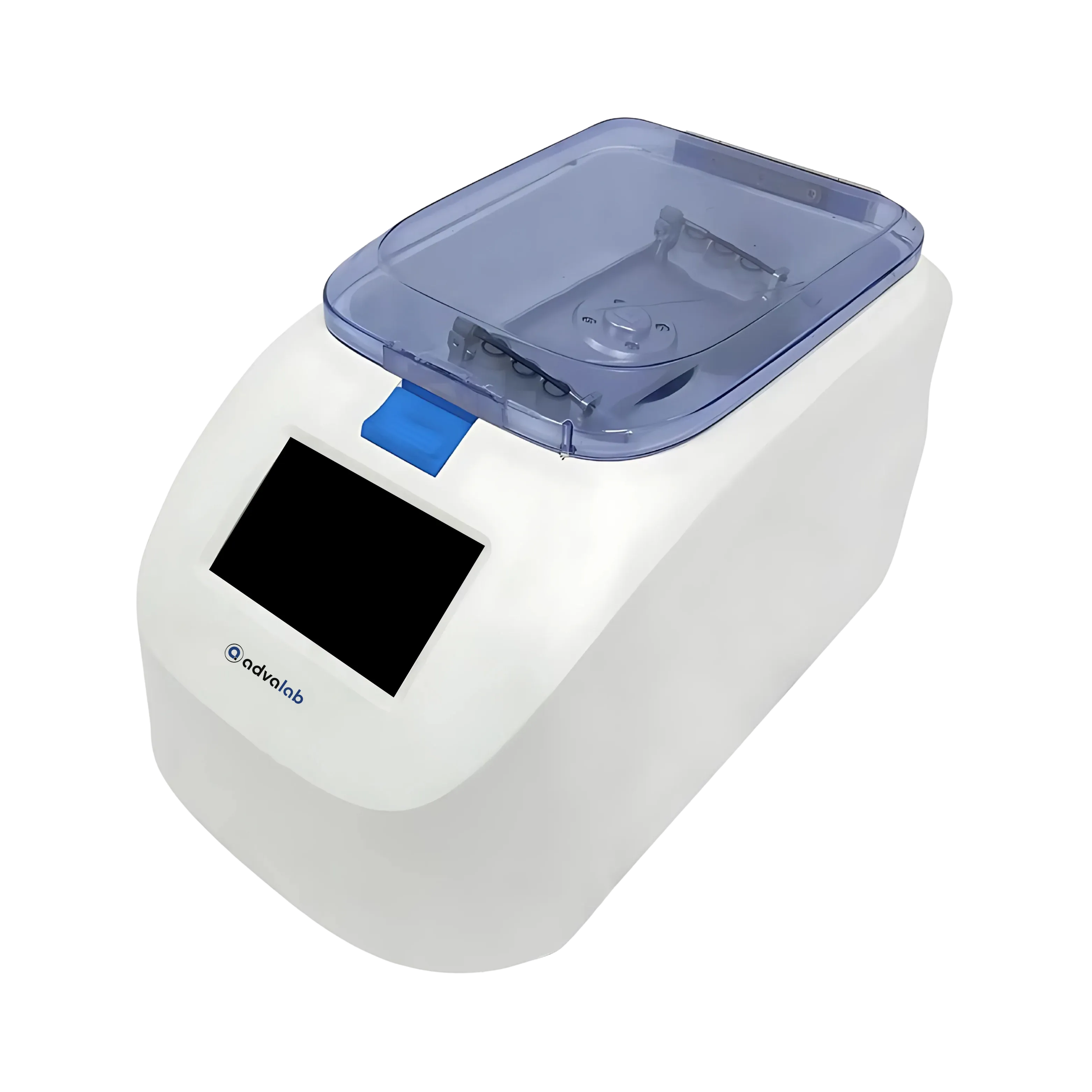
| Speed Range: | 2450 to 4450 rpm |
| Sample Capacity: | 6×2 ml / 2×5 ml |
| Feed Size: | According to tube size |