
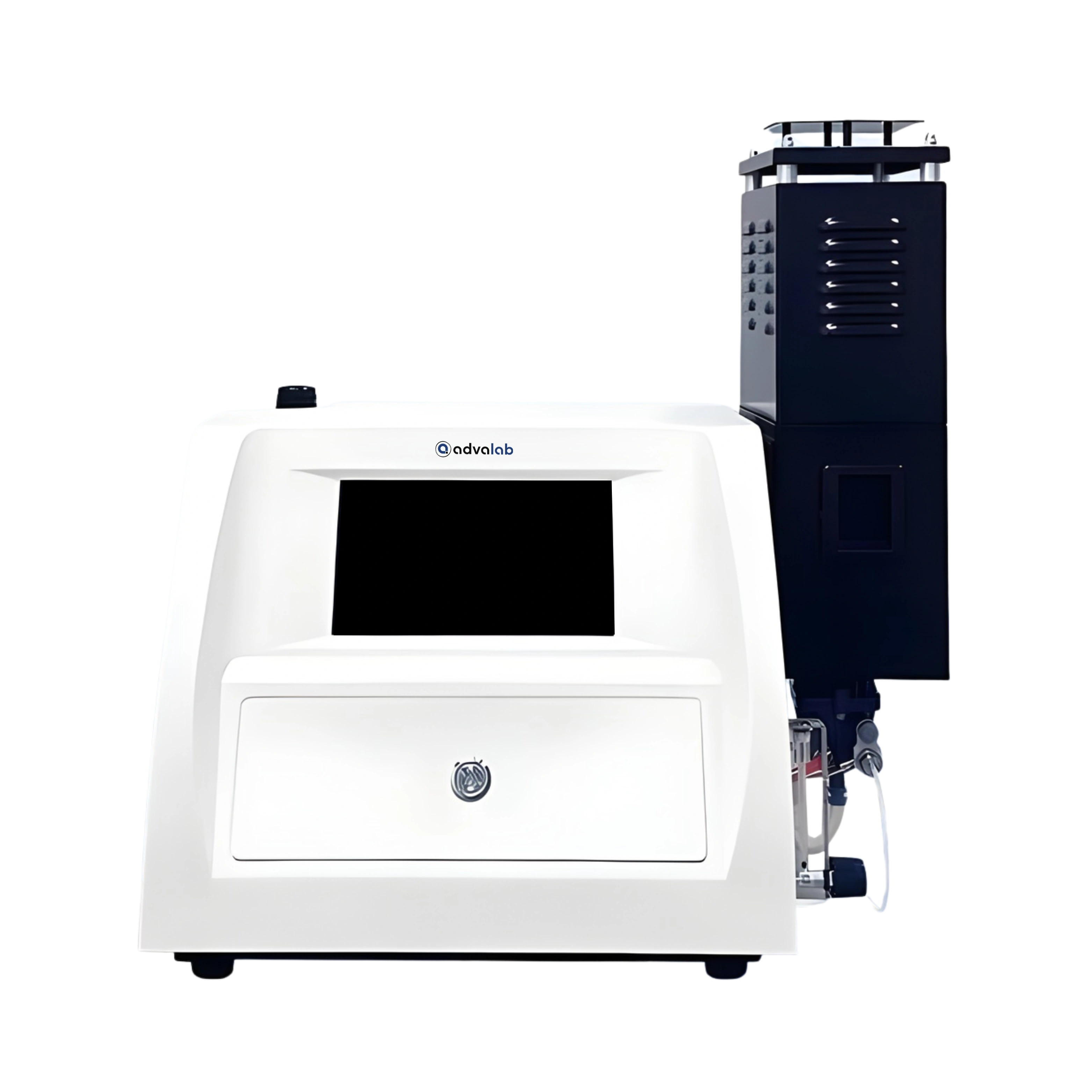

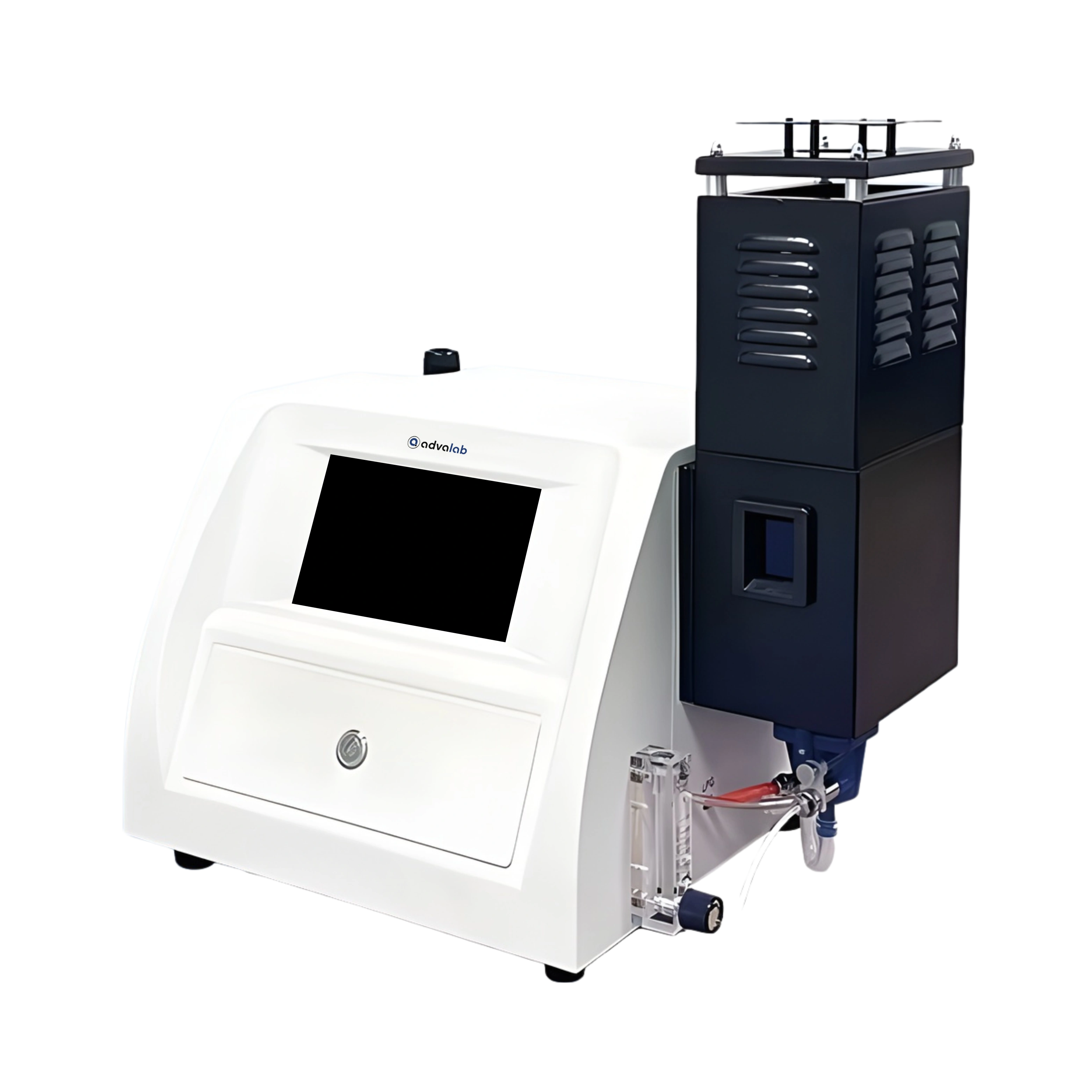
| Testing Elements | K, Na |
| Channels | 2 |
| Display Value | Concentration / Flame Intensity |
| Measuring Range |
K: 0.15 – 100 ppm Na: 0.18 – 100 ppm |
| Linearity Error |
K: ≤0.195 ppm Na: ≤0.69 ppm |
| Display | Digital LCD |
| Response Time | ≤ 8 s |
| Aspiration Rate | < 3 mL/min |
| Stability | ≤3% (15 s), ≤5% (6 min) |
| Reproducibility | ≤2% |
| Calibration Curve | Automatic Linear Calibration |
| Fuel Supply | LPG + External Air Compressor |
| Dimensions (L×B×H) | 570 × 530 × 400 mm |
| Net Weight | 18 kg |
| Gross Weight 20 kg | 20 kg |
The Flame Photometer ADFP-507 is widely applied in clinical testing, food and beverage quality control, agricultural nutrient monitoring where accurate sodium and potassium analysis is essential. It ensures trace detection across both research and routine testing workflows.

1. What is the measurement capability of Flame Photometer ADFP-507?
The Flame Photometer ADFP-507 measures Potassium (K) and Sodium (Na) concentrations within 0.15–100 ppm, with linear error ?0.195 ppm for K and ?0.69 ppm for Na, ensuring precise detection for routine and advanced testing.
2. How does the Flame Photometer ADFP-507 ensure stable performance?
Flame Photometer ADFP-507 achieves excellent stability with ?3% fluctuation in 15 seconds and ?15% in 6 minutes, supported by an external air compressor and LPG fuel system that maintain a reliable flame for consistent analysis.
3. Can the Flame Photometer ADFP-507 be used in multiple industries?
Yes, the Flame Photometer ADFP-507 is applied in clinical electrolyte testing, food and beverage quality control, petrochemical research, and agricultural nutrient monitoring, offering dependable dual-element detection.
4. Does the Flame Photometer ADFP-507 support digital data management?
Yes, Flame Photometer ADFP-507 provides USB connectivity for digital workflows and has an optional built-in thermal printer, allowing direct result reporting, easy integration with laboratory systems, and streamlined record-keeping.
5. What makes the Flame Photometer ADFP-507 efficient for laboratories with limited samples?
With a sample uptake rate of <3 mL/min, the Flame Photometer ADFP-507 minimizes sample requirements while maintaining accurate and reproducible readings, making it resource-efficient for laboratories with small sample volumes.
6. What are the typical applications of a flame photometers?
Flame photometers are commonly used in clinical laboratories to analyze blood serum for electrolyte levels. They are also widely applied in agriculture for soil and fertilizer analysis. In the food industry, they help assess mineral content in products. Environmental monitoring labs use them to check water and waste samples for contamination. Their ease of use and quick results make them ideal for routine elemental analysis.
7. How should samples be prepared for flame photometers?
Samples must be in a liquid form, typically aqueous solutions, and free from particulates or organic solvents that might interfere with the flame. If the sample contains solids, it should be filtered or centrifuged. For accurate measurements, samples are usually diluted to fall within the linear calibration range. Calibration standards with known element concentrations are prepared similarly.
8. What are the limitations of a flame photometer?
Flame photometers have limited elemental detection capabilities, primarily restricted to a few metals. They cannot detect non-metallic elements or transition metals effectively. Interferences from other ions, emission overlap, or matrix effects can affect accuracy. The method requires careful calibration and flame stability for precise results. Also, they are less sensitive compared to techniques like ICP-OES or AAS.
9. Which elements can be measured using a flame photometers?
Flame photometers primarily measure alkali and alkaline earth metals, including sodium (Na), potassium (K), calcium (Ca), and lithium (Li). Some models can also measure barium (Ba) and rubidium (Rb) with proper filters. These elements emit characteristic light when introduced into a flame. The photometer detects this light to determine their concentration.
10. What is a flame photometers and how does it work?
flame photometers are analytical instruments used to detect and measure the concentration of certain metal ions, mainly sodium, potassium, lithium, and calcium, in a solution. It operates on the principle of flame emission spectrometry, where a sample is aspirated into a flame and the emitted light intensity is measured. The emitted light is specific to each element and correlates with its concentration.
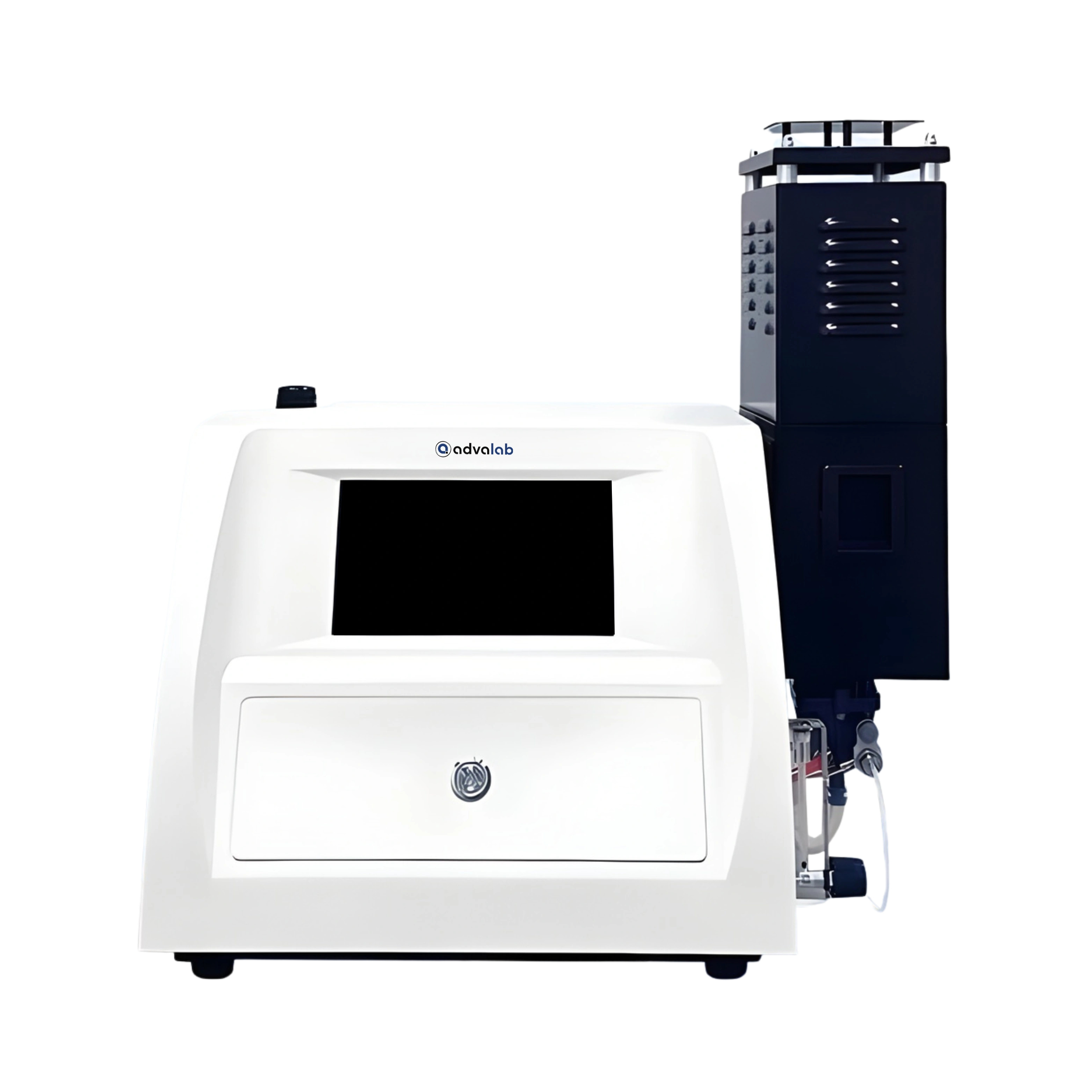
| Testing Elements | K, Na |
| Channels | 2 |
| Display Value | Concentration / Flame Intensity |

| Testing Elements | K, Na, Li, Ca |
| Channels | 4 |
| Display Value | Concentration / Flame Intensity |
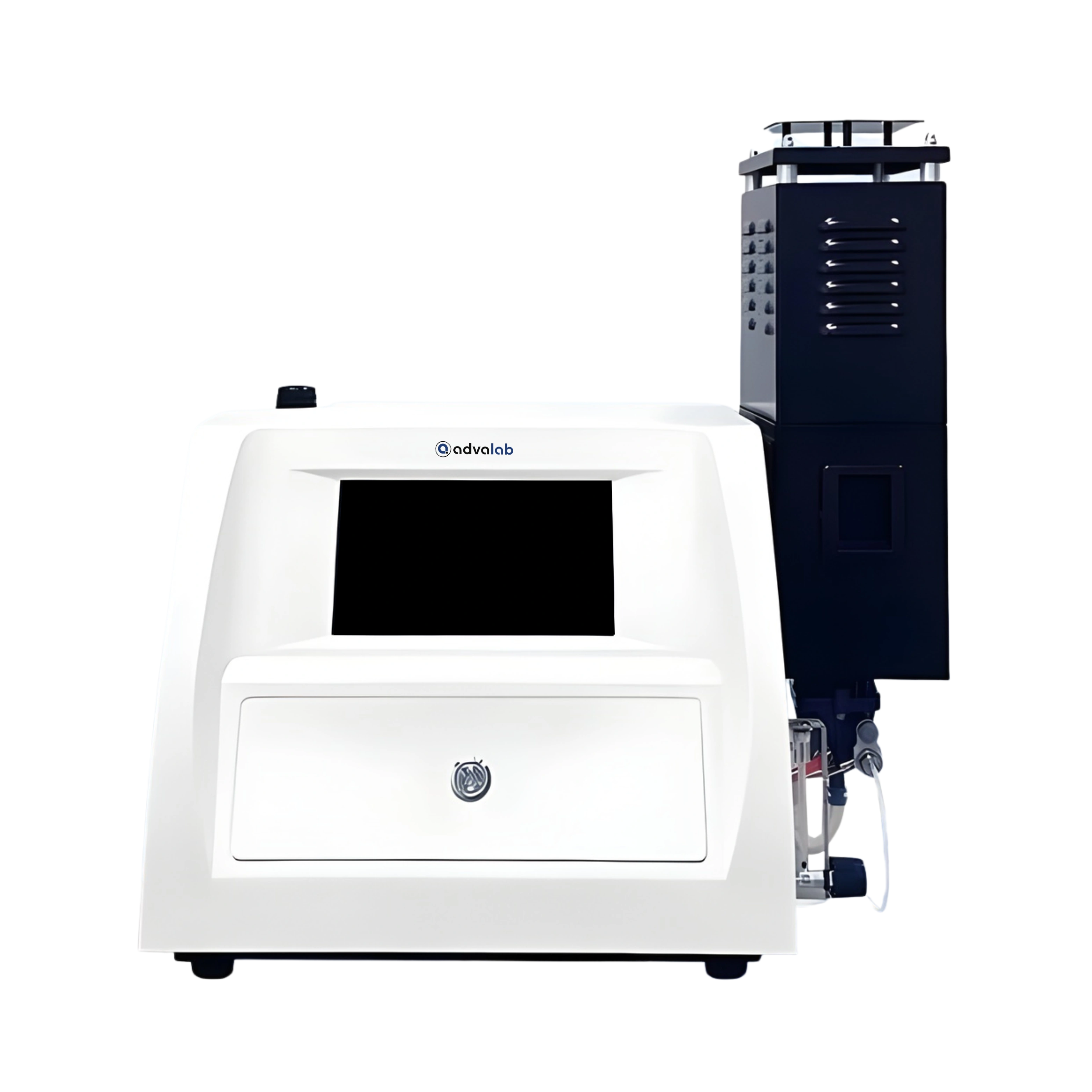
| Testing Elements | K, Na, Li, Ca, Ba |
| Channels | 5 |
| Display Value | Concentration / Flame Intensity |

| Testing Elements | K, Na, Li |
| Channels | 3 |
| Display Value | Concentration / Flame Intensity |