
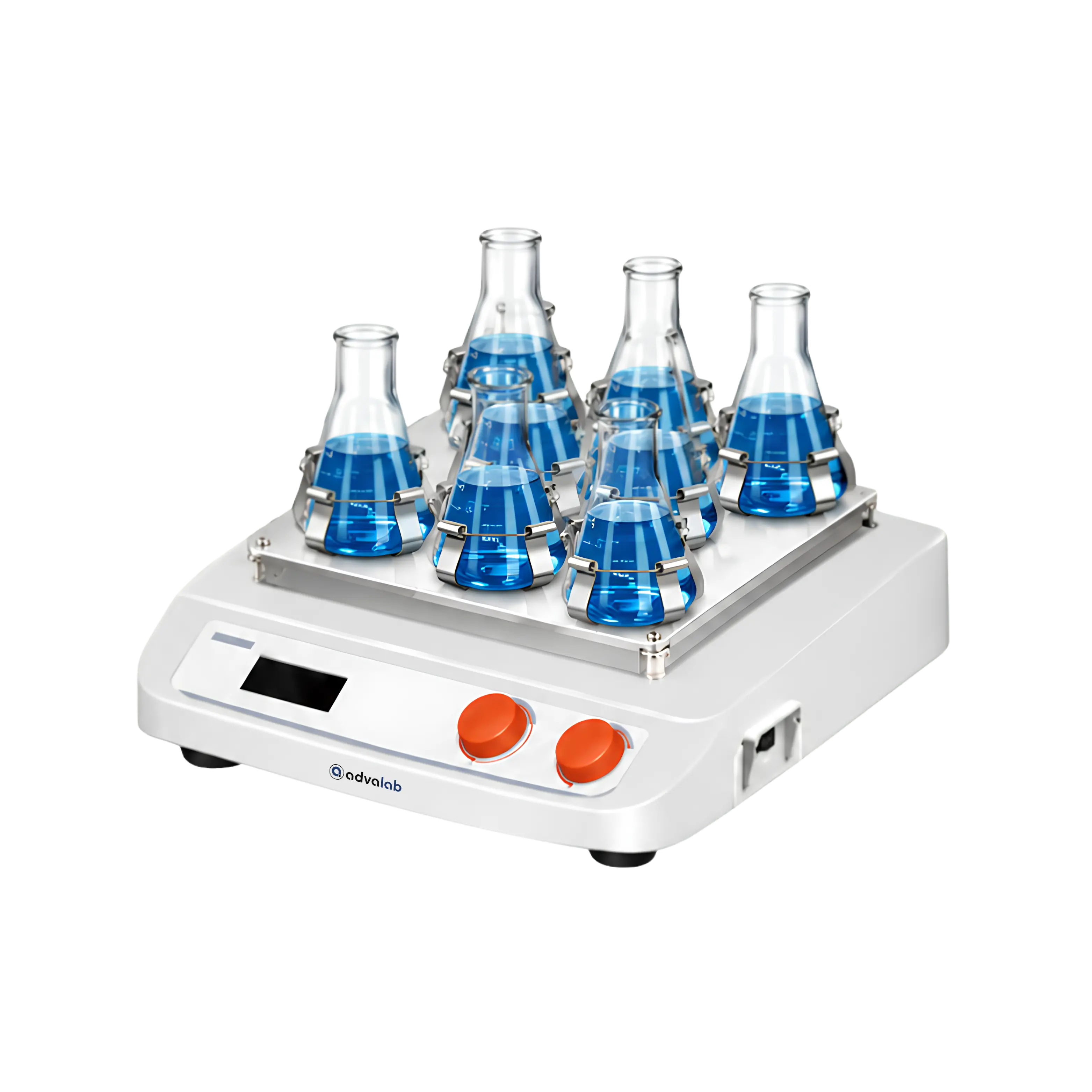
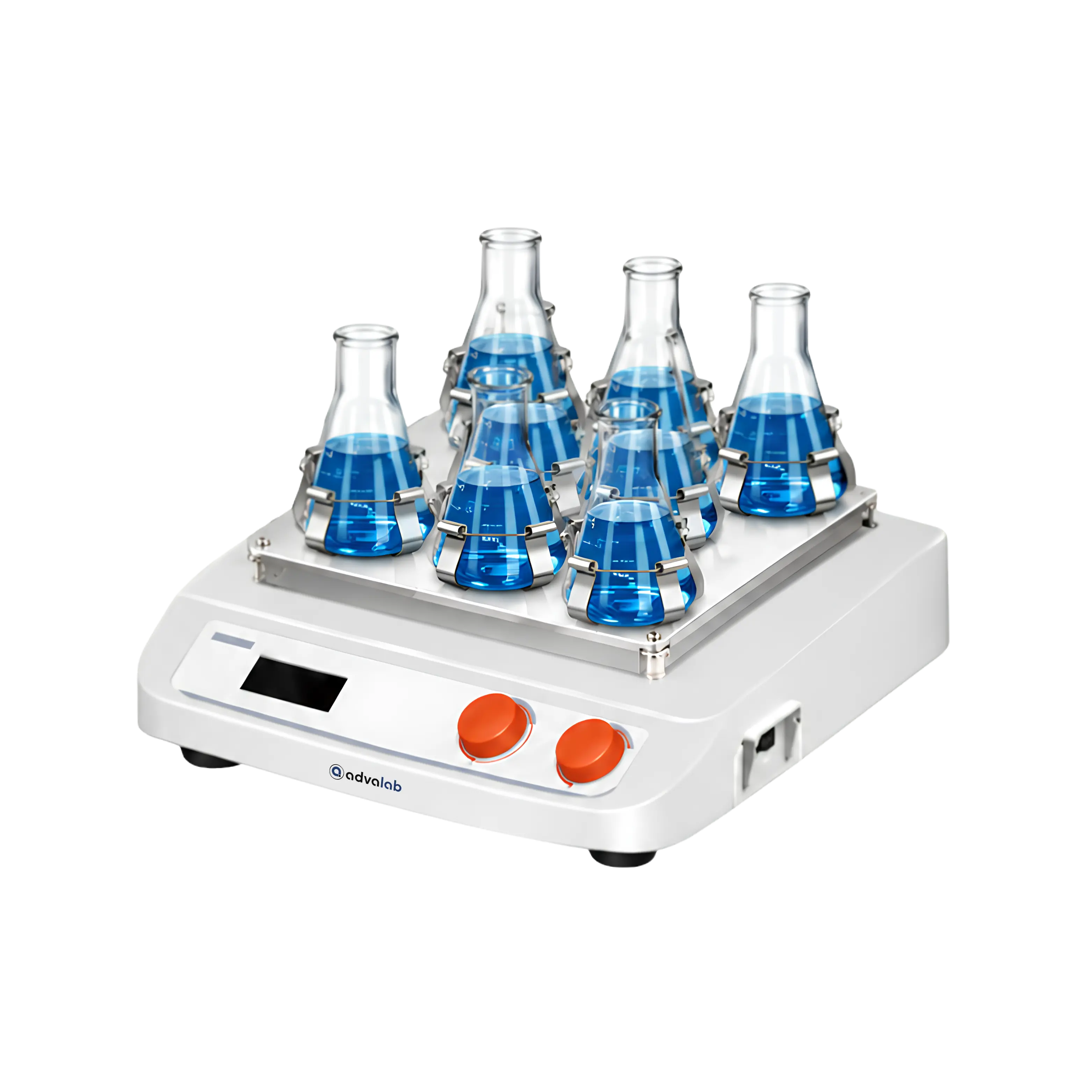
| Shaking Mode | Orbital |
| Amplitude | 8 mm |
| Speed Range | 60–400 rpm (Optional 500 rpm) |
| Maximum Load | 7.5 kg |
| Motor Type | DC Brushless Motor |
| Speed Display | LCD |
| Timer Range | 0–99 h 59 min |
| Timer Function | Yes |
| Time Display | LCD |
| RS232 / Option | RS232 |
| Voltage | 100–240 V |
| Frequency | 50–60 Hz |
| Protection Class | IP21 |
| Input Power | 35 W |
| Output Power | 25 W |
| Allowable Ambient Temperature | 5–40 °C |
| Allowable Relative Humidity | ≤80% |
| Exterior Dimensions | 330 × 370 × 130 mm |
| Packing Dimensions | 430 × 390 × 200 mm |
| Net Weight | 7 kg |
| Gross Weight | 10 kg |
Orbital Shaker ADOS-515 is used in microbiology, biochemistry, molecular biology, pharmaceutical, clinical, and food and environmental testing laboratories. It handles culture shaking in flasks, solution mixing, dissolution, extraction, gel staining and destaining, and washing of membranes and blots.
1. What is an Orbital Shaker?
An Orbital Shaker is a laboratory device that moves samples in a smooth, circular motion to mix liquids gently and evenly, ideal for cell culture, bacterial growth, and solubility experiments. This gentle agitation helps maintain the viability of sensitive biological samples and promotes uniform mixing. It is widely used in research, clinical, and industrial laboratories for consistent and reproducible results.
2. How does an Orbital Shaker work?
The Orbital Shaker uses a motor to rotate the platform in a circular orbit at adjustable speeds, providing consistent agitation without causing turbulence or damage to delicate samples. The circular motion ensures even distribution of nutrients and gases in culture media, improving sample growth and reaction efficiency. Speed and time controls allow for customizable operation tailored to specific experimental needs.
3. What types of containers can be used on an Orbital Shaker?
Orbital Shakers accommodate flasks, test tubes, bottles, petri dishes, and microplates, usually secured with clamps, racks, or platforms to prevent movement during shaking. This versatility makes them suitable for a variety of lab applications, from microbiology to biochemistry. Accessories and platforms can often be swapped or customized to fit unique container sizes and shapes.

| Speed | 50 to 250 rpm |
| Orbital Diameter | 20 mm |
| Maximum Load | 2.5 kg |
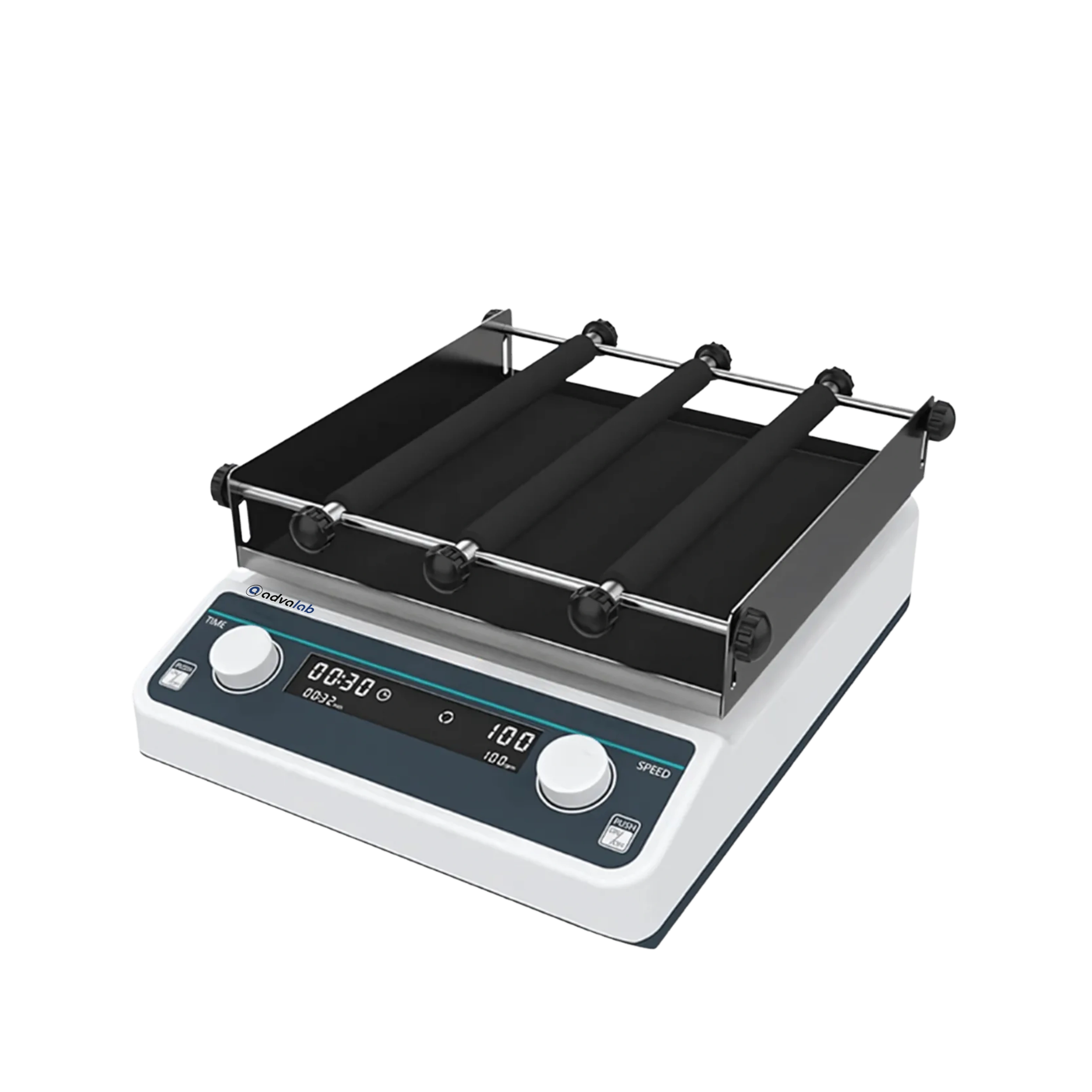
| Speed | 40 to 200 rpm |
| Maximum Load | 5 kg |
| Orbit Diameter | 20 mm |

| Speed Range | 40 to 200 rpm |
| Maximum Load | 1.2 kg |
| Orbit Diameter | 20 mm |

| Speed | 40 to 200rpm |
| Maximum Load | 5 kg |
| Orbit Diameter | 20 mm |
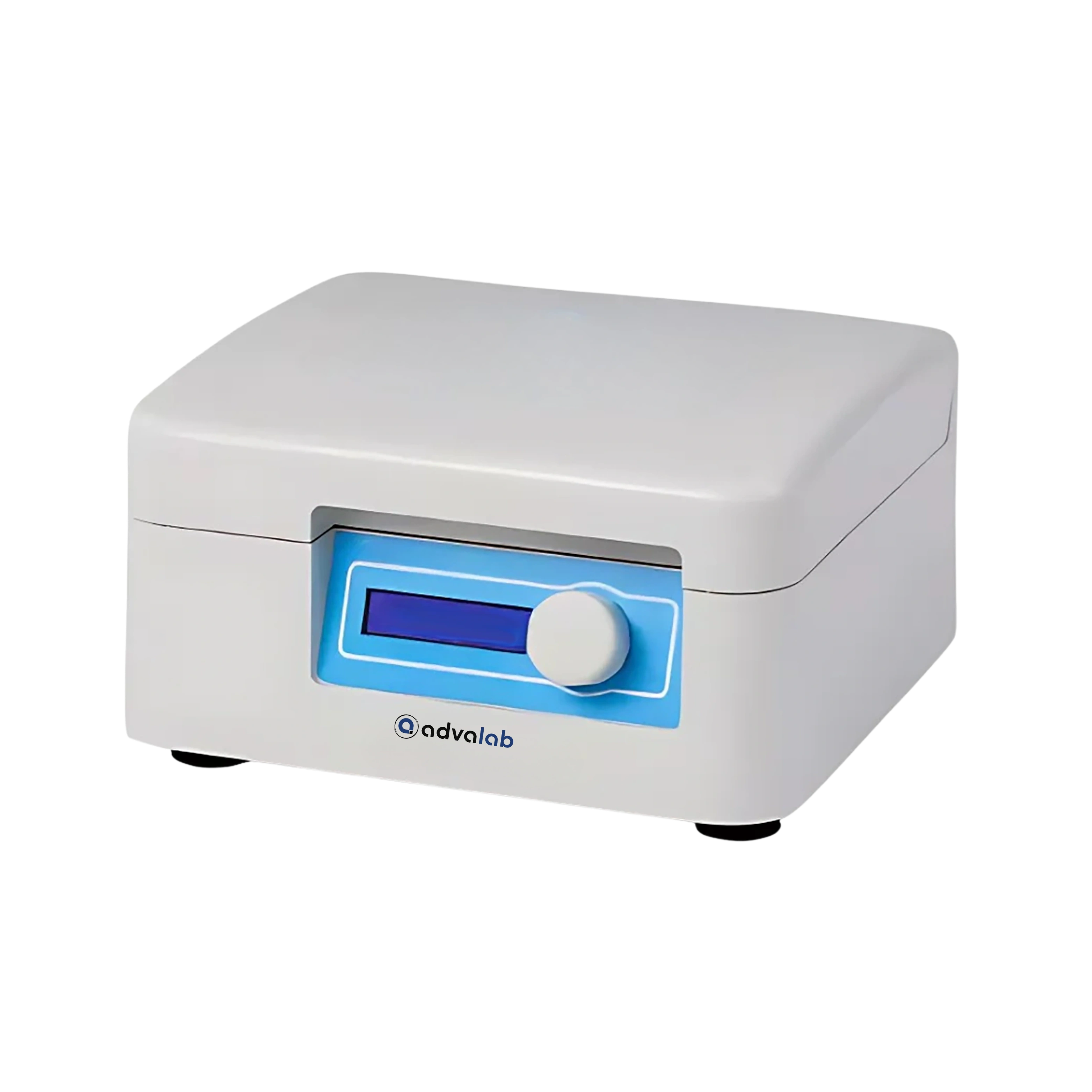
| Temperature Control Range: | RT. +5℃ to 80℃ |
| Shaking Speed: | 200 to 1600 rpm |
| Temperature Accuracy: | ≤ ± 0.5℃ |

| Shaking Speed: | 200 to 2000 rpm |
| Sample Capacity: | 2 plates |
| Speed Step Value: | 10 rpm |

| Shaking Speed: | 200 to 1500 rpm |
| Sample Capacity: | 4 plates |
| Speed Step Value: | 10 rpm |
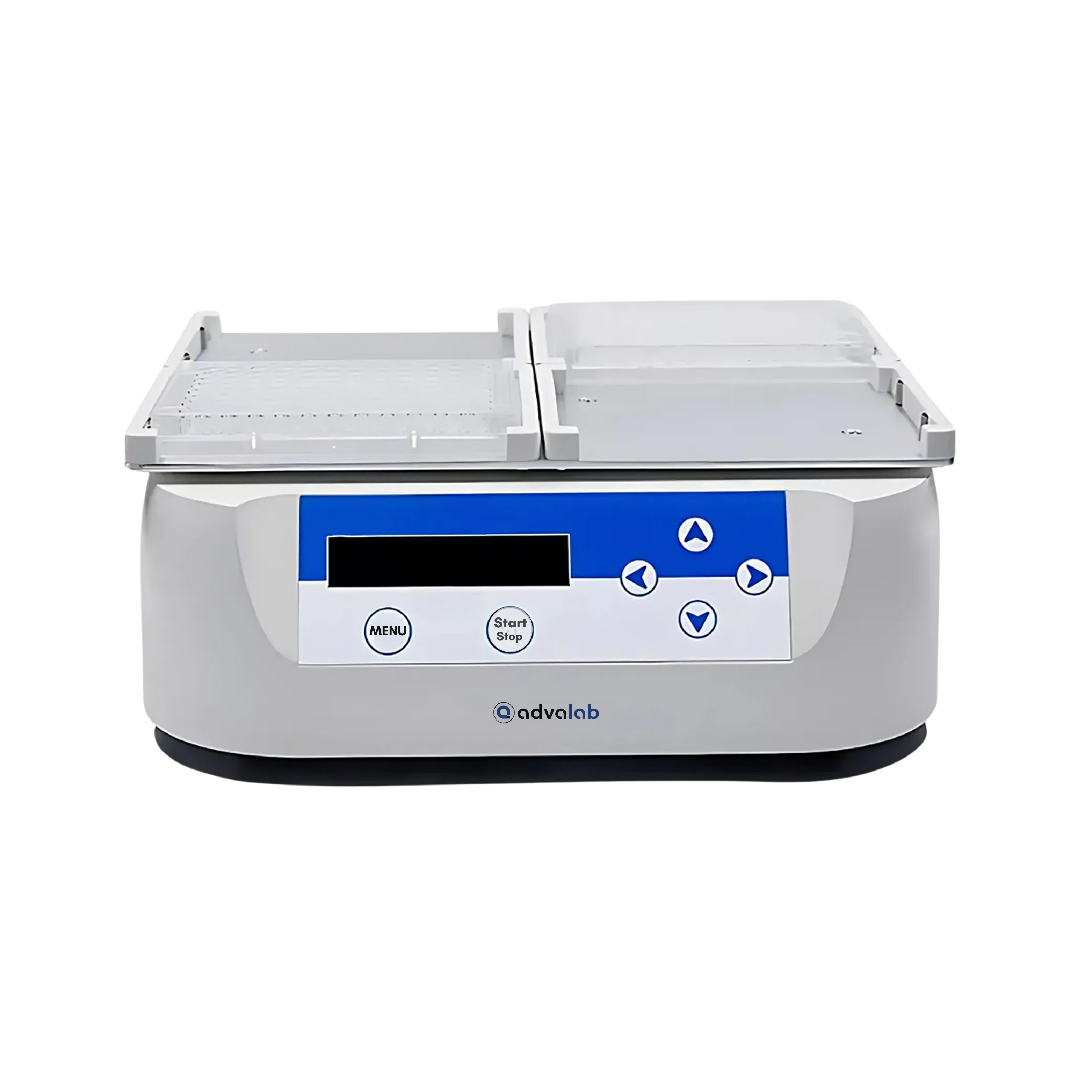
| Speed Range: | 200 to 1500 rpm |
| Amplitude: | 3 mm, horizontal rotation |
| Timer: | 1 min to 99 hr 59 min / 0: infinite time |
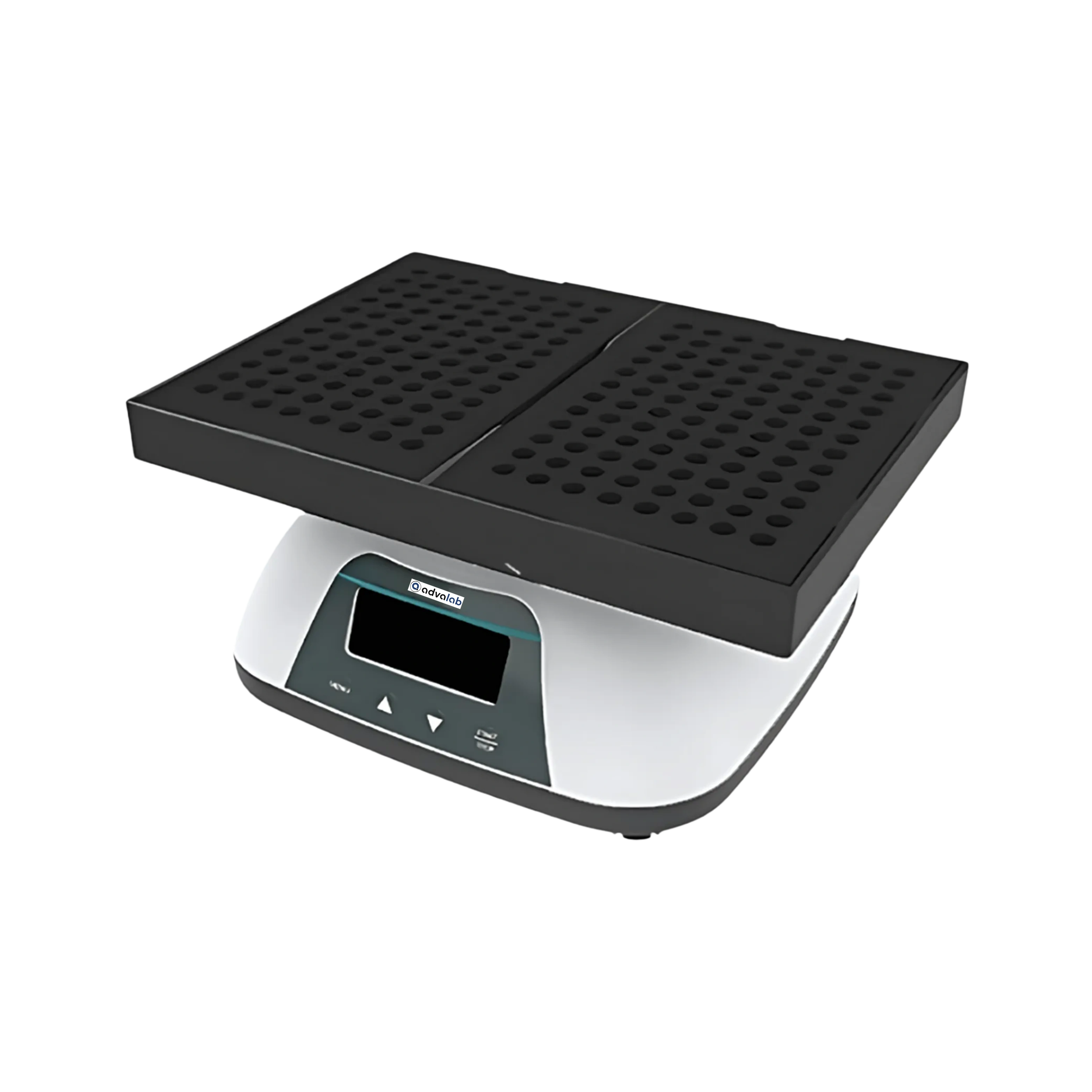
| Speed: | 100 to 1200 rpm |
| RPM Increment: | 100 rpm |
| Horizontal Gyration Amplitude: | 4 m |

| Speed: | 500 to 1200 rpm |
| RPM Increment: | 10 rpm |
| Horizontal Gyration Amplitude: | 3 mm |

| Speed: | Brushless motor 100to1200rpm |
| RPM Increment: | 100 rpm |
| Horizontal Gyration Amplitude: | 4 mm |
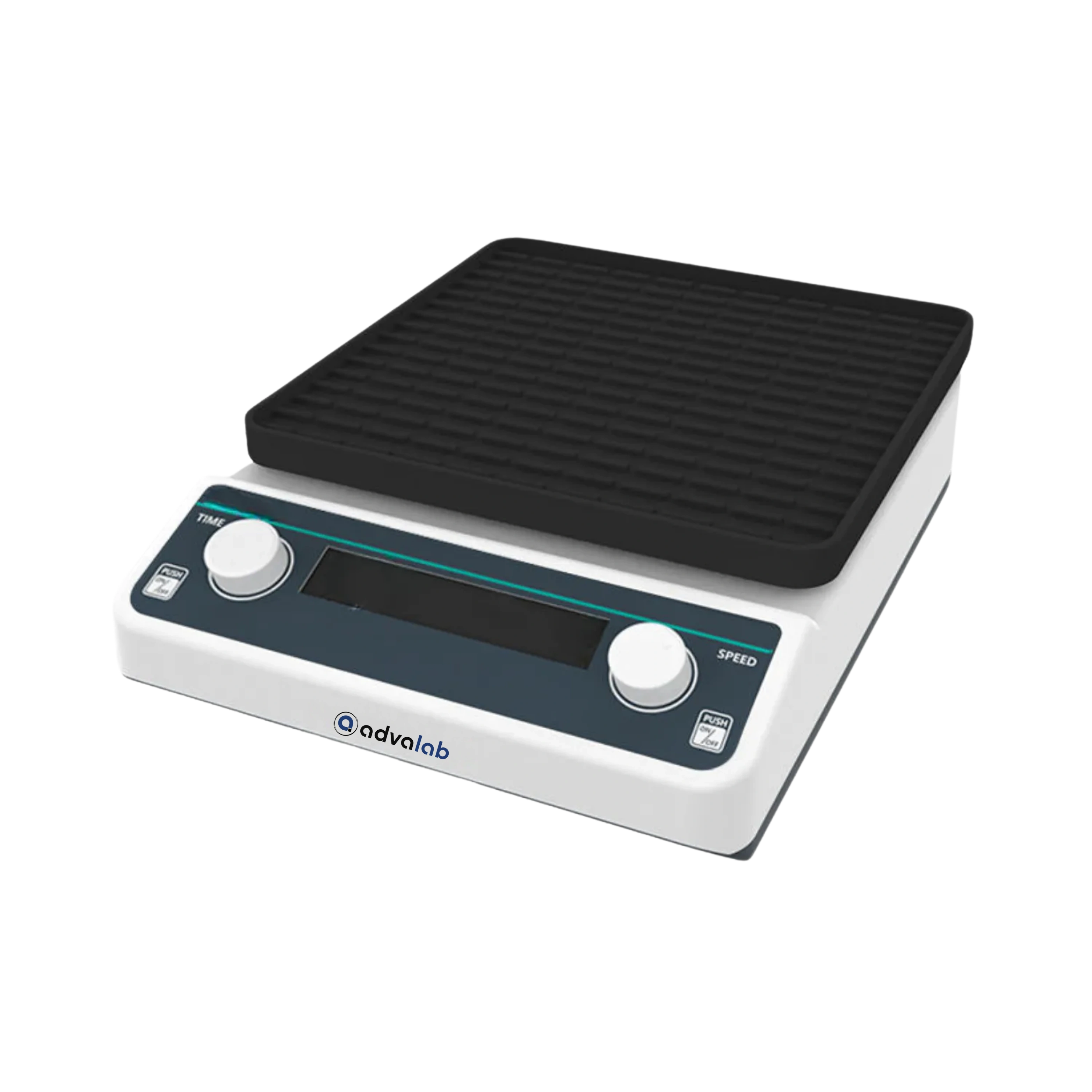
| Speed: | 500 to 1200rpm |
| RPM Increment: | 10 rpm |
| Horizontal Gyration Amplitude: | 3 mm |
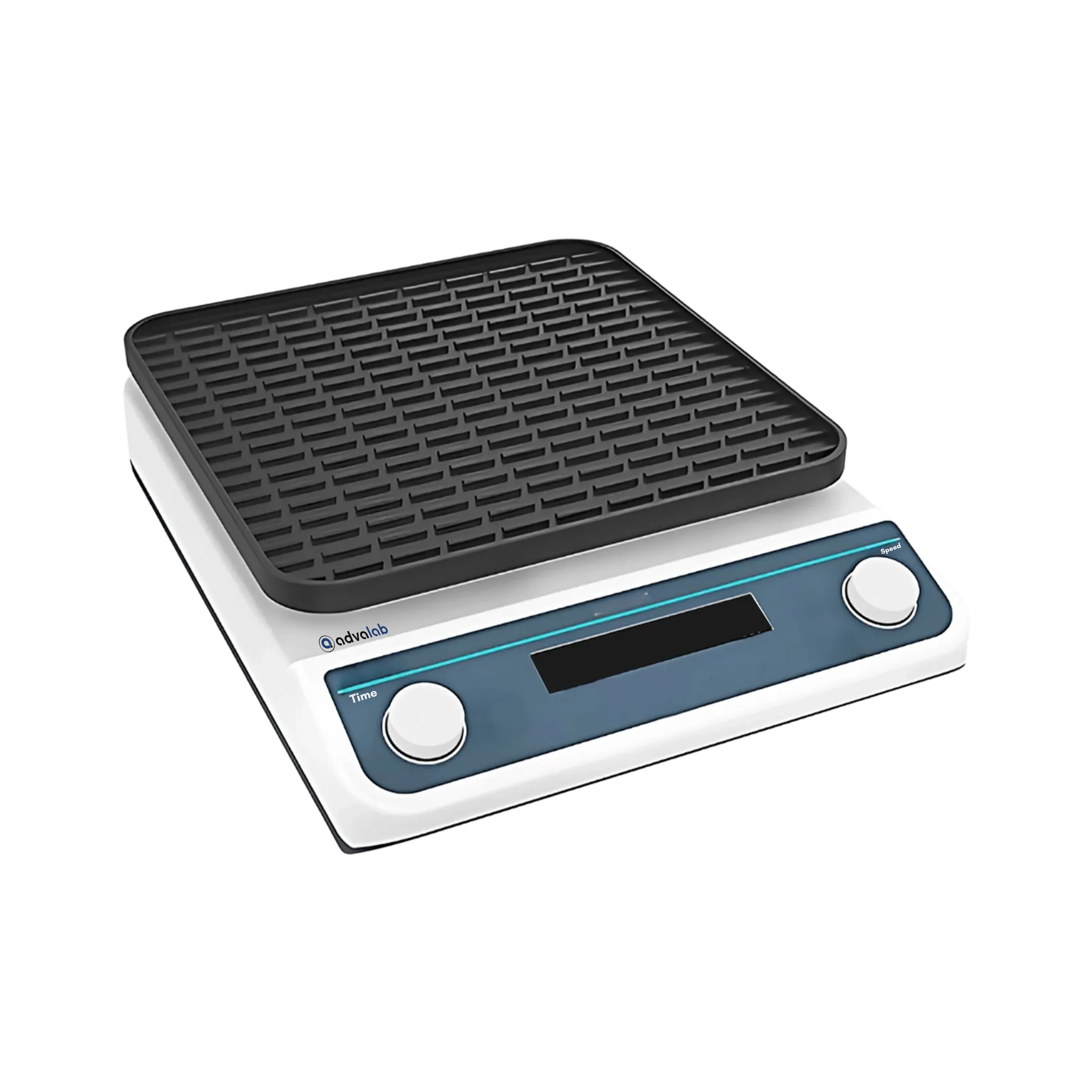
| Speed: | 40 to 200 rpm |
| Max Load: | 3 kg |
| Plate Size : | 320×320 mm |
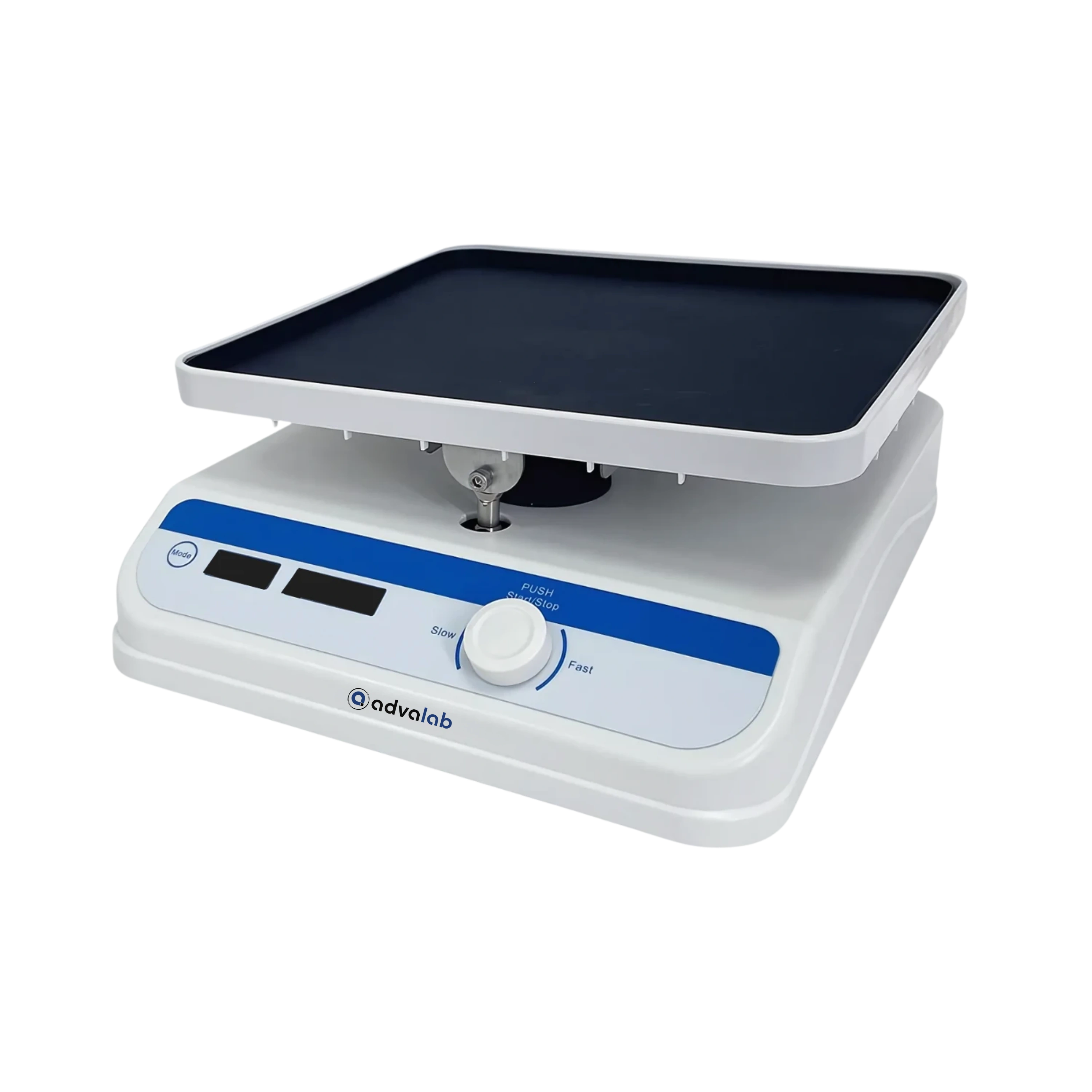
| Speed: | 10 to 70 rpm |
| Maximum Load with clamps: | 3 kg |
| Orbital Diameter: | 10° |
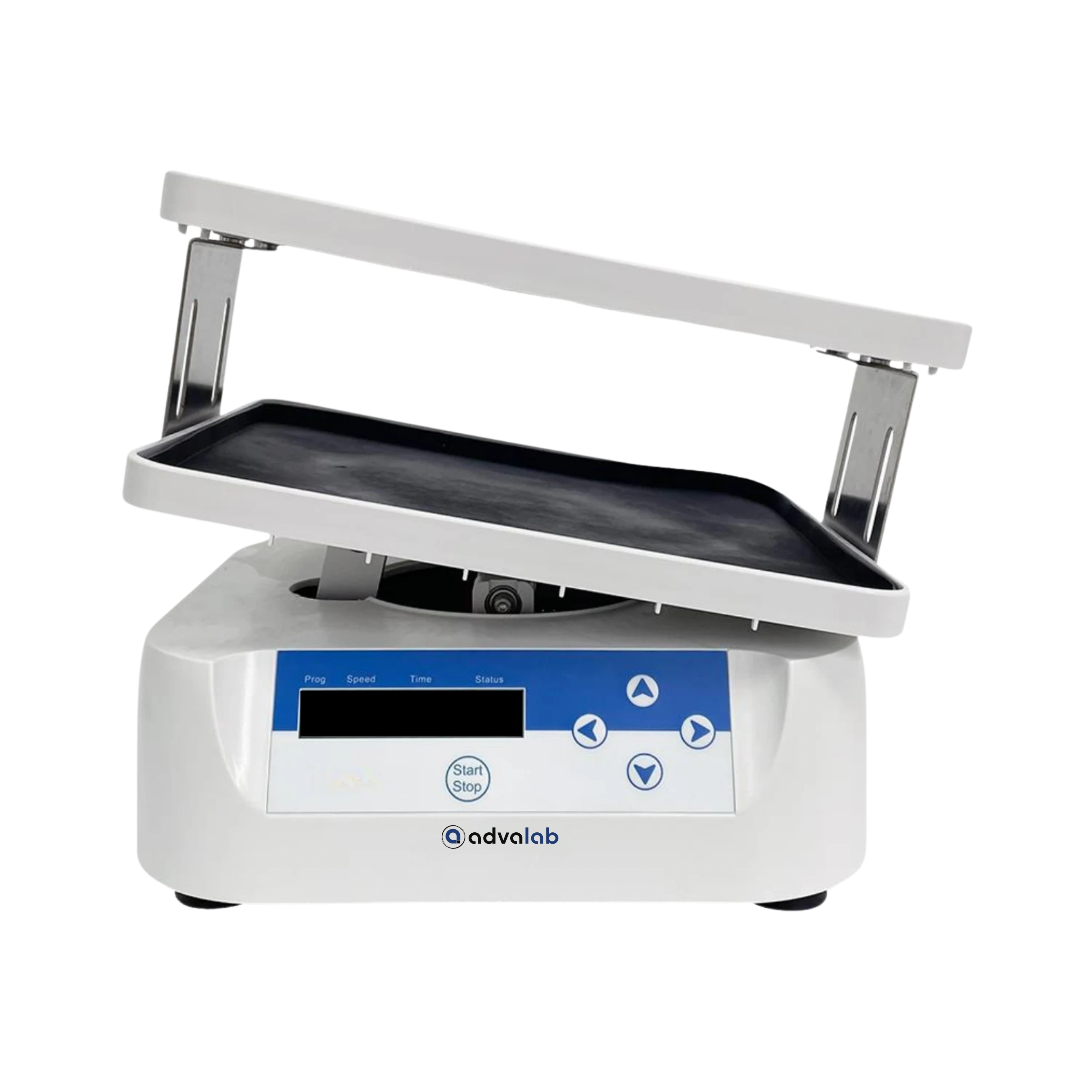
| Speed: | 10 to 100 rpm |
| Maximum Load : | 5.0 kg |
| Amplitude: | 25mm, 10’, up and down |

| Speed Range: | 1 to 70 rpm |
| Maximum Load: | 2.0 kg |
| Tilt Angle: | 1 to 10 ° |