

| Receiving flask | 2 L |
| Evaporating flask | 1L |
| Rotating Motor | 40 W |
| Evaporation rate | Greater than or equal to 1L/h |
| Rotating Speed | 0 to 120 rpm |
| Water (oil) bath power | 1500 W |
| Temperature Control Range | RT~99˚C |
| Temperature fluctuation | ±1 |
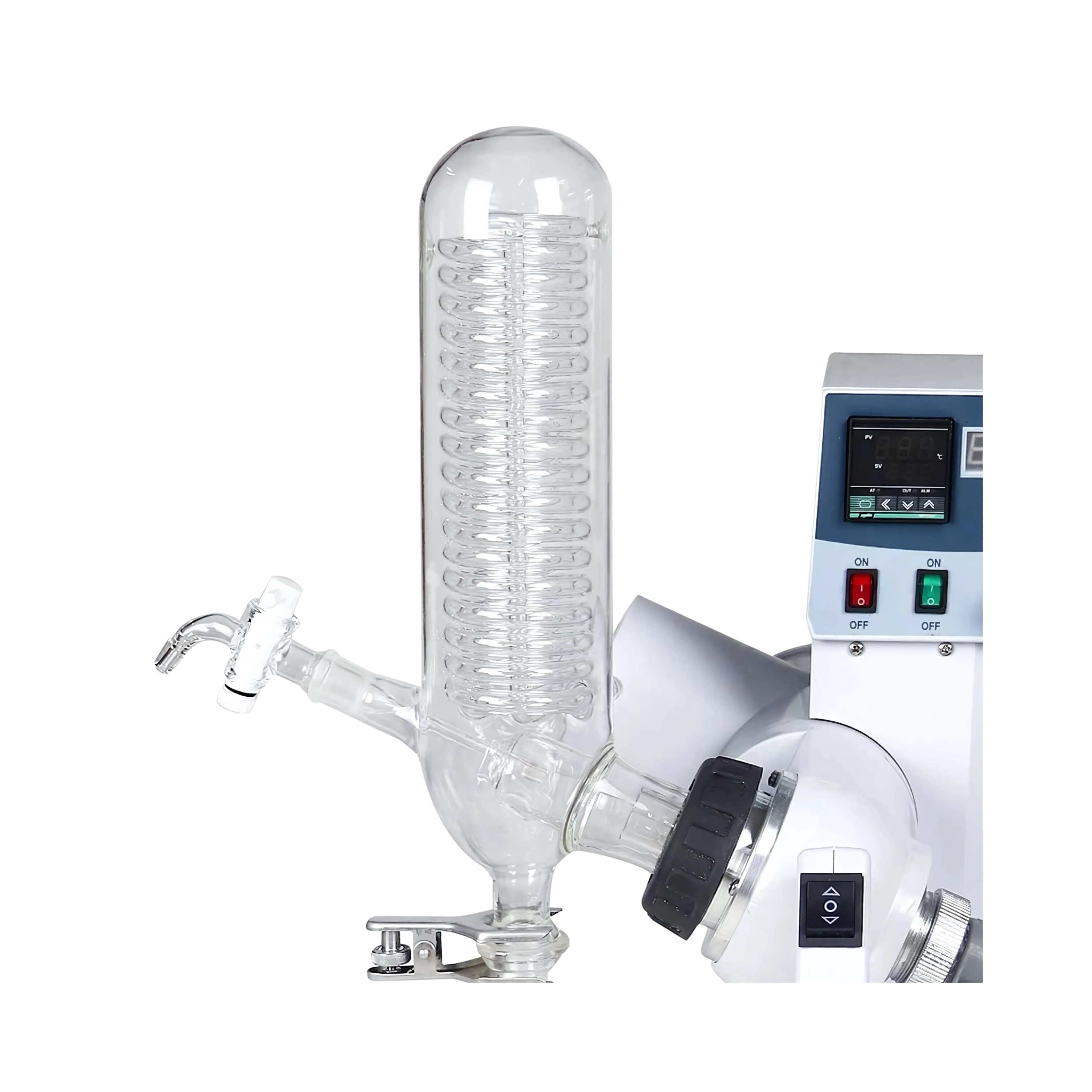
| Condenser | Vertical Condenser |
| Lifting height | 0 to 140 mm |
| Water Bath Size | 1500 W |
| Power Supply | 220 V/ 50/60 Hz |
| Dimensions | 550×420×780 mm |
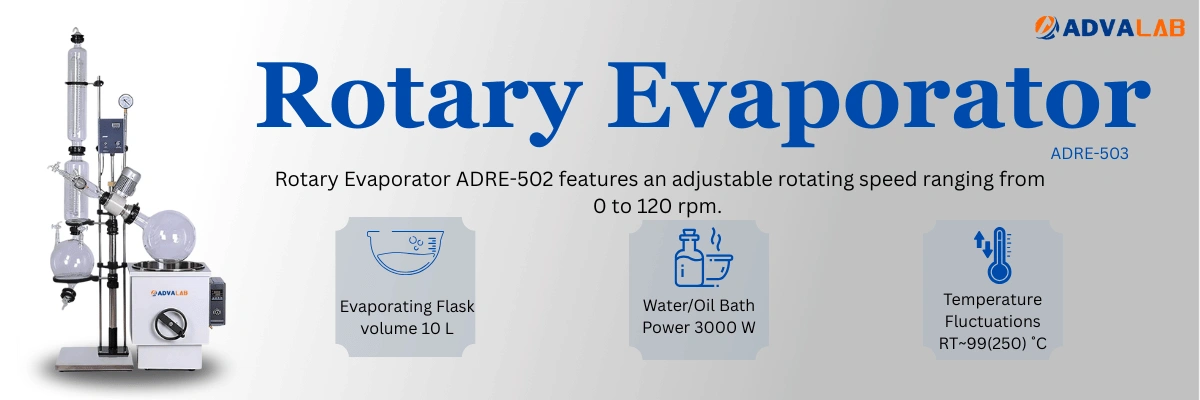
The Rotary Evaporator ADRE-503 is perfect for separating, purifying, and concentrating compounds in lab-scale operations. It is commonly used in pharmaceuticals, chemicals, and academic research environments.
1. What flask sizes are supported by the Rotary Evaporator ADRE-503?
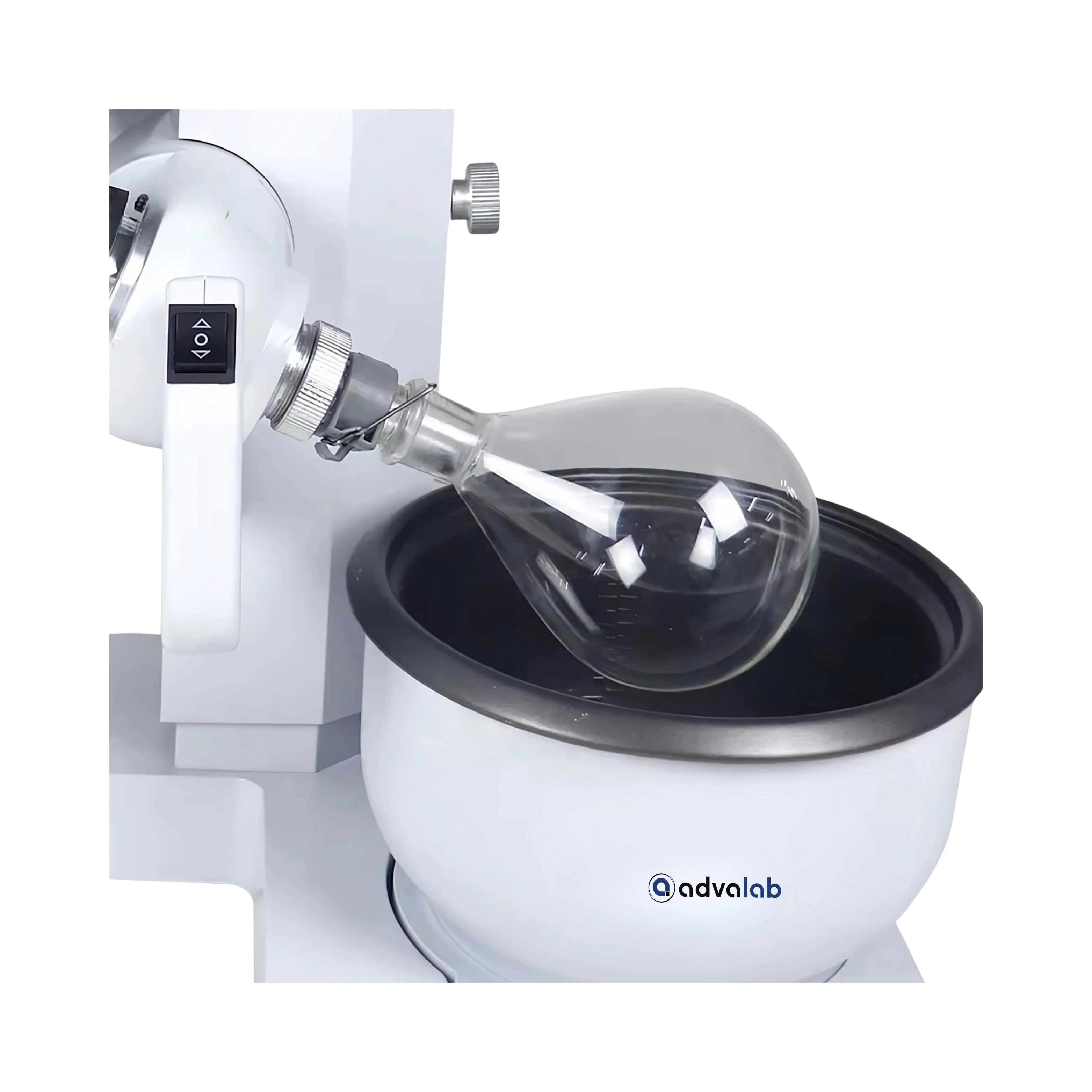
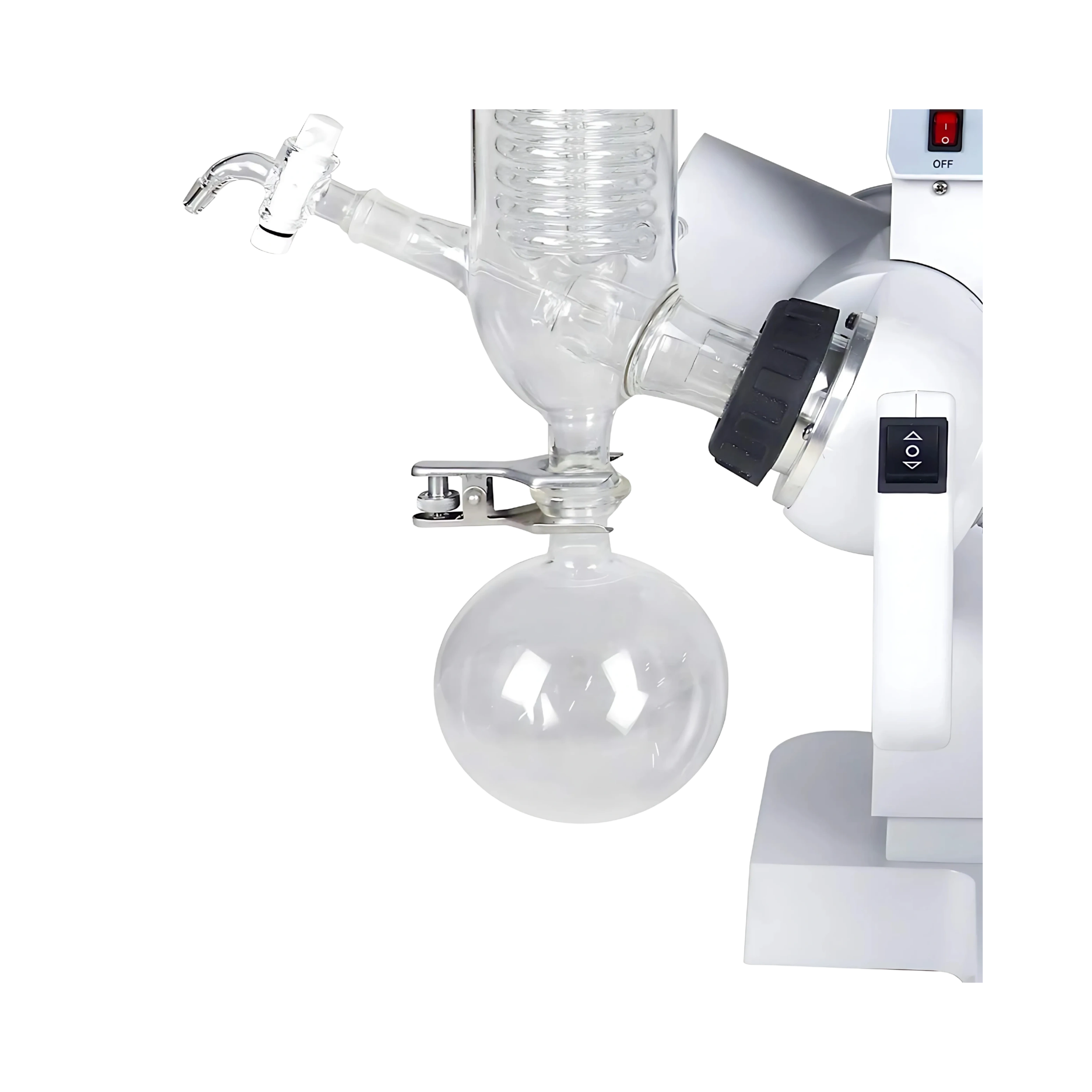
The Rotary Evaporator ADRE-503 comes with a 1L evaporating flask and a 2L receiving flask. These sizes are suitable for most small to medium lab processes. They allow efficient handling of solvent recovery and concentration. The flasks are easy to clean and made from durable materials.
2. Is the Rotary Evaporator ADRE-503 easy to maintain?
Yes, Rotary Evaporator ADRE-503 designed with a simple layout and accessible parts. The brushless DC motor requires minimal maintenance effort. Its robust construction ensures long-term reliable performance. Routine cleaning and basic checks are all that’s needed.
3. What is the evaporation capacity of the Rotary Evaporator ADRE-503?
The Rotary Evaporator ADRE-503 offers an evaporation rate of ?1L/h with water. This ensures fast and efficient solvent removal during lab processes. It’s ideal for tasks requiring high throughput in routine applications. This feature is especially useful in pharmaceutical and chemical labs.
4. How does the Rotary Evaporator ADRE-503 ensure precise temperature control?
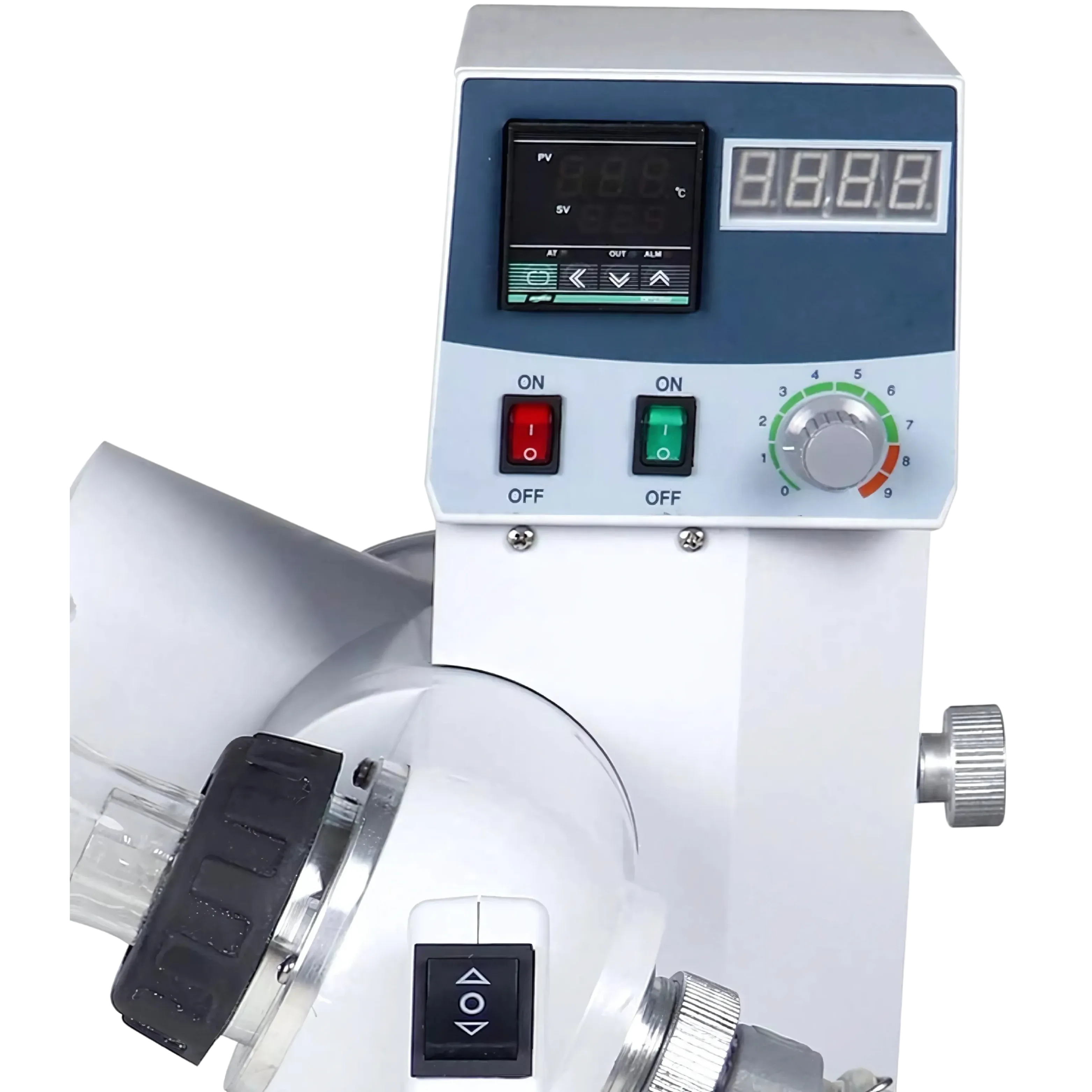
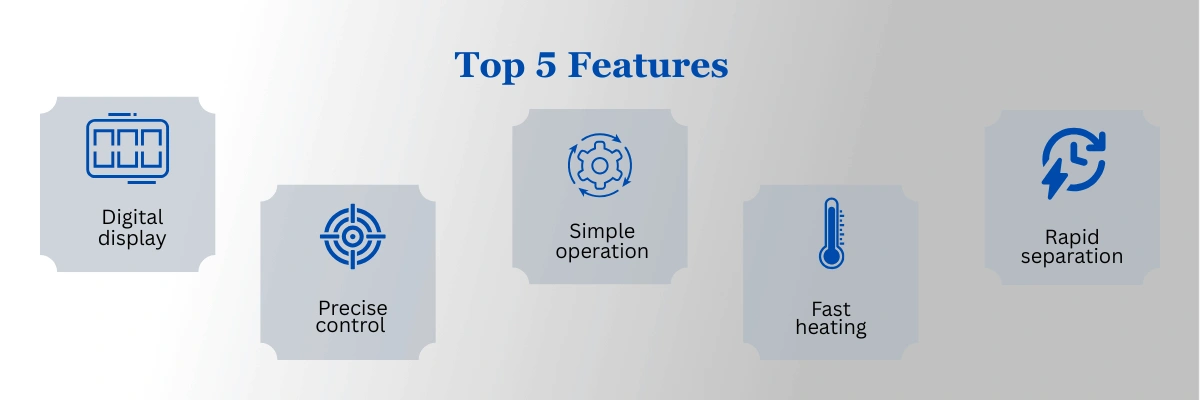
The Rotary Evaporator ADRE-503 includes a 1500W water/oil bath with RT to 99°C range. Temperature fluctuation is tightly maintained within ±1°C. This makes it suitable for sensitive processes like crystallization. Its digital interface lets users monitor and adjust easily.
5. What is the condenser design in the Rotary Evaporator ADRE-503?
The Rotary Evaporator ADRE-503 uses a vertical, three-layer coil condenser system. It includes a main and auxiliary coil for larger surface area. This design allows for faster and more efficient condensation. It reduces solvent loss and enhances cooling performance.
6. What types of solvents can be removed using a rotary evaporator?
Rotary evaporators can remove a wide range of volatile solvents such as ethanol, methanol, acetone, and chloroform. These are commonly used in chemical and biological extractions. The equipment is suitable for both aqueous and organic solvents. Proper settings and compatible materials ensure efficient and safe operation.
7. How does a rotary evaporator work?
A rotary evaporator works by rotating a flask containing a solution while applying heat and vacuum. This setup reduces the boiling point of solvents, allowing them to evaporate quickly at lower temperatures. The vapors are then condensed and collected in a separate flask. The rotating motion improves surface area, speeding up the process.
8. What are the key components of a rotary evaporator?
A rotary evaporator typically includes a rotating flask, heating bath, condenser, receiving flask, and vacuum system. Each part plays a role in evaporating and condensing the solvent effectively. Digital controls are often included for temperature and rotation speed. Some models also feature automated lift and safety protection.

| Receiving Flask Capacity | 1 Liter |
| Rotating Motor Power | 40W (Stepless Speed Regulation) |
| Rotating Speed | 0 to 120 rpm |

| Rotating bottle | 5 L |
| Recovery bottle | 3 L |
| Main engine speed | 10 to 140 rpm |

| Evaporating Flask volume | 10 L |
| Receiving Flask volume | 5 L |
| Rotating motor | 180 W |