

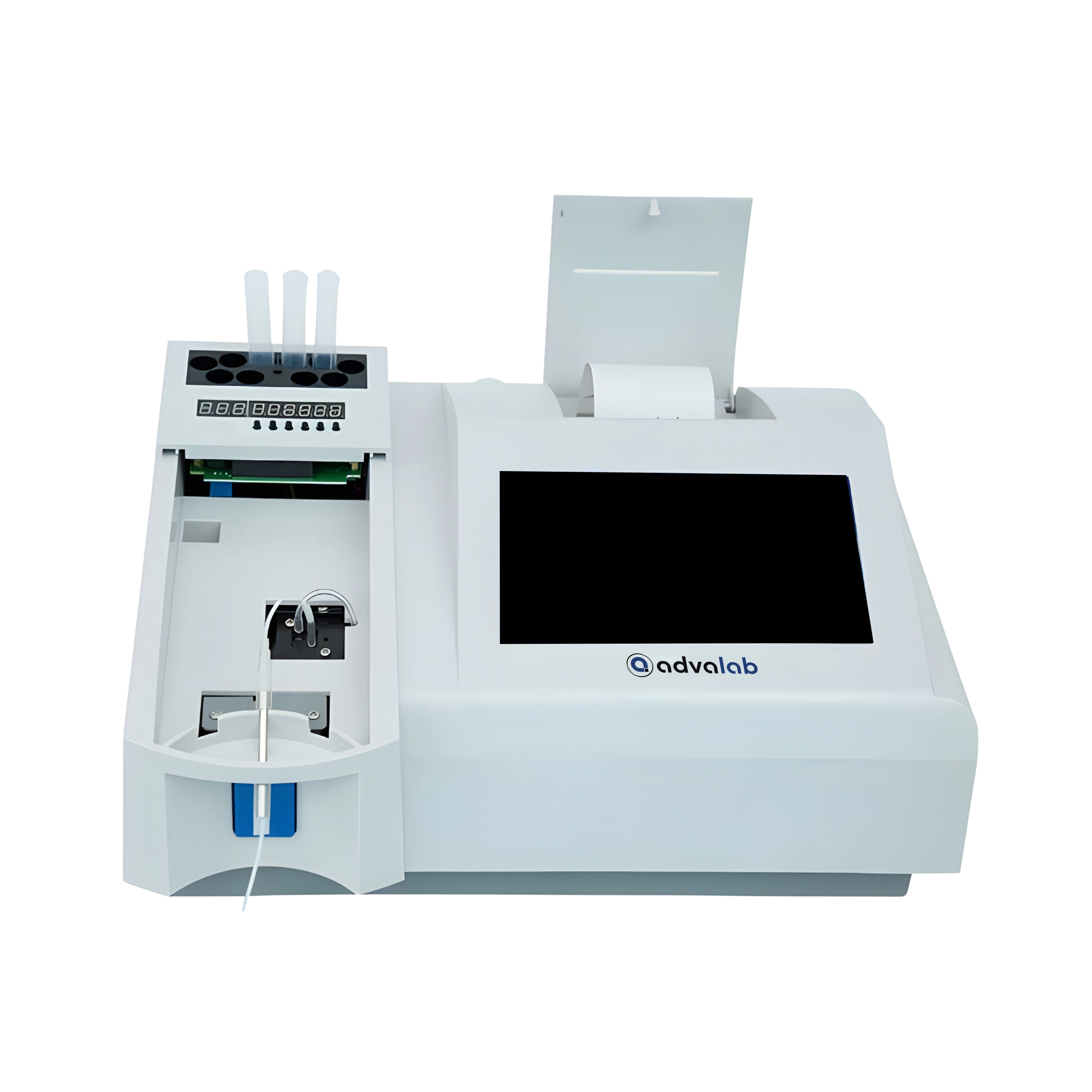
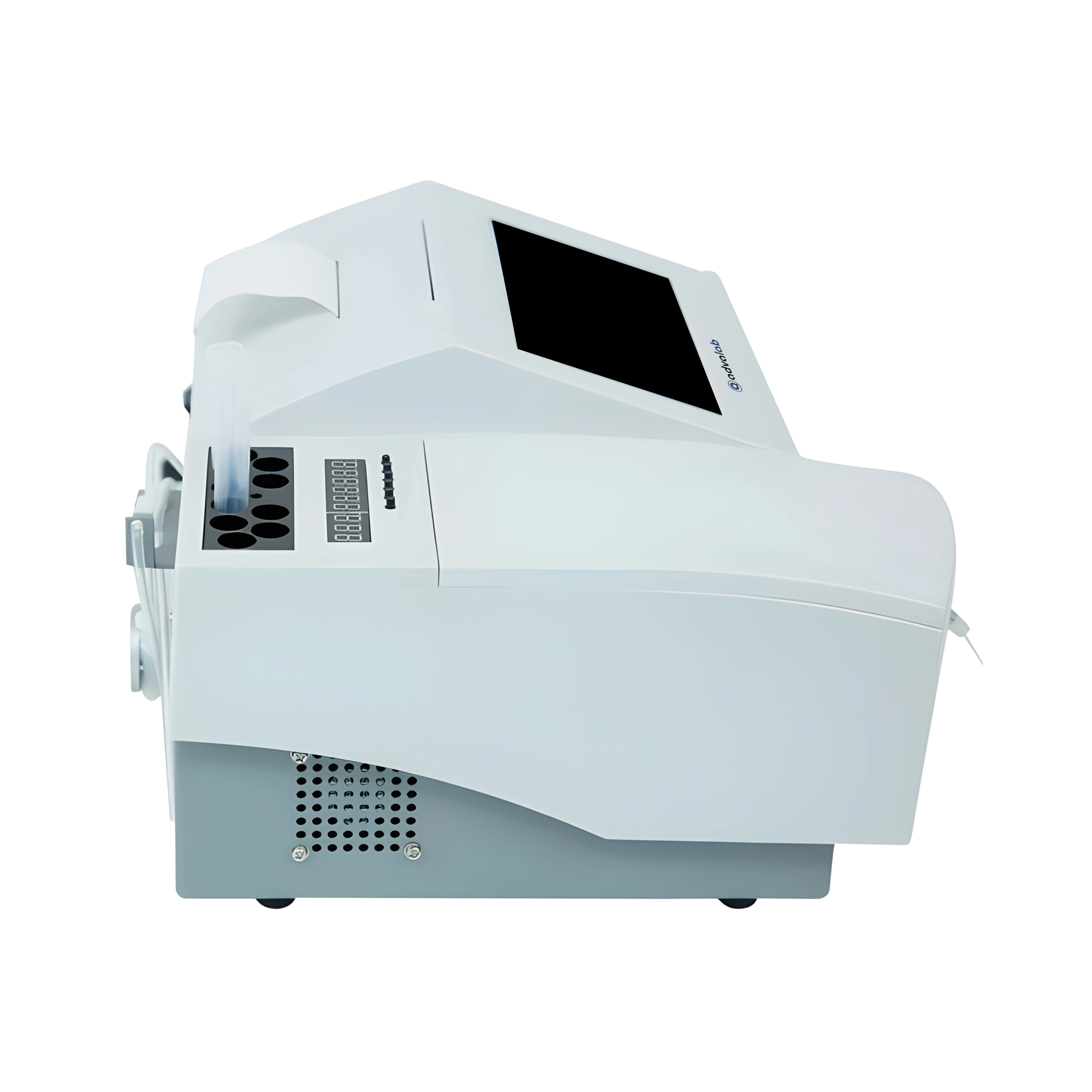
| Sample volume | 0 to 3000µl (500µl recommended) |
| Light Source | 6V, 10W halogen lamp |
| Wavelength filters | 340 nm, 405 nm, 492 nm, 510 nm, 546 nm, 578 nm, 630 nm and 1 free position |
| Wavelength precision | ±2 nm |
| Thermostatic Control |
Temperature: RT, 25℃, 30℃, 37℃ Precision: ±0.1℃ |
| Repeatability | < 1% CV |
| Absorbance precision |
Outside: 0.0001 Abs Inside: 0.00001Abs |
| Incubating position | 10 Incubation positions |
| Test mode |
Kinetic End point Two point Absorbance |
| Quality control curve | L-J quality control curve for every test item |
| Display | 7-inch colour LCD Touchscreen |
| Storage | 10000 |
| Printer | Internal thermal sensitive printer |
| Interface | RS-232 |
| Working Environment Temperature | 0℃ to 40℃ |
| Working Environment Humidity | 80% |
| Dimension (L × W × H) | 340 × 270 × 160 mm |
| Packaging Dimensions | 340x270x160mm |
| Net Weight | 5 kg |
| Gross Weight | 5 kg |
Semi-Automatic Chemistry Analyzer is used for a variety of clinical tests, including liver function, kidney function, lipid profile, and cardiac markers. It supports enzyme assays, electrolyte analysis, and therapeutic drug monitoring in medical laboratories.


1. What is a Semi-Automatic Chemistry Analyzer ADSCA-501?
Semi-Automatic Chemistry Analyzer ADSCA-501 is a laboratory instrument used to measure chemical substances in blood and other biological samples. It requires manual steps like sample and reagent loading but performs automatic photometric readings and calculations. Commonly used in clinical labs, it supports tests such as liver function, renal function, and lipid profiles. It is compact, cost-effective, and user-friendly making them ideal for small to medium-sized labs.
2. What types of tests does Semi-Automatic Chemistry Analyzer ADSCA-501 can perform?
Semi-Automatic Chemistry Analyzer ADSCA-501 can perform a wide range of clinical chemistry tests. These include liver function tests (LFT), kidney/renal function tests (RFT), and lipid profiles. It also handles blood glucose, cardiac markers, enzyme assays, and electrolyte analysis. The analyzer supports both routine and specialized biochemical tests. Its flexibility makes it suitable for use in hospitals, clinics, and research labs.
3. What is the role of the light source in Semi-Automatic Chemistry Analyzer ADSCA-501?
The 6V, 10W halogen lamp serves as the primary light source in Semi-Automatic Chemistry Analyzer ADSCA-501 that is essential for photometric detection. It emits light that passes through the sample to measure absorbance at specific wavelengths. This absorbance is used to calculate the concentration of analytes in the sample. A stable and accurate light source ensures reliable and precise test results. It also include a hibernate function to extend lamp life and save energy.
4. What is the role of the L-J quality control curve in Semi-Automatic Chemistry Analyzer ADSCA-501?
Semi-Automatic Chemistry Analyzer ADSCA-501 has L-J (Levey-Jennings) quality control curve that helps to monitor the precision and accuracy of test results. It visually displays control data over time to detect trends, shifts, or errors. Each test item is tracked with its own L-J curve for better quality assurance. This supports early identification of instrument or reagent issues. It’s an essential tool for maintaining consistent laboratory performance.
5. What is the wavelength range in Semi-Automatic Chemistry Analyzer ADSCA-501 and how accurate is it?
Semi-Automatic Chemistry Analyzer ADSCA-501 uses 7 fixed wavelength filters that are 340?nm, 405?nm, 492?nm, 510?nm, 546?nm, 578?nm, and 630?nm, plus one free position. These wavelengths cover the common absorbance needs for biochemical assays. The wavelength precision is ±2?nm, ensuring reliable and consistent measurements. This level of accuracy supports sensitive detection of analytes. It helps deliver stable results for both clinical and research applications.
6. What is a Semi-Automatic Chemistry Analyzer ADSCA-501?
Semi-Automatic Chemistry Analyzer ADSCA-501 is a laboratory instrument used to measure chemical substances in blood and other biological samples. It requires manual steps like sample and reagent loading but performs automatic photometric readings and calculations. Commonly used in clinical labs, it supports tests such as liver function, renal function, and lipid profiles. It is compact, cost-effective, and user-friendly making them ideal for small to medium-sized labs.
7. What types of tests does Semi-Automatic Chemistry Analyzer ADSCA-501 can perform?
Semi-Automatic Chemistry Analyzer ADSCA-501 can perform a wide range of clinical chemistry tests. These include liver function tests (LFT), kidney/renal function tests (RFT), and lipid profiles. It also handles blood glucose, cardiac markers, enzyme assays, and electrolyte analysis. The analyzer supports both routine and specialized biochemical tests. Its flexibility makes it suitable for use in hospitals, clinics, and research labs.
8. What is the role of the light source in Semi-Automatic Chemistry Analyzer ADSCA-501?
The 6V, 10W halogen lamp serves as the primary light source in Semi-Automatic Chemistry Analyzer ADSCA-501 that is essential for photometric detection. It emits light that passes through the sample to measure absorbance at specific wavelengths. This absorbance is used to calculate the concentration of analytes in the sample. A stable and accurate light source ensures reliable and precise test results. It also include a hibernate function to extend lamp life and save energy.
9. What is the role of the L-J quality control curve in Semi-Automatic Chemistry Analyzer ADSCA-501?
Semi-Automatic Chemistry Analyzer ADSCA-501 has L-J (Levey-Jennings) quality control curve that helps to monitor the precision and accuracy of test results. It visually displays control data over time to detect trends, shifts, or errors. Each test item is tracked with its own L-J curve for better quality assurance. This supports early identification of instrument or reagent issues. It’s an essential tool for maintaining consistent laboratory performance.
10. What is the wavelength range in Semi-Automatic Chemistry Analyzer ADSCA-501 and how accurate is it?
Semi-Automatic Chemistry Analyzer ADSCA-501 uses 7 fixed wavelength filters that are 340?nm, 405?nm, 492?nm, 510?nm, 546?nm, 578?nm, and 630?nm, plus one free position. These wavelengths cover the common absorbance needs for biochemical assays. The wavelength precision is ±2?nm, ensuring reliable and consistent measurements. This level of accuracy supports sensitive detection of analytes. It helps deliver stable results for both clinical and research applications.
11. What are Semi-Automatic Chemistry Analyzers?
Semi-Automatic Chemistry Analyzers are laboratory instrument used to perform biochemical tests on samples like blood or urine. Unlike fully automatic analyzers, they require some manual steps, such as sample preparation and reagent handling. These units improve testing accuracy and efficiency compared to manual methods. They are commonly used in clinics and research labs for reliable diagnostic support.
12. What is the working principle of Semi-Automatic Chemistry Analyzers?
Semi-Automatic Chemistry Analyzers work by mixing patient samples with specific reagents to trigger chemical reactions. They measure changes in light absorbance or color intensity to determine the concentration of substances in the sample. The operator manually loads samples and reagents but the machine controls incubation time and measurement. Results are displayed digitally and can be stored or printed.
13. What are the common applications of a Semi-Automatic Chemistry Analyzers?
Semi-Automatic Chemistry Analyzers are commonly used for biochemical testing in clinical labs, hospitals, and research facilities. They perform tests such as enzyme analysis, electrolyte measurement, protein quantification, and metabolic screening. These applications help to diagnose diseases, monitor patient health, and support medical research. Such systems are ideal for settings that require accurate, reliable testing without full automation. Their flexibility makes them suitable for a wide range of diagnostic purposes.
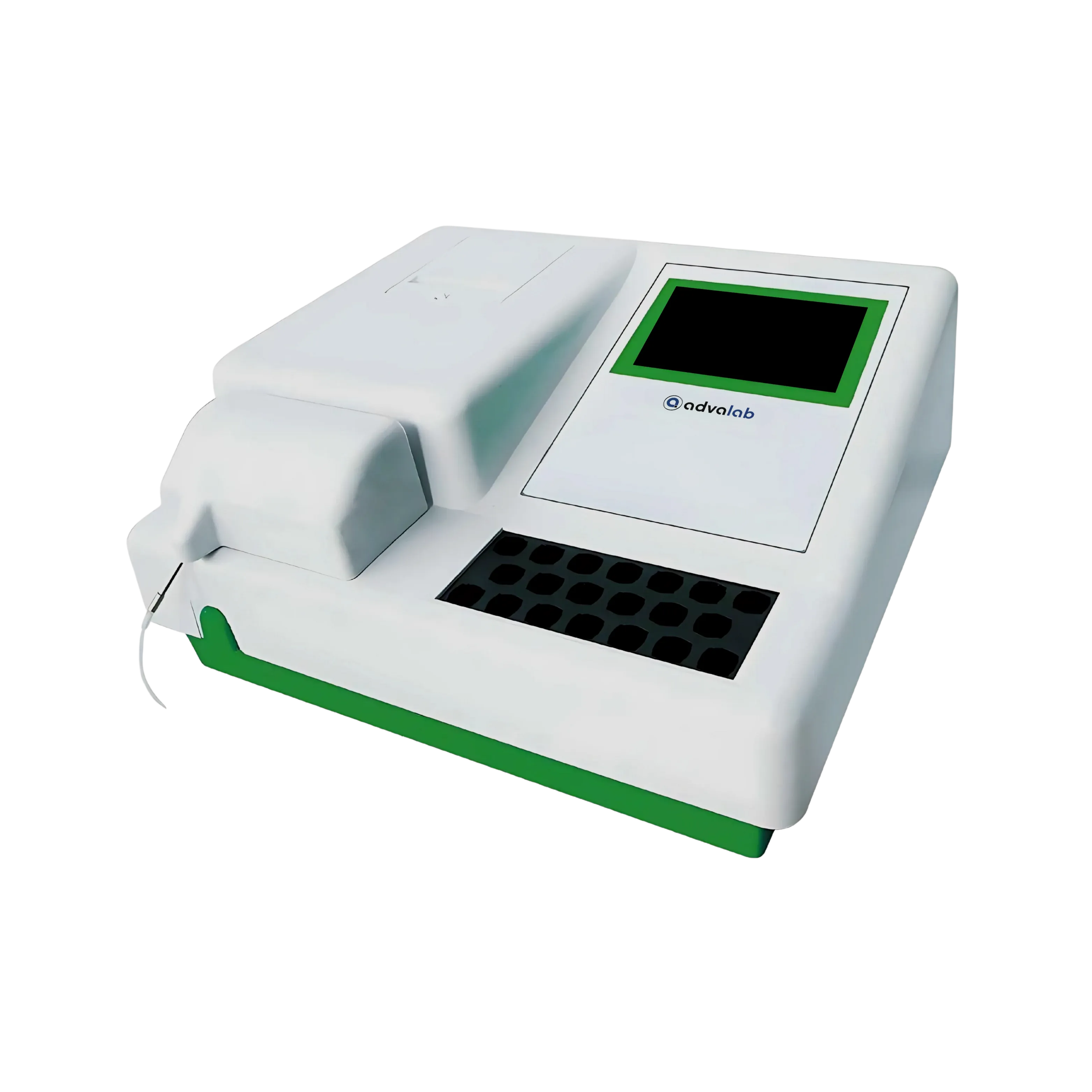
| Measuring System |
Measuring Range: 0 to 3.000 OD Method: End Point, Fixed Time, Multistandard, Bichromatic and Immunoturbidimetry Photometric linearity: ±2% (0 to 3.000 OD) Photometric Accuracy: ±2% (0 to 3.000 OD) |
| Photometric System |
Light source: 6V/10W halogen lamp; Standby function Filters: 340 nm, 405 nm, 492 nm, 510 nm, 546 nm, 578 nm, 620 nm and 2 more open filters available Wavelength Accuracy: ±2nm |
| Thermostatic Control |
Temperature: 25℃, 30℃, 37℃ Precision: ±0.1℃ |

| Throughput: | 200 tests/hour |
| Sample Volume: | 2 to 70µl |
| Reagent Volume: | 20 to 350 µl |