
| Sample Volume | 1 to 100µl, 0.1µl / step |
| Reagent Position | 2 × 40 |
| Reagent Volume R1 | 1 to 400 µl, 1µl / step |
| Reagent Volume R2 | 1 to 400 µl, 1µl / step |
| Wavelength | 340 to 810nm |
| Throughput 1 Reagent | 400 tests/hour |
| Throughput 2 Reagent | 400 tests/hour |
| Reaction Time | 0 to 999 seconds |
| Assay Items | 80 Assay |
| Operation | Random access |
| Reading System | Direct Reading System |
| Method |
End Point Kinetic Fixed Time Immunoturbidimetric 1 to 2 reagent Multistandard Reagent / serum blank |
| Reagent / Sample Probe |
With liquid level sensor Collision sensor Teflon coating Automatic washing plastic |
| Washing | 8 Channel automatic washing system for reaction cuvette |
| Calibration |
Linear Non- linear Multi-standard K factor |
| Sample Dilution / Retest | Sample can be diluted and rested if results are out of range or sample is insufficient. Also with calibrator auto diluting function. |
| Light Source | Halogen Lamp |
| Absorbance Resolution | 0.0001 A |
| Absorbance Accuracy | ± 0.0003A (0 to 2.5 A) |
| Repeatability (CV %) | ≤ 2 % |
| Quality Control | Levy Jennings quality control Program at 3 levels |
| Dimensions (L× B × H) | 1000 × 850 × 700 mm |
| Weight | 137 kg |
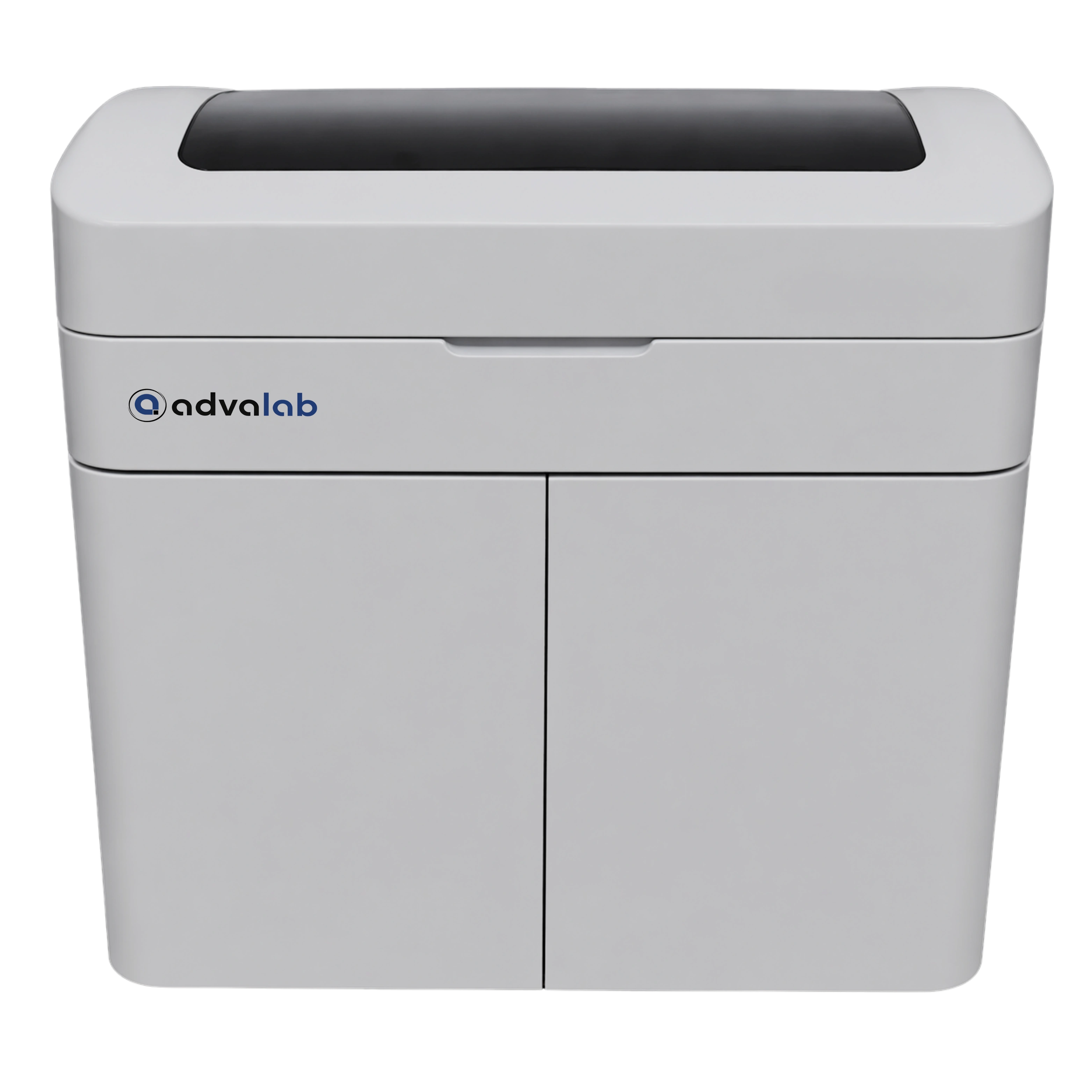
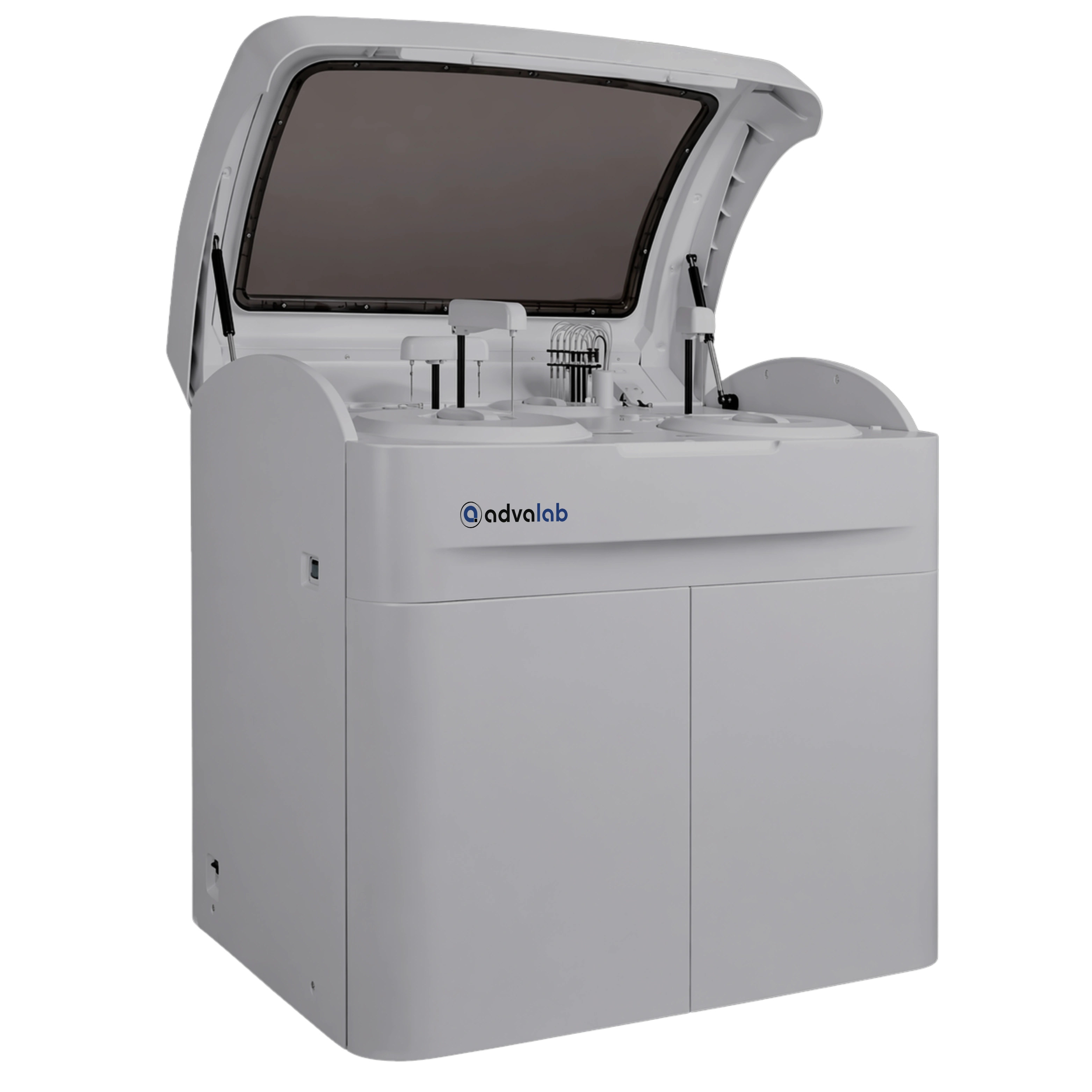
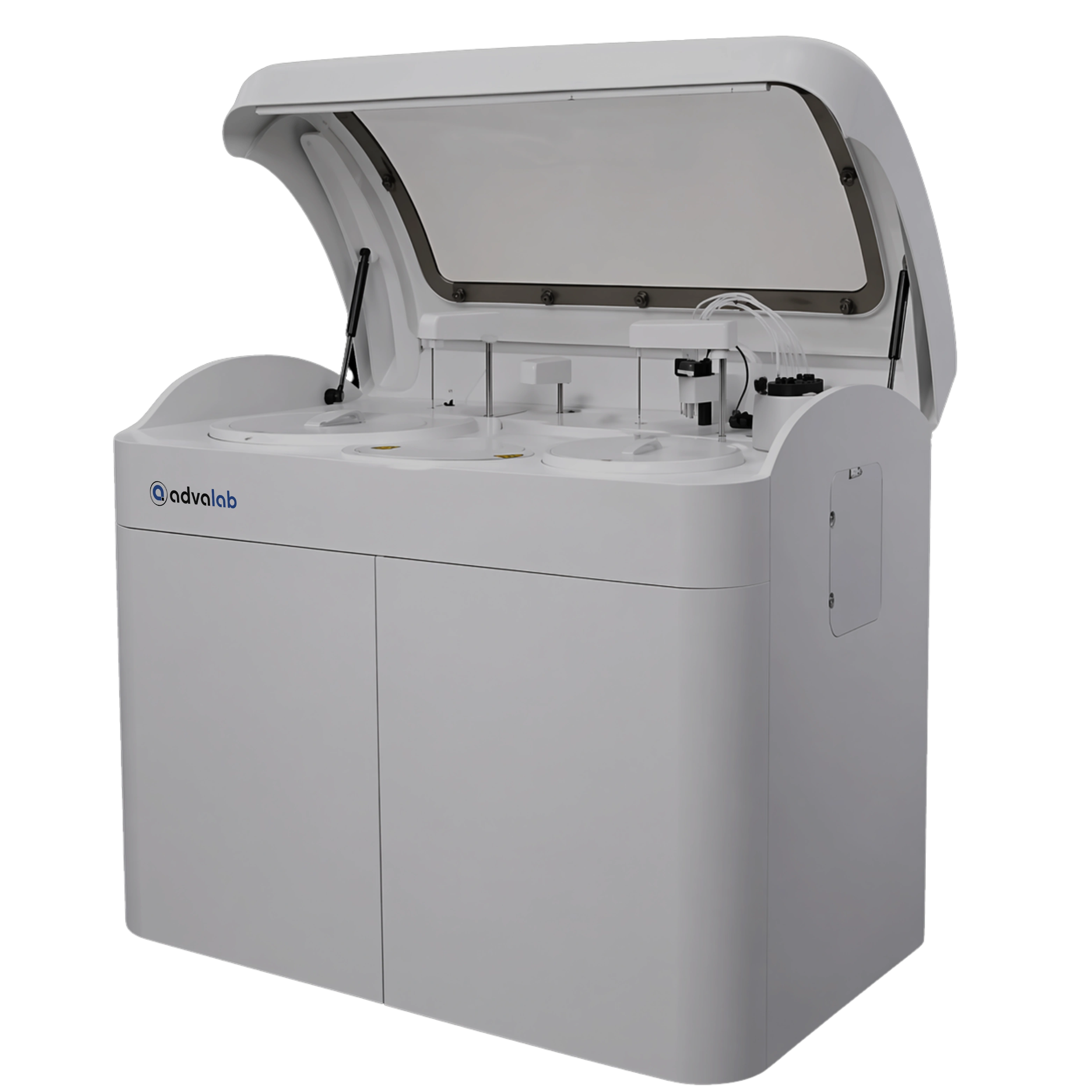
Automatic Biochemistry Analyzer ADAB-503 is essential in clinical labs for testing of blood, urine, and serum to aid in disease diagnosis and patient monitoring. It is used to evaluate biochemical markers in samples for clinical assessment and treatment planning.
1. What is the significance of an absorbance resolution of 0.0001A in Automatic Biochemistry Analyzer ADBCA-503?
An absorbance resolution of 0.0001A indicates that Automatic Biochemistry Analyzer ADBCA-503 has ability to detect extremely small changes in light absorbance as it passes through a sample. This high resolution ensures greater accuracy and sensitivity in detecting subtle variations in analyte concentrations. It allows the system to produce precise and reproducible results, even in assays with minimal color change or optical density variation.
2. How much is repeatability in Automatic Biochemistry Analyzer ADBCA-503, and why is it important?
Repeatability in the Automatic Biochemistry Analyzer ADBCA-503 ensures consistent results for the same sample under identical conditions. It provides a coefficient of variation (CV) of ? 2%, indicating high precision. Such accuracy is vital for reliable disease diagnosis and patient care. Consistent test results are essential for monitoring treatment progress. This level of precision supports clinical decision-making in laboratories.
3. What is the Importance of Quality Control at 3 levels in Automatic Biochemistry Analyzer ADBCA-503?
Quality control (QC) at three levels that is low, normal, and high is a critical practice in biochemistry laboratories to ensure the accuracy, reliability, and consistency of test results across the full analytical range. This method evaluates the Automatic Biochemistry Analyzer ADBCA-503 performance in detecting both low concentrations, typical values, and high levels of analytes in biological samples.
4. What is the role of a halogen lamp as the light source in Automatic Biochemistry Analyzer ADBCA-503?
The halogen lamp in Automatic Biochemistry Analyzer ADBCA-503 serves as the primary light source used in photometric analysis. It emits a broad spectrum of light, particularly in the visible and near-infrared range, which is essential for accurately measuring the absorbance of various biochemical reactions occurring in the test cuvettes. The consistent and stable light output of a halogen lamp allows the system to detect subtle changes in light intensity after it passes through the sample.
5. What are the key functions of the Automatic Biochemistry Analyzer ADBCA-503, and why is it important for laboratory testing?
Automatic Biochemistry Analyzer ADBCA-503 automatically measures biochemical substances in samples like blood, serum, plasma, and urine. It operates across a wavelength range of 340 nm to 810 nm for accurate detection. This Analyzer delivers fast, reliable, and consistent results essential for diagnostics. It reduces manual workload and minimizes human errors in the lab. This improves efficiency and supports timely clinical decision-making.
6. What are Automatic Biochemistry Analyzers?
Automatic Biochemistry Analyzers are fully automated laboratory instrument used to measure chemical substances in biological samples. They reduce manual effort and increase accuracy and efficiency in clinical diagnostics. Designed to support a wide range of biochemical tests essential for disease diagnosis and monitoring. Such Analyzers is commonly used in hospitals, diagnostic labs, and research institutions.
7. What are the advanced features that make Automatic Biochemistry Analyzers efficient and reliable in laboratory settings?
Automatic Biochemistry Analyzers offer reagent temperature regulation to ensure stable reactions. They include liquid level detection for precise sampling and collision safety to protect internal components. Analyzers have high-performance cuvette washer that maintains cleanliness and prevents cross-contamination. These features collectively enhance testing accuracy, safety, and operational efficiency.
8. What makes Automatic Biochemistry Analyzers enhanced?
Automatic Biochemistry Analyzers feature full automation, reducing manual steps and improving accuracy. They have advanced software platforms enable efficient data management and LIS integration. Eco-friendly features like waste reduction and sustainable reagent use improve lab sustainability. Overall, these Analyzers deliver faster, safer, and more reliable diagnostic results in high-throughput environments.
| Sample Volume | 1 to 100µl, 0.1µl / step |
| Reagent Position | 2 × 40 |
| Reagent Volume R1 | 1 to 400 µl, 1µl / step |
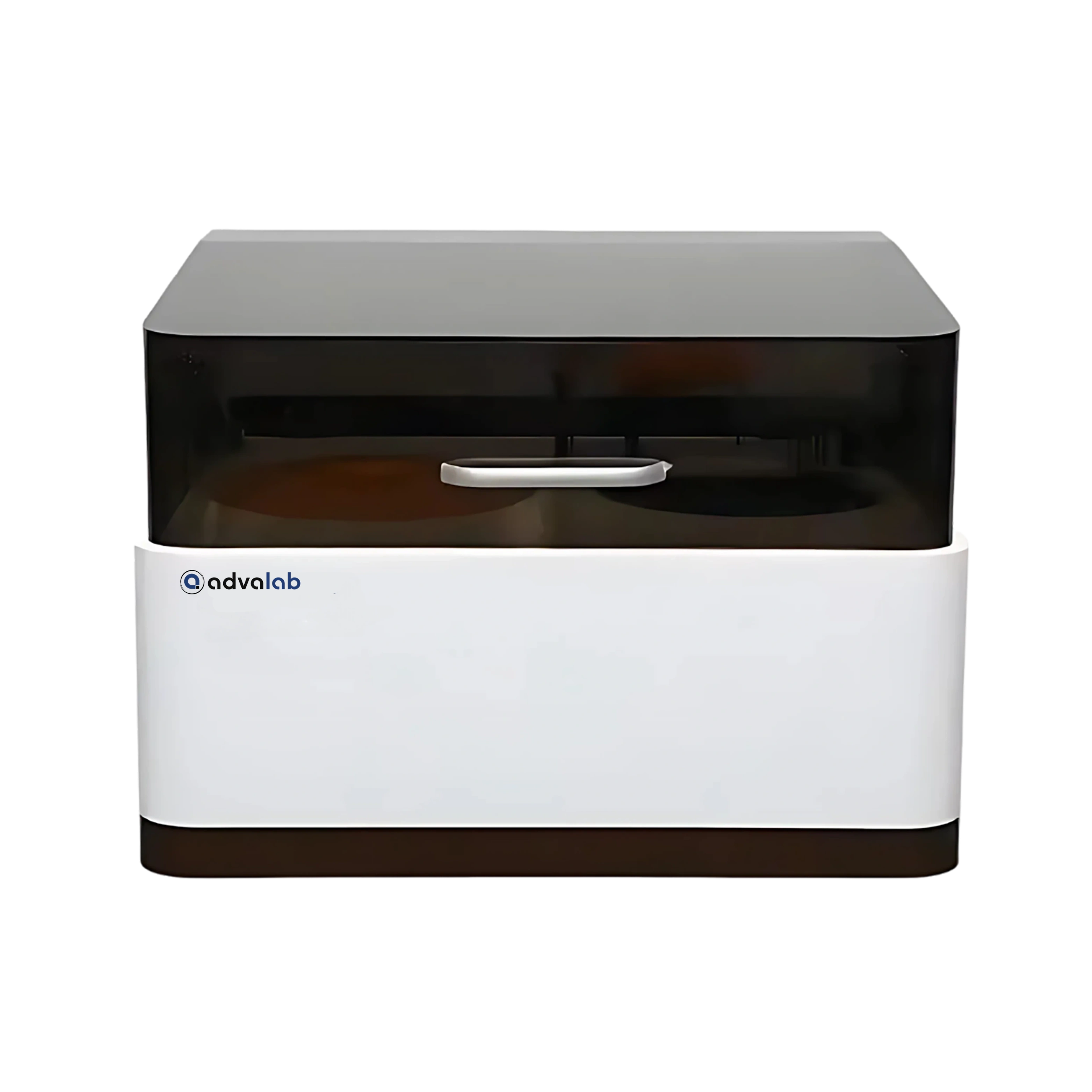
| Sample Volume | 1 to 100µl, 0.1µl / step |
| Reagent Position | 2 × 36 |
| Reagent Volume R1 | 1 to 400 µl, 1µl / step |
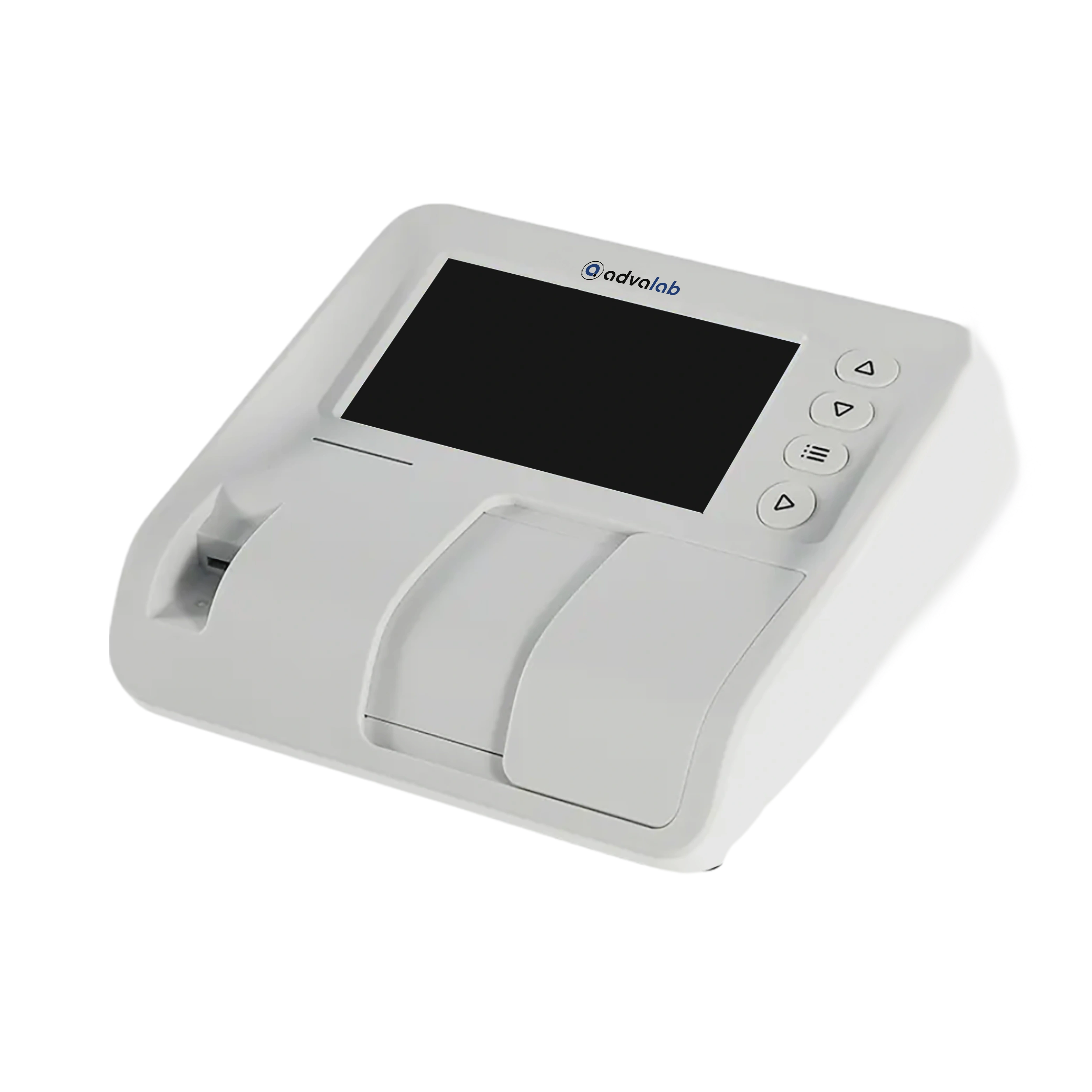
| Sample Type: | Serum, whole Blood, Plasma |
| Sample Volume: | 45 µl |
| Detection Time: | ≤3 minutes |