

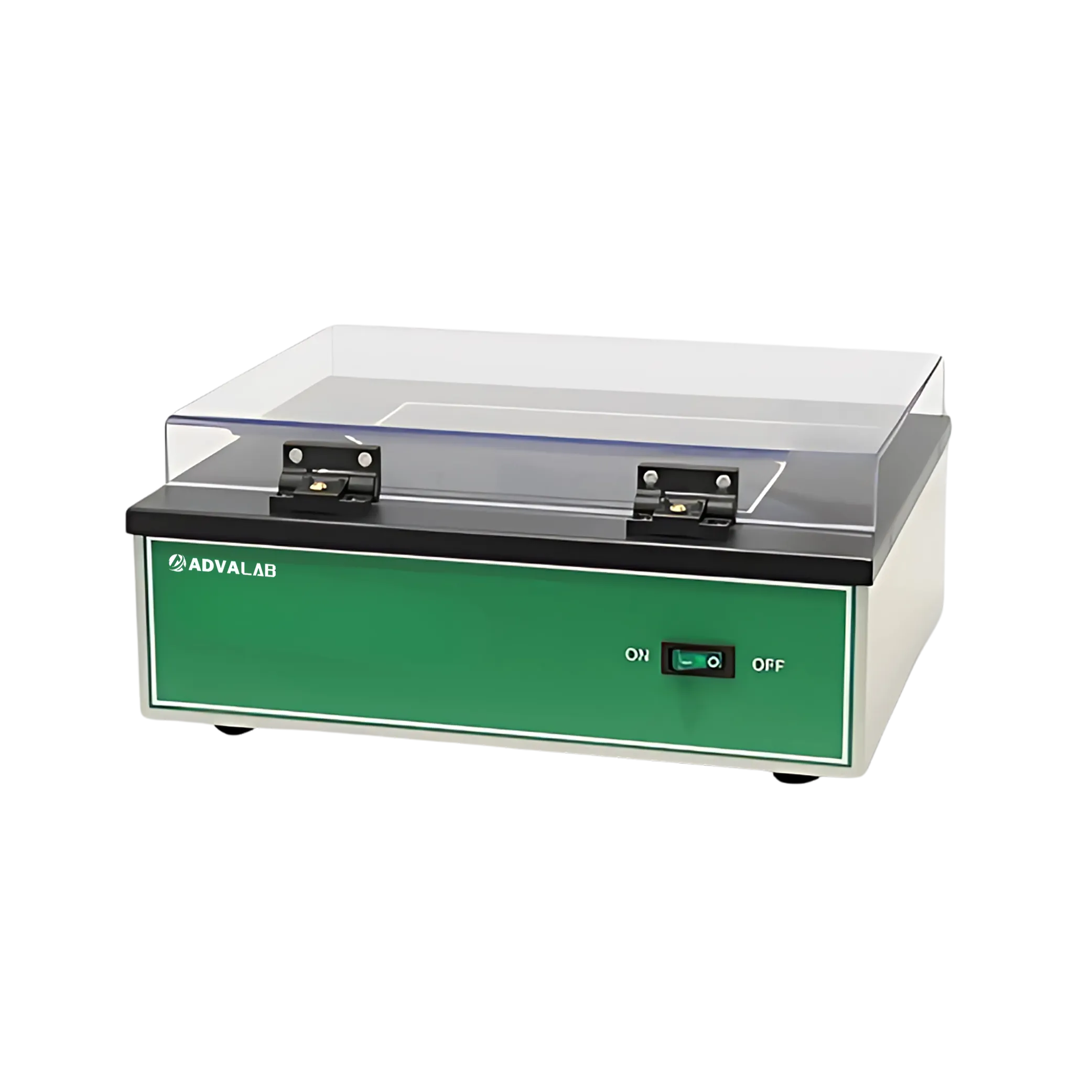

| Transmission size (W×L) | 200×150 mm |
| Source ultraviolet wavelength (nm) | 302 nm |
| Transmission UV lamp power (W) | 8 W |
| Dimensions (L×W×H) | 325×265×150 mm |
| Weight (kg) | 4.6 kg |
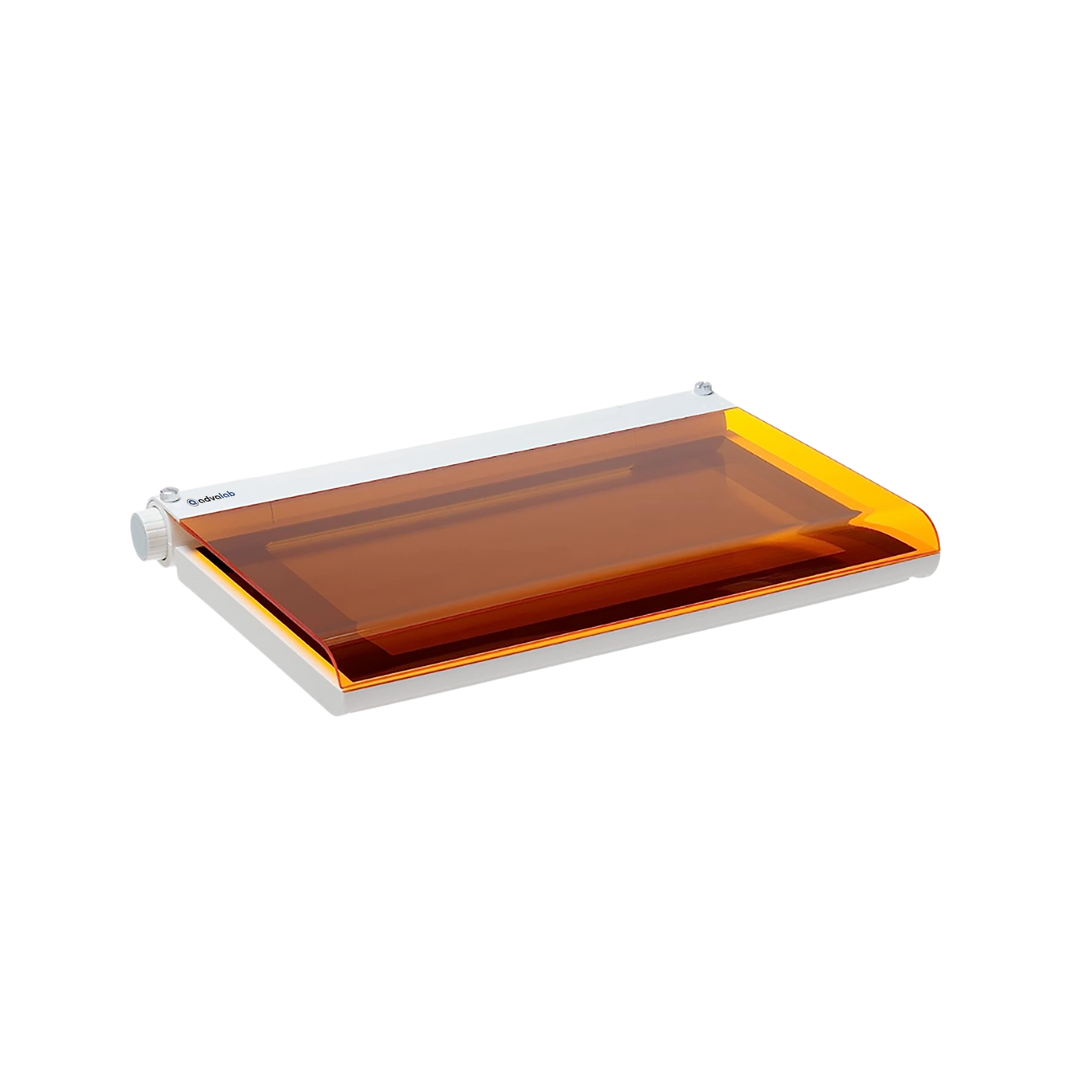
The UV Transilluminator ADUT-501 is used for visualizing nucleic acids and protein in agarose and polyacrylamide gels. Being compatible with various dyes, it is ideal for diverse molecular biology experiments.

1. What is the primary use of the UV Transilluminator ADUT-501?
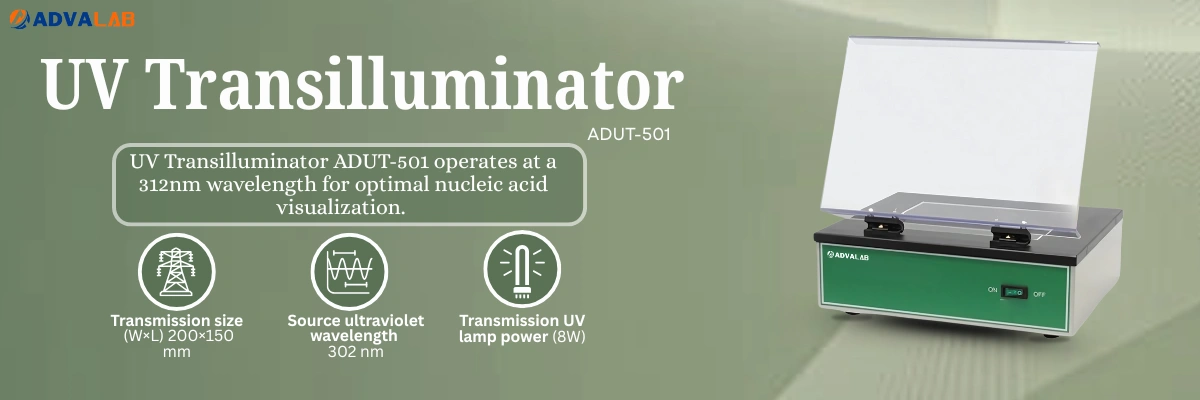
The UV Transilluminator ADUT-501 is primarily used for the visualization of nucleic acids such as DNA and RNA after electrophoresis. It works best with gels stained with fluorescent dyes like ethidium bromide, SYBR Green, or GelRed. The 312nm UV wavelength excites these dyes to fluoresce clearly, making bands visible for analysis. This makes it essential for routine gel documentation and analysis in molecular biology labs.
2. How does the UV Transilluminator ADUT-501 compare with higher wattage transilluminators?
While the UV Transilluminator ADUT-501 uses an 8W lamp, it provides consistent illumination using quartz UV lamps and filter glass. Higher wattage models may be brighter, but the UV Transilluminator ADUT-501 meets typical lab needs effectively. Its lower wattage supports energy efficiency and longer lamp life. This makes it a cost-effective and reliable lab tool.
3. What type of UV wavelength does the UV Transilluminator ADUT-501 emit, and why is this important?
The UV Transilluminator ADUT-501 emits UV light at 312nm, which is in the UV-B range. This wavelength is optimal for exciting common fluorescent dyes like ethidium bromide and SYBR Green. It offers strong fluorescence without causing excessive damage to nucleic acids. This makes it suitable for both visualization and DNA recovery applications.
4. What kind of samples can be viewed using UV Transilluminator ADUT-501?
The UV Transilluminator ADUT-501 is mainly used for viewing DNA and RNA in stained agarose or polyacrylamide gels. It also works with protein gels labeled with UV-reactive dyes. Additional applications include examining TLC plates and UV-reactive substances. Its versatility suits research, teaching, and quality control labs.
5. How does the protective screen of the UV Transilluminator ADUT-501 contribute to safe operation?
The UV Transilluminator ADUT-501 features a UV-blocking screen that protects the user's face and eyes. It allows clear gel viewing while minimizing harmful exposure. The screen is angle-adjustable, aiding in gel excision and analysis. It enhances safety without requiring a separate face shield.
6. How does a UV Transilluminator work?
The device emits UV light at specific wavelengths, typically 254 nm, 302 nm, or 365 nm. Fluorescent dyes like ethidium bromide or SYBR Green absorb this light and emit visible fluorescence. This fluorescence highlights the location of biomolecules in the gel. A viewing surface or protective hood allows safe observation of the glowing bands.
7. What are the advantages of using a UV Transilluminator in gel analysis?
UV Transilluminators provide high-contrast visualization of stained gels for clear detection of nucleic acids or proteins. They support accurate and fast analysis of electrophoresis results. Dual-wavelength models increase flexibility for different dyes and applications. Their efficiency enhances productivity in research and diagnostic workflows.
8. What is the difference between portable and bench-top UV Transilluminators?
Portable UV Transilluminators are compact and lightweight, ideal for fieldwork or limited lab space. Bench-top models offer a larger viewing area and more advanced features. Both types function similarly but differ in size and portability. The choice depends on specific workflow and space requirements.

| Emission Wavelength | 302 nm |
| Observation Area (L×W) | 150mm×120mm |
| LED Source | Built-in bottom UV LED light module |

| Emission Wavelength | 302 nm |
| Observation Area (L×W) | 200mm×130mm |
| LED Source | Bottom built-in UV LED light module |

| Transmission Wavelength | 302nm |
| Observation Area (L×W) | 195mm×145mm |
| UV Lamp Lifetime | Less than 1,500 hours |
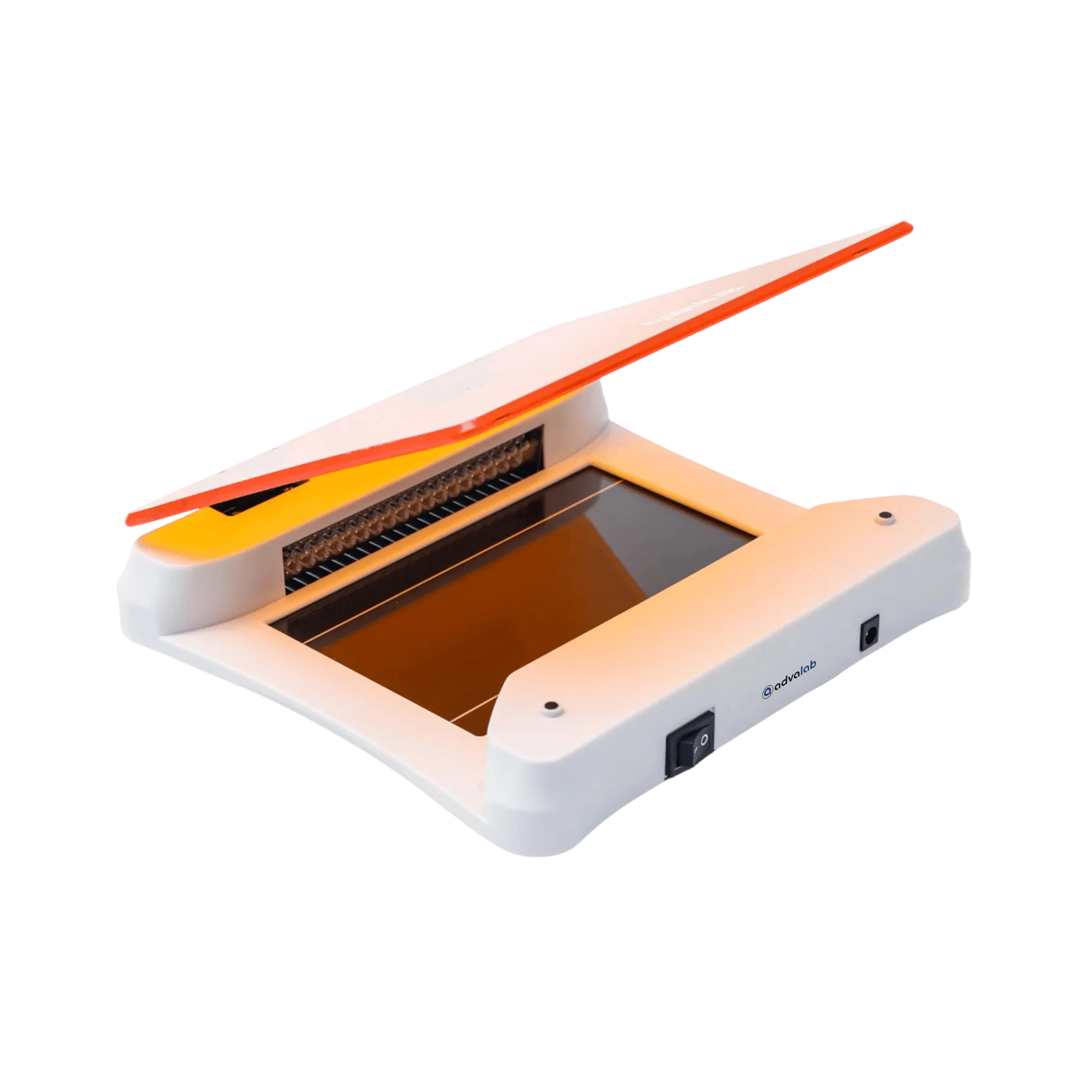
| Wavelength: | 470 nm |
| Maximum Gel Size: | 160 ×100 mm |
| LED Radiation Mode: | Double sides matrices |
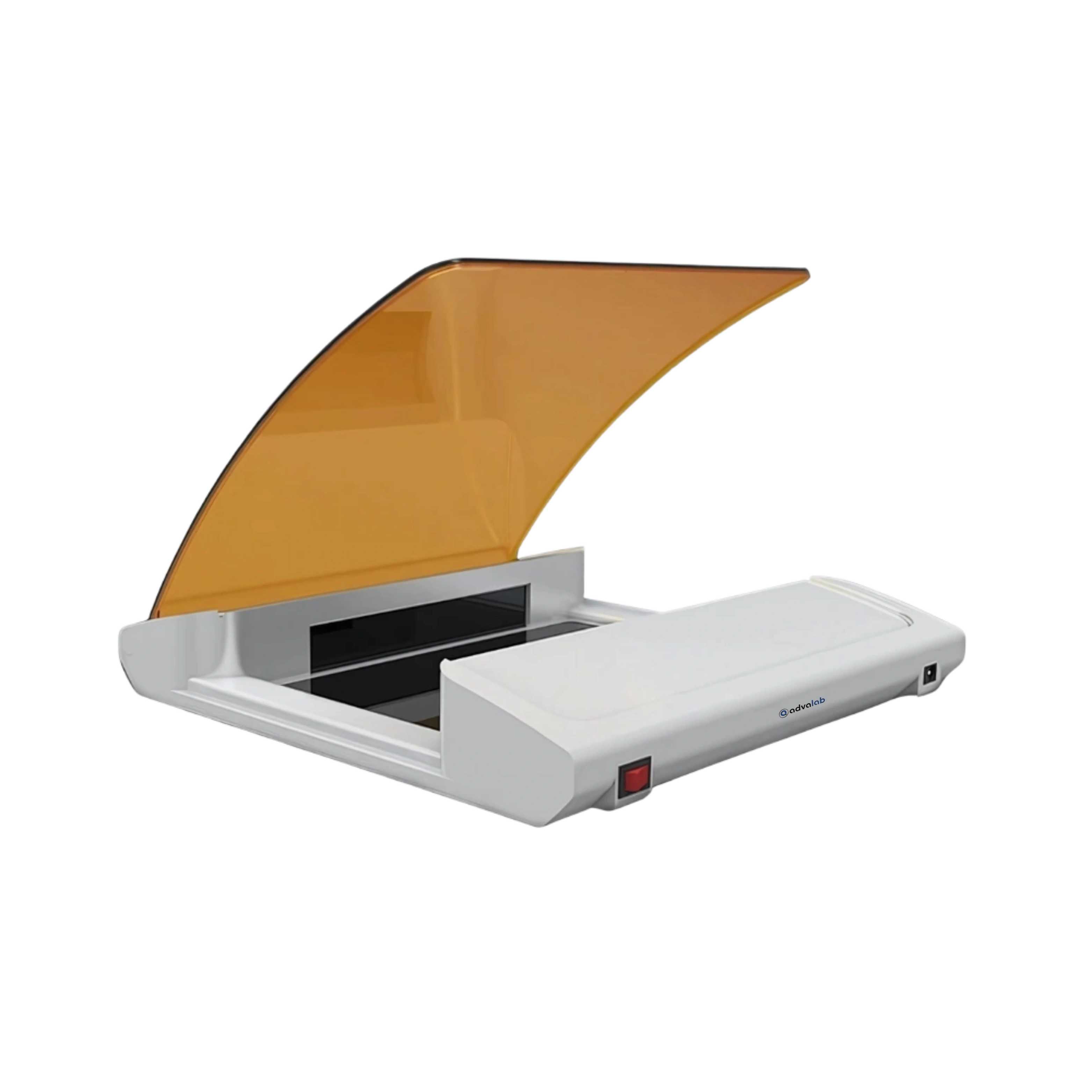
| Excitation Light Source: | 470 nm wavelength high-intensity blue light (144 LED array) |
| Detection Sensitivity: | DetMinimum detection limit of 0.5 ng |
| Transillumination Area : | 180 × 110 mm |
| Maximum Emission Wavelength: | 470 nm |
| Observation Area (L×W): | 210 × 120 mm |
| LED Source: | Bottom built-in blue LED light module |

| Maximum Emission Wavelength: | 470nm |
| Observation Area (L×W): | 210×120mm |
| LED Source: | Bottom built-in blue and white LED light module |