


| Emission Wavelength | 302 nm |
| Observation Area (L×W) | 200mm×130mm |
| LED Source | Bottom built-in UV LED light module |
| LED Lifetime | Less than 50,000 hours |
| Applicable Fluorescent Dyes | EtBr, SYBR Safe, SYBR Gold, SYBR Green I/II, SYPRO Ruby, SYPRO Orange, SYPRO Red, Coomassie Fluor™ Orange stains, GelRed, Redsafe |
| Base | 30 mm thickness, stable aluminium alloy |
| Power Adapter | 12V 1A |
| Dimension (L×W×H) | 260×192×30 mm |
| Weight | 1.3kg |
UV Transilluminator ADUT-504 is used for visualizing DNA/RNA and protein gel electrophoresis results. It also allows safe and precise gel cutting during molecular biology experiments.


1. How uniform is the illumination on UV Transilluminator ADUT-504?
Bottom LED panel of UV Transilluminator ADUT-504 provides uniform brightness across the observation area, avoiding reflected light interference and ensuring that all gel bands are clearly visible for imaging or cutting.
2. Does UV Transilluminator ADUT-504 reduce harm to the user?
Yes, UV Transilluminator ADUT-504 concentrated LED lamp beads shorten radiation distance, reduce UV exposure risk, and minimize harm to the operator compared with traditional mercury lamps.
3. How easy is UV Transilluminator ADUT-504 to adjust observation settings?
On UV Transilluminator ADUT-504 light intensity and contrast can be adjusted via the built-in knob, allowing researchers to tailor illumination for gel thickness, dye type, and experimental conditions for optimal imaging.
4. Is UV Transilluminator ADUT-504 compatible with protein stains?
Yes, UV Transilluminator ADUT-504 effectively excites SYPRO dyes, Coomassie Fluor™ Orange, and other protein-specific stains, providing clear and accurate visualization of protein gels for research and analytical applications.
5. How is heat managed in UV Transilluminator ADUT-504?
UV Transilluminator ADUT-504 uses advanced superconducting heat dissipation technology, which efficiently removes heat without noise, maintaining a comfortable and stable experimental environment while protecting the device and samples during prolonged use.
6. How does a UV Transilluminator work?
The device emits UV light at specific wavelengths, typically 254 nm, 302 nm, or 365 nm. Fluorescent dyes like ethidium bromide or SYBR Green absorb this light and emit visible fluorescence. This fluorescence highlights the location of biomolecules in the gel. A viewing surface or protective hood allows safe observation of the glowing bands.
7. What are the advantages of using a UV Transilluminator in gel analysis?
UV Transilluminators provide high-contrast visualization of stained gels for clear detection of nucleic acids or proteins. They support accurate and fast analysis of electrophoresis results. Dual-wavelength models increase flexibility for different dyes and applications. Their efficiency enhances productivity in research and diagnostic workflows.
8. What is the difference between portable and bench-top UV Transilluminators?
Portable UV Transilluminators are compact and lightweight, ideal for fieldwork or limited lab space. Bench-top models offer a larger viewing area and more advanced features. Both types function similarly but differ in size and portability. The choice depends on specific workflow and space requirements.

| Transmission Wavelength | 302nm |
| Observation Area (L×W) | 195mm×145mm |
| UV Lamp Lifetime | Less than 1,500 hours |

| Transmission size (W×L) | 200×150 mm |
| Source ultraviolet wavelength (nm) | 302 nm |
| Transmission UV lamp power (W) | 8 W |

| Emission Wavelength | 302 nm |
| Observation Area (L×W) | 150mm×120mm |
| LED Source | Built-in bottom UV LED light module |
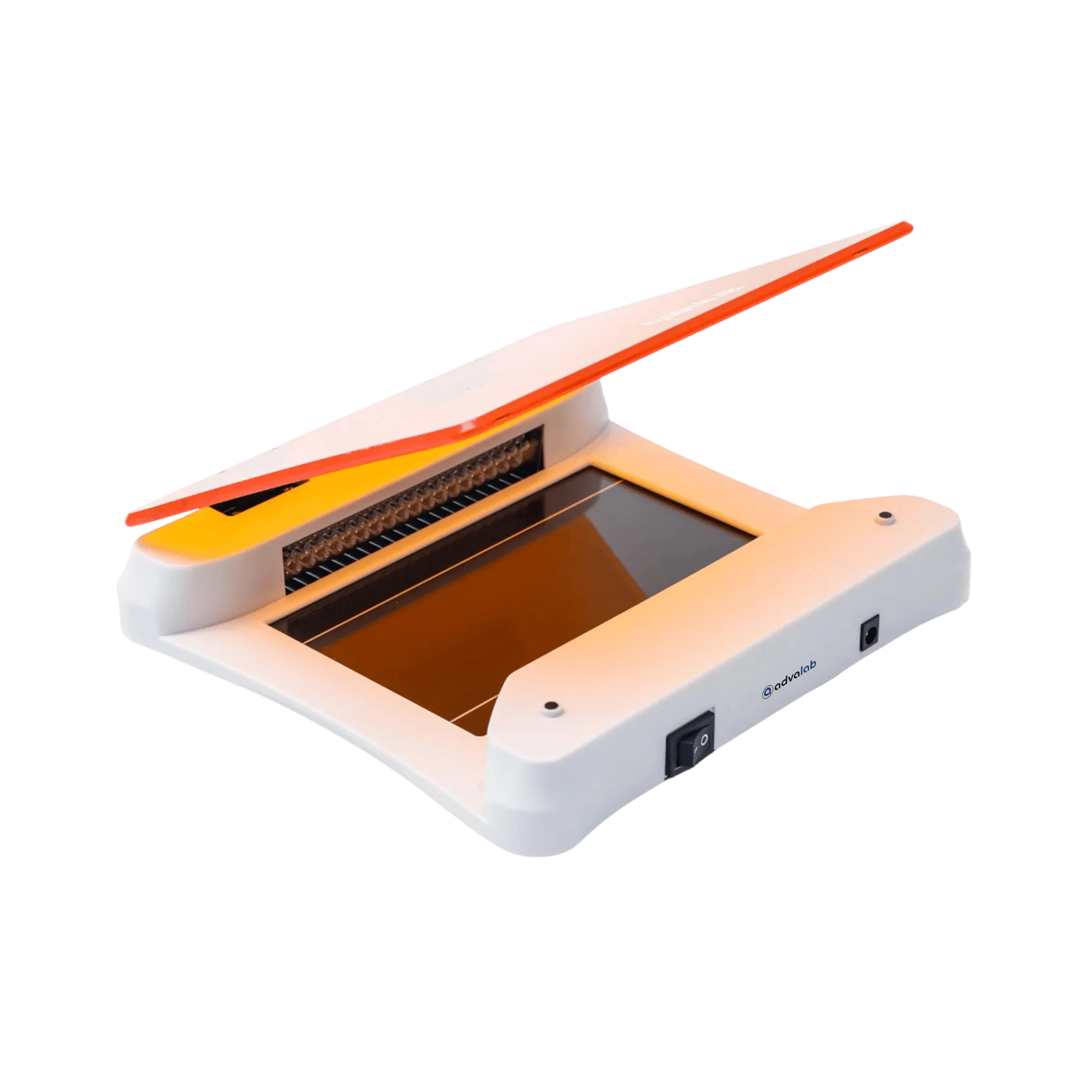
| Wavelength: | 470 nm |
| Maximum Gel Size: | 160 ×100 mm |
| LED Radiation Mode: | Double sides matrices |
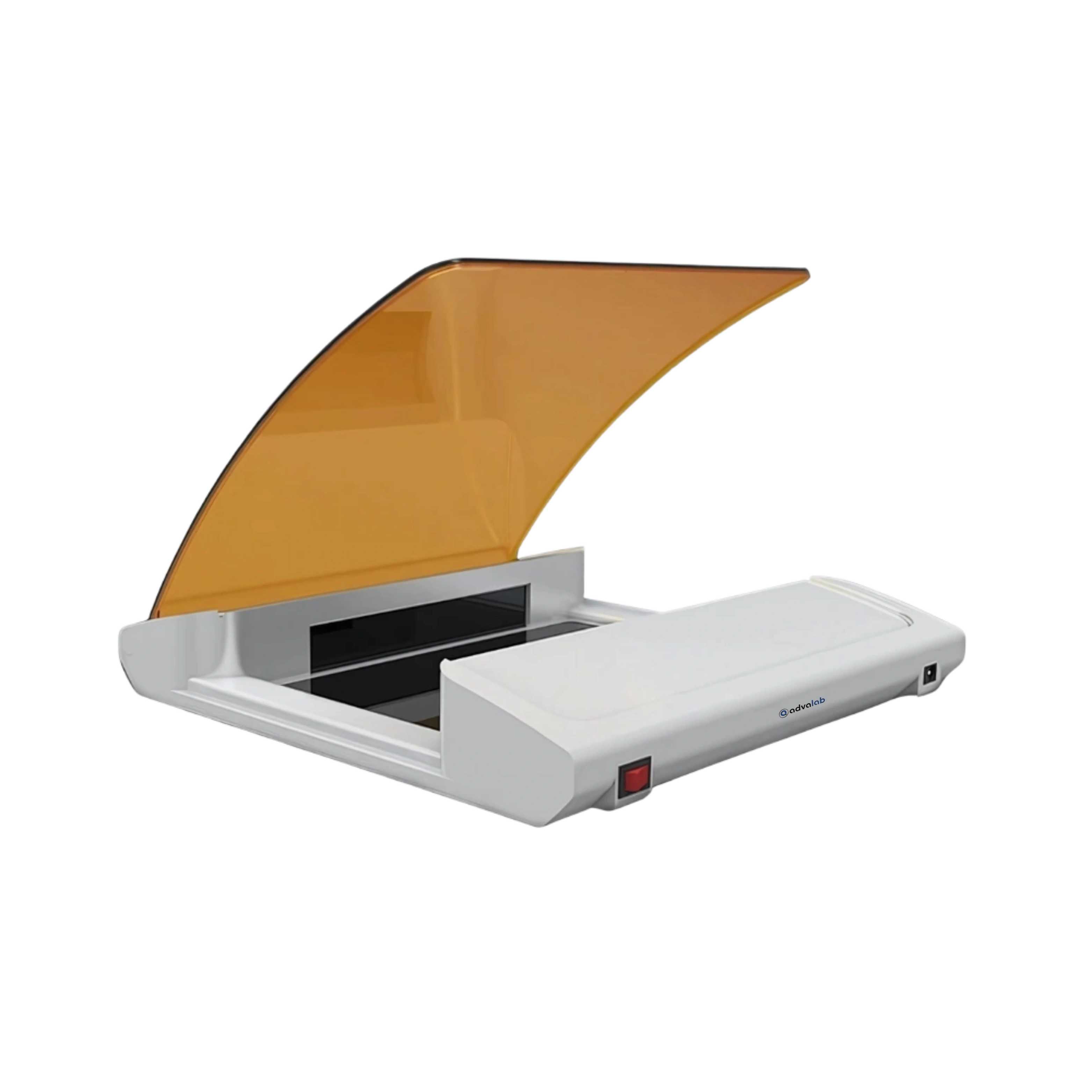
| Excitation Light Source: | 470 nm wavelength high-intensity blue light (144 LED array) |
| Detection Sensitivity: | DetMinimum detection limit of 0.5 ng |
| Transillumination Area : | 180 × 110 mm |
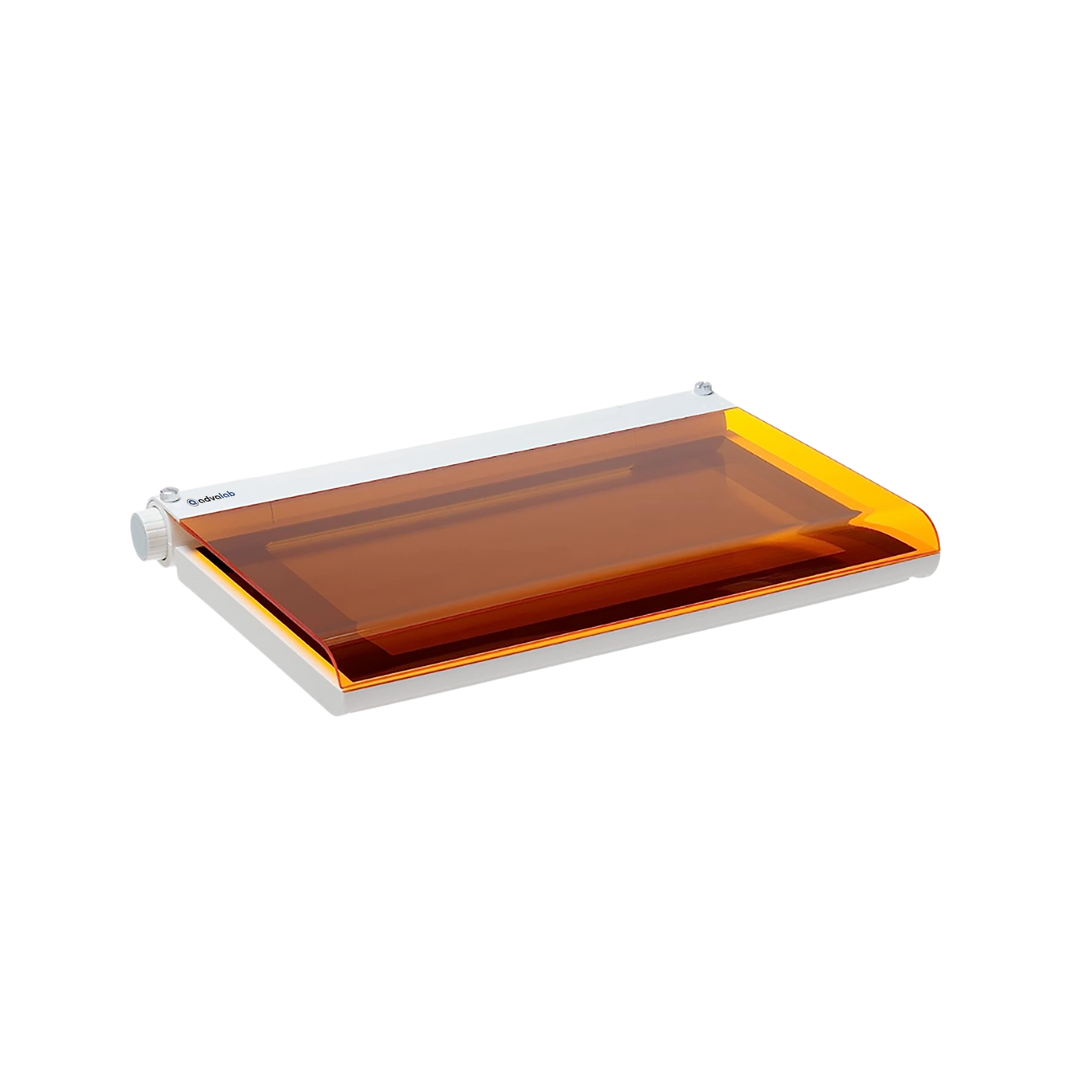
| Maximum Emission Wavelength: | 470 nm |
| Observation Area (L×W): | 210 × 120 mm |
| LED Source: | Bottom built-in blue LED light module |

| Maximum Emission Wavelength: | 470nm |
| Observation Area (L×W): | 210×120mm |
| LED Source: | Bottom built-in blue and white LED light module |