


| Transmission Wavelength | 302nm |
| Observation Area (L×W) | 195mm×145mm |
| UV Lamp Lifetime | Less than 1,500 hours |
| Protection Cover | Adjustable 0°to 180° for optimal UV protection |
| Transmission UV Lamp Power | 8W × 6 |
| Power Supply | 110V / 265V; 50/60 Hz |
| Dimension (L×W×H) | 335 × 190 × 120 mm |
| Weight | 5kg |
UV Transilluminator ADUT-502 is used for observing DNA and RNA gel electrophoresis results. It also allows precise cutting of gel bands for downstream molecular biology experiments.


1. Does UV Transilluminator ADUT-502 have a cooling system?
UV Transilluminator ADUT-502 is equipped with a built-in cooling fan that helps maintain a stable operating temperature. This prevents overheating, ensures consistent UV illumination, and prolongs the service life of the lamp and internal components, providing reliable long-term performance.
2. What are the key features of the filter glass in UV Transilluminator ADUT-502?
UV Transilluminator ADUT-502 features a special UV filter glass with high sensitivity and excellent permeability. It enhances the visibility of even faint DNA and RNA gel bands, ensures clear and accurate gel observation, and protects samples from excessive UV exposure.
3. How does the adjustable protection cover in UV Transilluminator ADUT-502 ensure UV safety?
UV Transilluminator ADUT-502 has an adjustable protection cover that can be positioned anywhere between 0° and 180°. This ensures optimal UV safety during operation, protects users from harmful exposure, and allows flexible positioning for convenient gel observation and handling.
4. What makes the power switch and supplies reliable on the UV Transilluminator ADUT-502?
UV Transilluminator ADUT-502 is equipped with a high-quality switching power supply and reliable power switch. This ensures stable operation, protects the internal components, and provides a long service life, allowing consistent and safe performance during extended laboratory use.
5. How does the precise sealing structure protect UV Transilluminator ADUT-502 and samples?
UV Transilluminator ADUT-502 features a precise sealing structure that effectively minimizes the risk of gel contamination and protects internal components from damage caused by leaks. This ensures reliable operation, maintains sample integrity, and prolongs the instrument’s lifespan.
6. How does a UV Transilluminator work?
The device emits UV light at specific wavelengths, typically 254 nm, 302 nm, or 365 nm. Fluorescent dyes like ethidium bromide or SYBR Green absorb this light and emit visible fluorescence. This fluorescence highlights the location of biomolecules in the gel. A viewing surface or protective hood allows safe observation of the glowing bands.
7. What are the advantages of using a UV Transilluminator in gel analysis?
UV Transilluminators provide high-contrast visualization of stained gels for clear detection of nucleic acids or proteins. They support accurate and fast analysis of electrophoresis results. Dual-wavelength models increase flexibility for different dyes and applications. Their efficiency enhances productivity in research and diagnostic workflows.
8. What is the difference between portable and bench-top UV Transilluminators?
Portable UV Transilluminators are compact and lightweight, ideal for fieldwork or limited lab space. Bench-top models offer a larger viewing area and more advanced features. Both types function similarly but differ in size and portability. The choice depends on specific workflow and space requirements.

| Emission Wavelength | 302 nm |
| Observation Area (L×W) | 200mm×130mm |
| LED Source | Bottom built-in UV LED light module |

| Emission Wavelength | 302 nm |
| Observation Area (L×W) | 150mm×120mm |
| LED Source | Built-in bottom UV LED light module |

| Transmission size (W×L) | 200×150 mm |
| Source ultraviolet wavelength (nm) | 302 nm |
| Transmission UV lamp power (W) | 8 W |
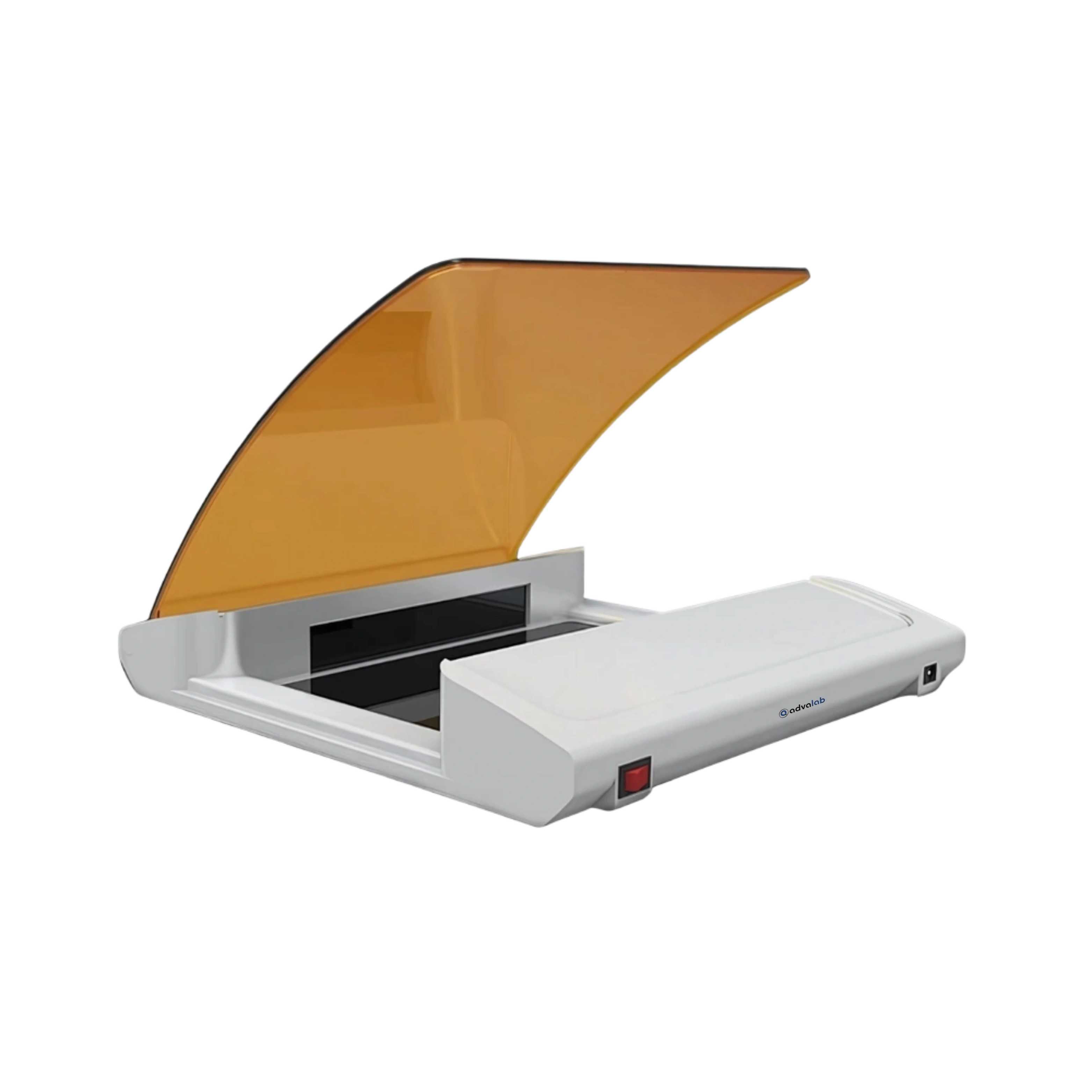
| Excitation Light Source: | 470 nm wavelength high-intensity blue light (144 LED array) |
| Detection Sensitivity: | DetMinimum detection limit of 0.5 ng |
| Transillumination Area : | 180 × 110 mm |
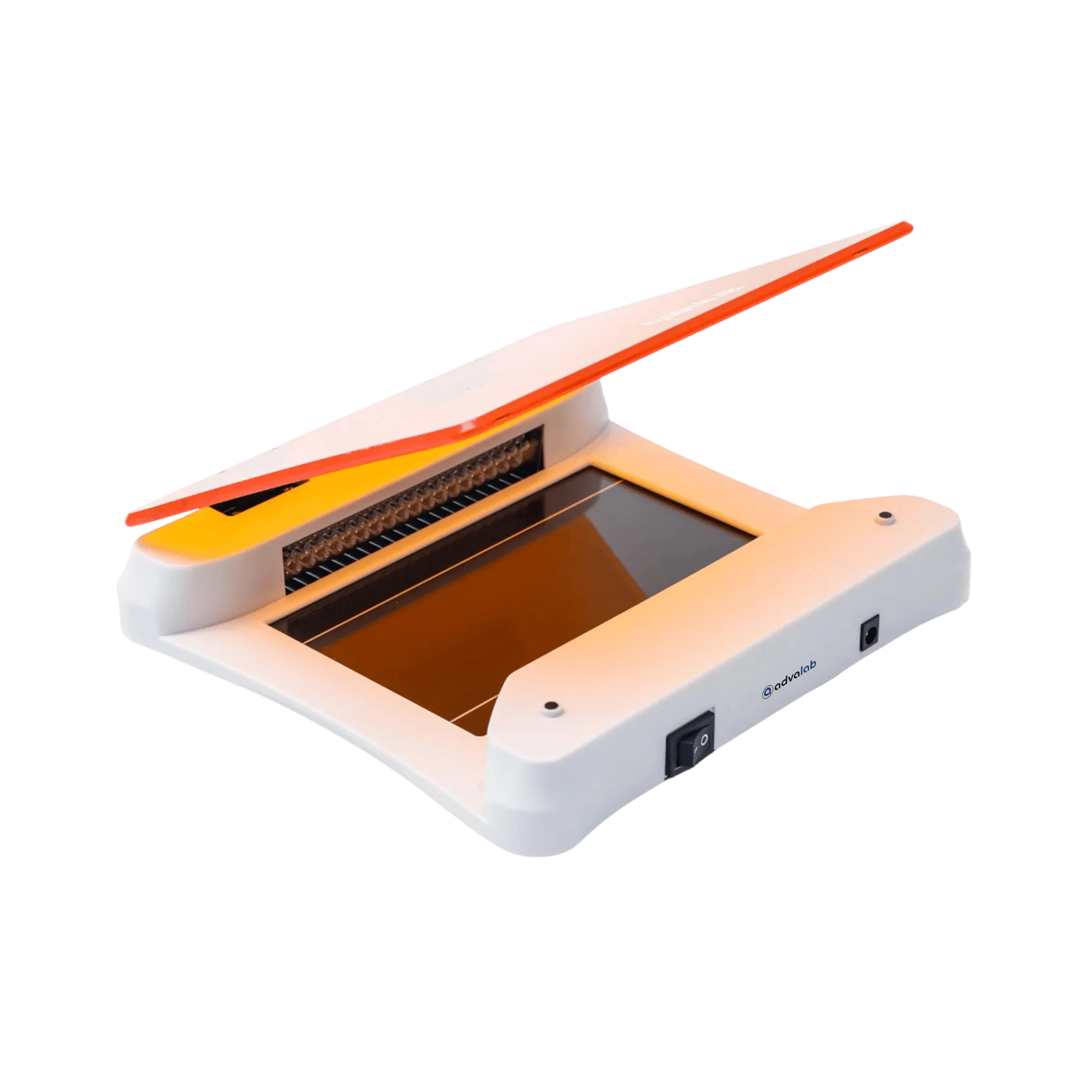
| Wavelength: | 470 nm |
| Maximum Gel Size: | 160 ×100 mm |
| LED Radiation Mode: | Double sides matrices |
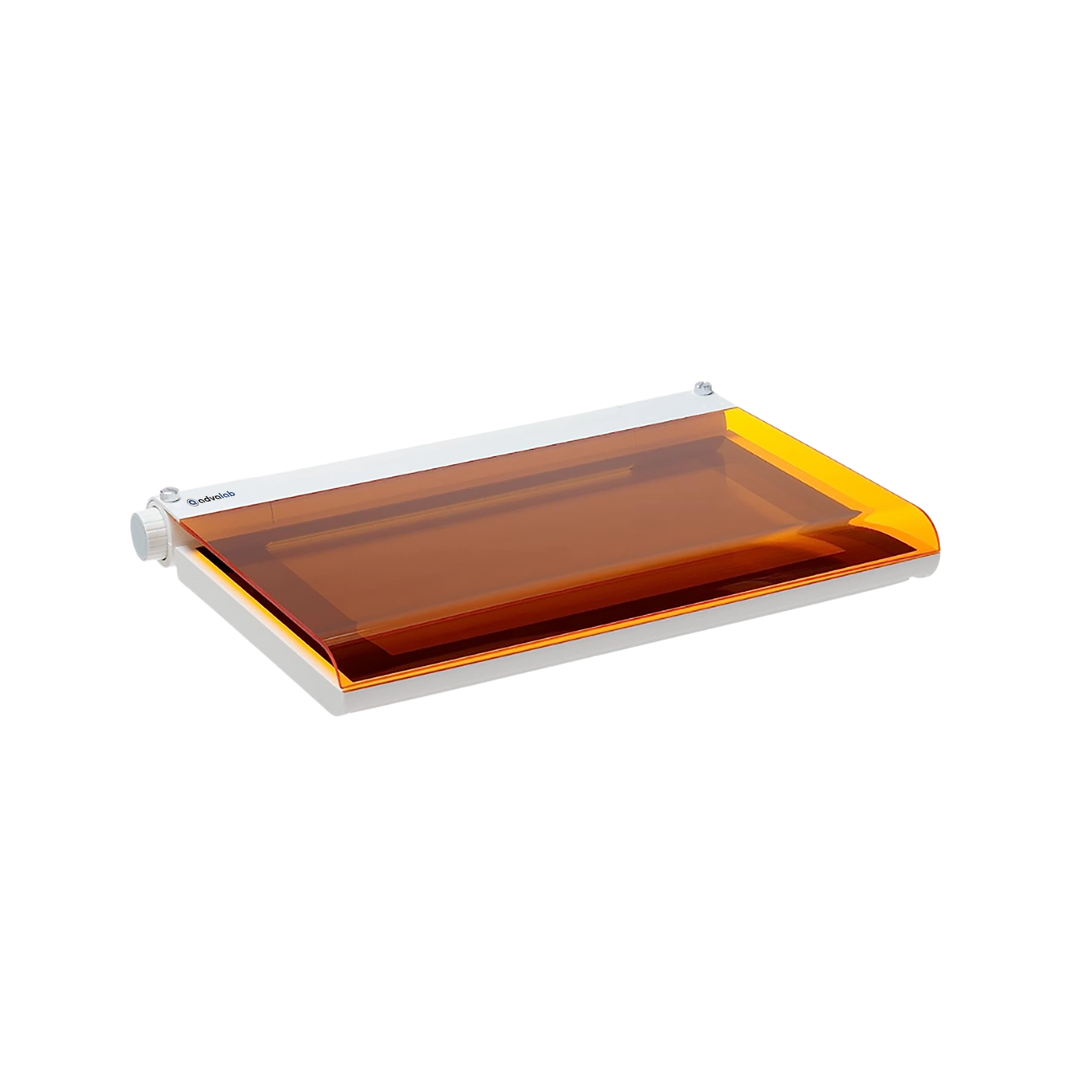
| Maximum Emission Wavelength: | 470 nm |
| Observation Area (L×W): | 210 × 120 mm |
| LED Source: | Bottom built-in blue LED light module |

| Maximum Emission Wavelength: | 470nm |
| Observation Area (L×W): | 210×120mm |
| LED Source: | Bottom built-in blue and white LED light module |