

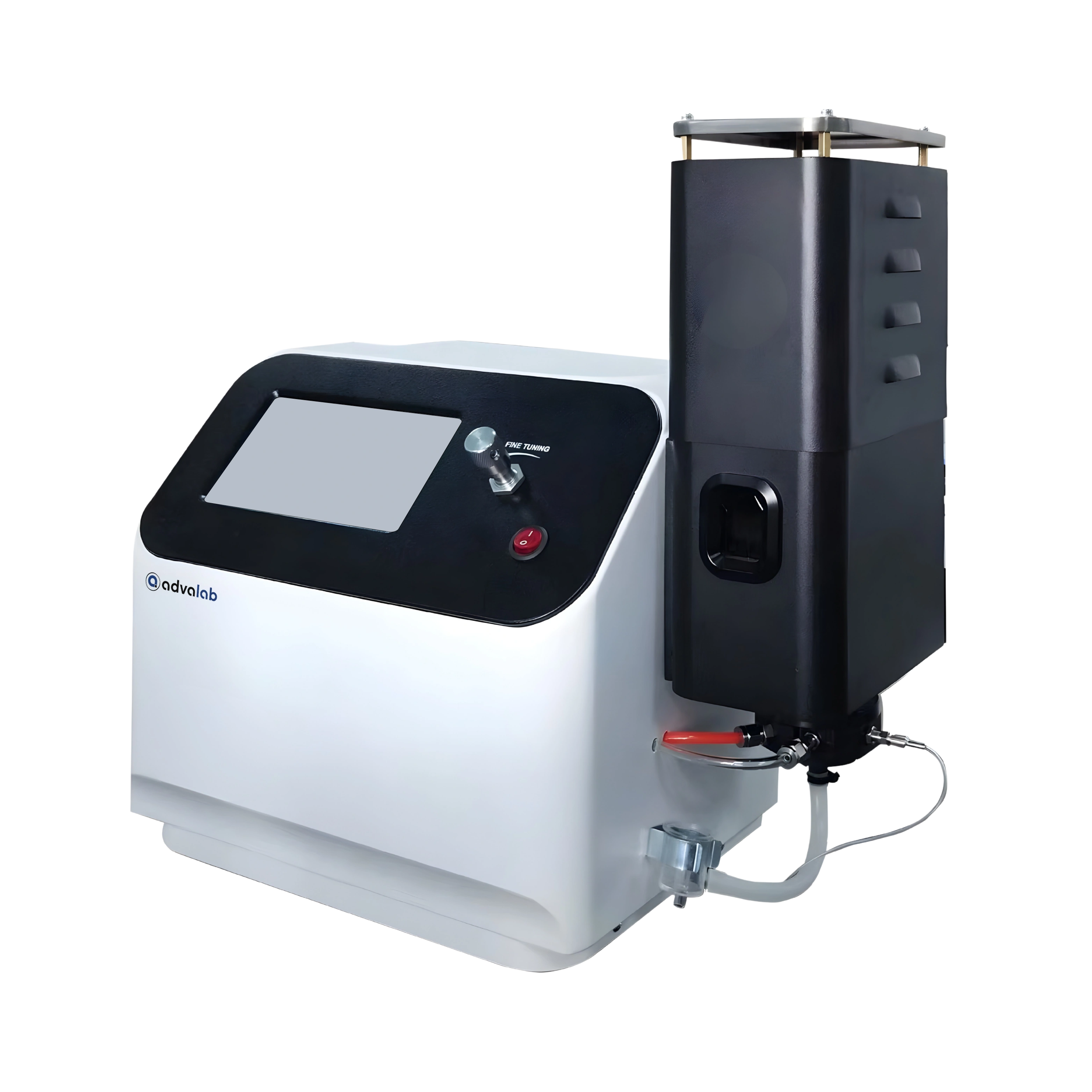
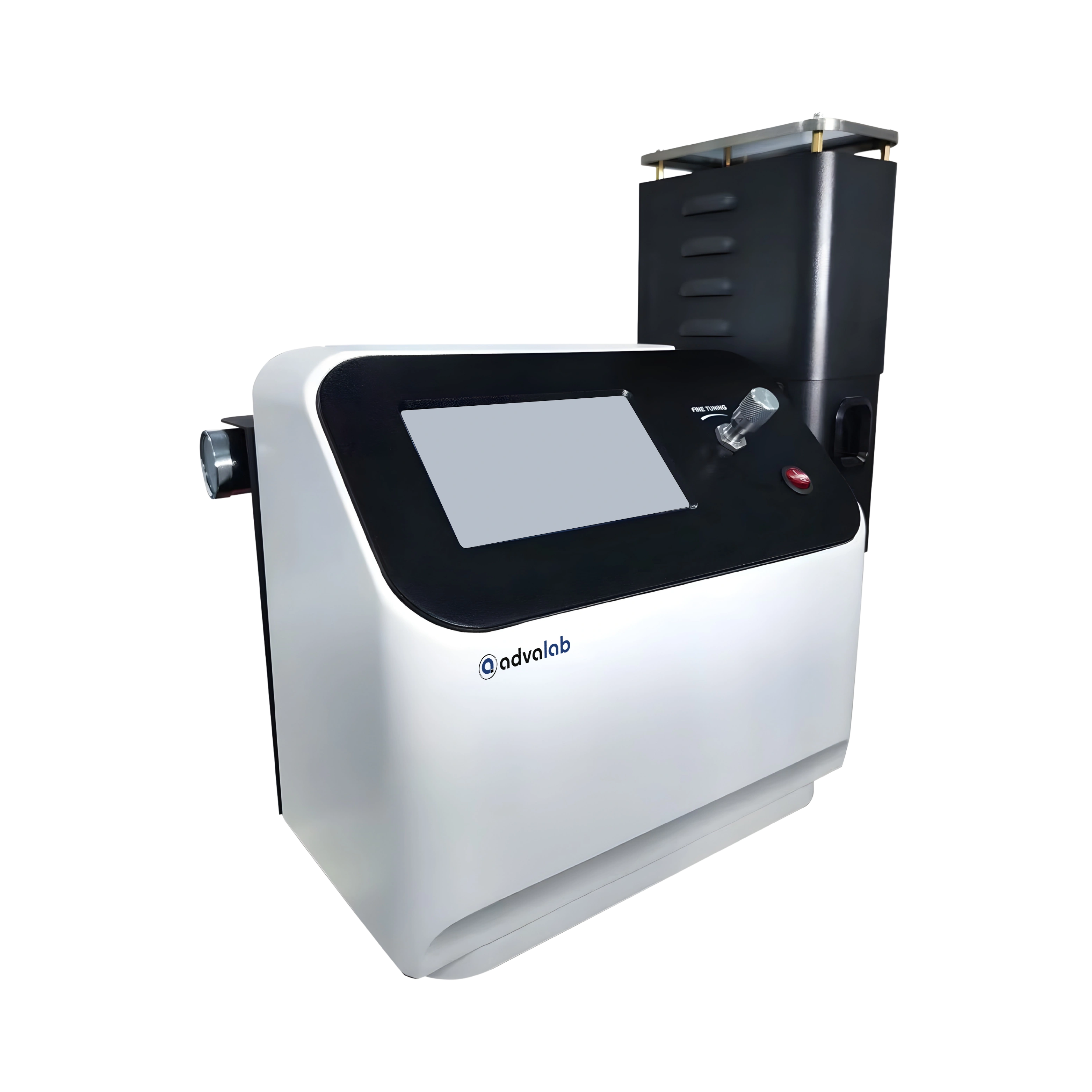
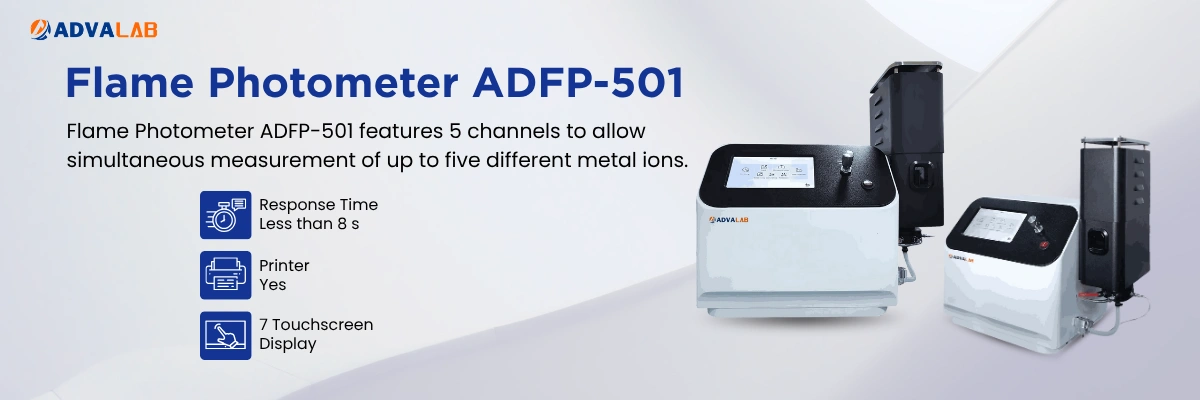
| Testing Elements | K, Na, Li, Ca, Ba |
| Channels | 5 |
| Display Value | Concentration value / Energy |
| Measuring Range |
K: 0 to 100 ppm Na: 0 to 160 ppm Li: 0 to 100 ppm Ca: 0 to 1000 ppm Ba: 0 to 3000 ppm |
| Detection Limit |
K: less than or equal to 0.004 mmol/L Na: less than or equal to 0.008 mmol/L Li: less than or equal to 0.015 mmol/L Ca: less than or equal to 0.050 mmol/L Ba: less than or equal to 0.044 mmol/L |
| Linearity Error |
K: less than or equal to 0.005 mmol/L Na: less than or equal to 0.003 mmol/L Li: less than or equal to 0.021 mmol/L Ca: less than or equal to 0.075 mmol/L Ba: less than or equal to 0.066 mmol/L |
| Display | 7-inch capacitive touchscreen |
| Response Time | Less than 8 s |
| Aspiration Rate | Less than 6 ml/min |
| Stability | Less than or equal to 3% drift within 15 s |
| Reproducibility | Less than or equal to 3% |
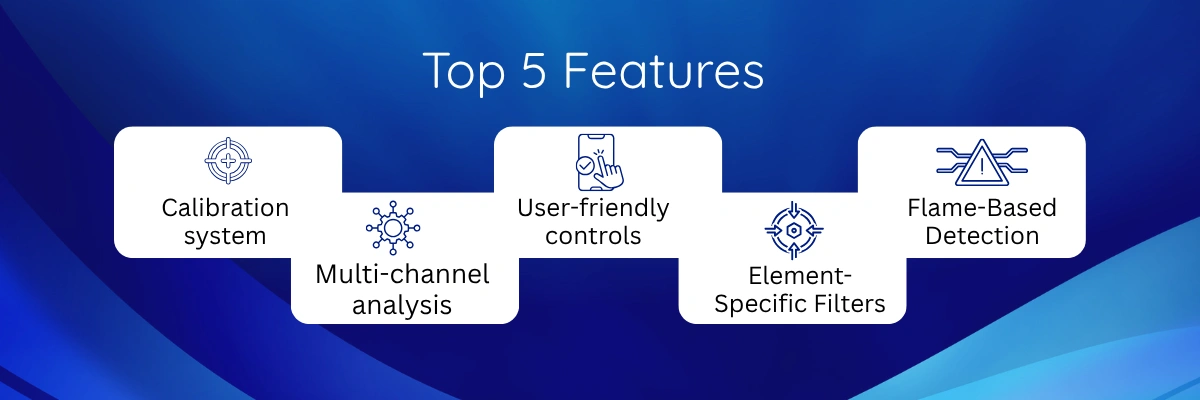
| Calibration Curve | Yes |
| Printer | Yes |
| Fuel Supply | LPG |
| Output | USB port |
| Dimensions (L×B×H) | 710 × 380 × 520 mm |
| Net Weight | 18 Kg |
| Gross Weight | 20 Kg |
Our Flame Photometer ADFP-501 is used in clinical laboratories for electrolyte analysis, in agricultural testing for soil and plant nutrient assessment, in food and beverage quality control for mineral content determination.
Observation window lid 1 Pc Drainage tube 1 Pc Binding tie 1 Pc 12 PU tube for air 1 Pc Stainless steel clamp 1 Pc PRV for LPG 1 Pc Thermal printer(Bluetooth) 1 Pc LPG tube(orange) 1 Pc Glass cylinder for flame 1 Pc Air compressor 1 Pc Chimney 1 Pc Acupunture needle (0.35×75mm) 1 Pc
Software ×1 Pc
1. What is a Flame Photometer and how does it work?
A Flame Photometer is an analytical instrument used to measure the concentration of certain metal ions, primarily sodium, potassium, calcium, and lithium. It works by introducing a sample solution into a flame, where the heat excites the metal ions, causing them to emit light at characteristic wavelengths. The emitted light is filtered and measured by a detector. The intensity of the light is directly proportional to the concentration of the specific ion.
2. Which elements can be detected using a Flame Photometer?
Flame Photometer is most commonly used to detect alkali and alkaline earth metals such as sodium (Na), potassium (K), calcium (Ca), and lithium (Li). These elements emit strong and distinct spectral lines when excited in a flame. It also detect barium and strontium, though less commonly. The detection is limited to elements that ionize easily and emit light in the visible spectrum.
3. What are the advantages of using a Flame Photometer?
Flame Photometer is simple to use, cost-effective, and provide rapid analysis for specific metal ions. It requires minimal sample preparation and can handle high throughput in routine testing. It is compact and require relatively low maintenance. It is ideal for clinical diagnostics, such as measuring electrolytes in blood serum. Despite their simplicity, they offer good precision and reliability for targeted applications.
4. How do you calibrate a Flame Photometer?
Calibration involves running a series of standard solutions with known concentrations of the target metal ions. These standards help create a calibration curve by plotting the intensity of emitted light against concentration. The instrument uses this curve to determine the concentration of unknown samples. Regular calibration is essential for accuracy and should be done at the start of each session.
5. Why is a specific type of flame used in Flame Photometry?
A specific type of flame, usually a mixture of air and propane or butane, is used to ensure a consistent temperature and combustion environment. The flame must be hot enough to excite the electrons of metal ions without causing excessive ionization or instability. A stable flame is crucial for reliable emission measurements. The type and ratio of gases can affect the sensitivity and accuracy of the readings.
6. What are the typical applications of a flame photometers?
Flame photometers are commonly used in clinical laboratories to analyze blood serum for electrolyte levels. They are also widely applied in agriculture for soil and fertilizer analysis. In the food industry, they help assess mineral content in products. Environmental monitoring labs use them to check water and waste samples for contamination. Their ease of use and quick results make them ideal for routine elemental analysis.
7. How should samples be prepared for flame photometers?
Samples must be in a liquid form, typically aqueous solutions, and free from particulates or organic solvents that might interfere with the flame. If the sample contains solids, it should be filtered or centrifuged. For accurate measurements, samples are usually diluted to fall within the linear calibration range. Calibration standards with known element concentrations are prepared similarly.
8. What are the limitations of a flame photometer?
Flame photometers have limited elemental detection capabilities, primarily restricted to a few metals. They cannot detect non-metallic elements or transition metals effectively. Interferences from other ions, emission overlap, or matrix effects can affect accuracy. The method requires careful calibration and flame stability for precise results. Also, they are less sensitive compared to techniques like ICP-OES or AAS.
9. Which elements can be measured using a flame photometers?
Flame photometers primarily measure alkali and alkaline earth metals, including sodium (Na), potassium (K), calcium (Ca), and lithium (Li). Some models can also measure barium (Ba) and rubidium (Rb) with proper filters. These elements emit characteristic light when introduced into a flame. The photometer detects this light to determine their concentration.
10. What is a flame photometers and how does it work?
flame photometers are analytical instruments used to detect and measure the concentration of certain metal ions, mainly sodium, potassium, lithium, and calcium, in a solution. It operates on the principle of flame emission spectrometry, where a sample is aspirated into a flame and the emitted light intensity is measured. The emitted light is specific to each element and correlates with its concentration.
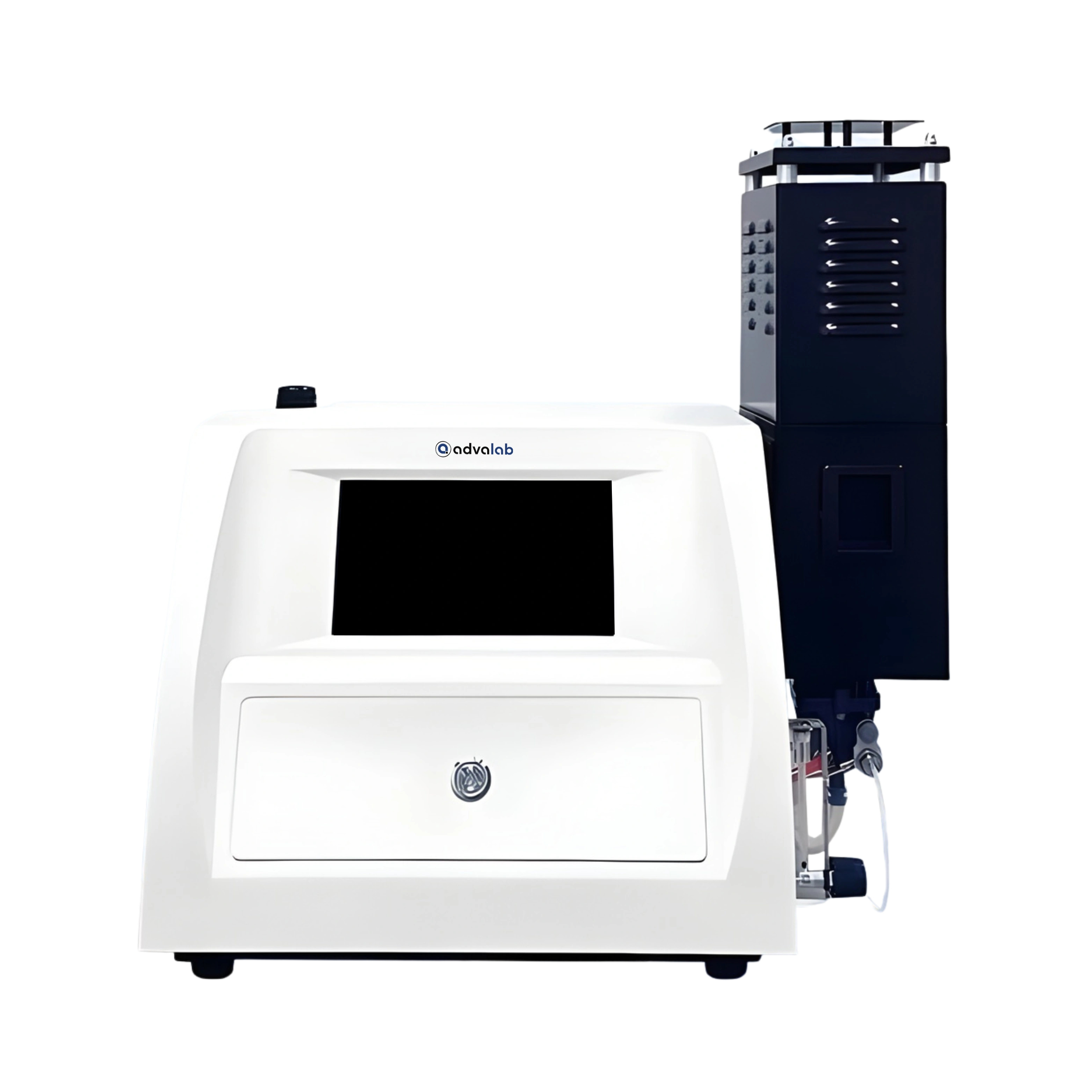
| Testing Elements | K, Na |
| Channels | 2 |
| Display Value | Concentration / Flame Intensity |

| Testing Elements | K, Na, Li, Ca |
| Channels | 4 |
| Display Value | Concentration / Flame Intensity |
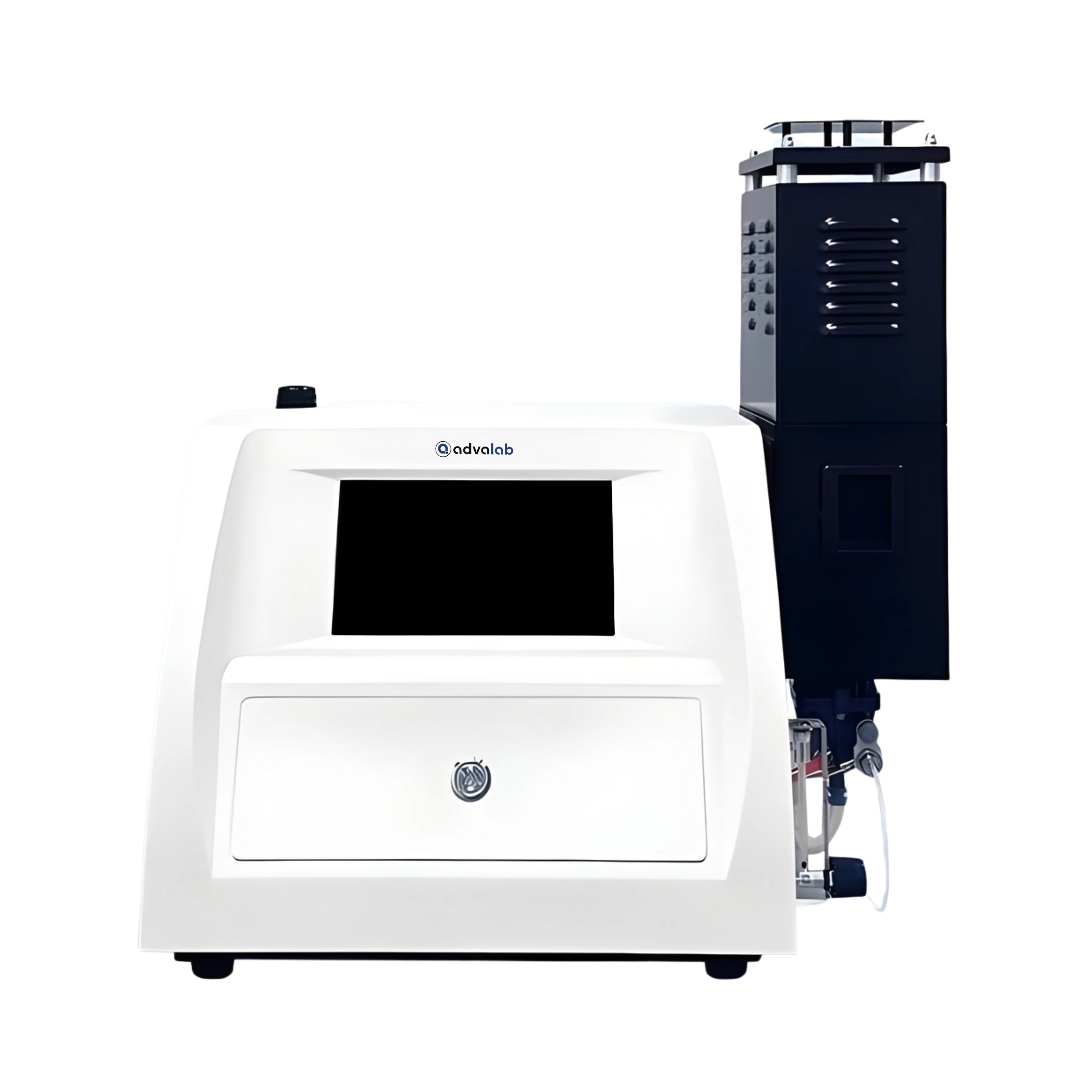
| Testing Elements | K, Na, Ca |
| Channels | 3 |
| Display Value | Concentration / Flame Intensity |
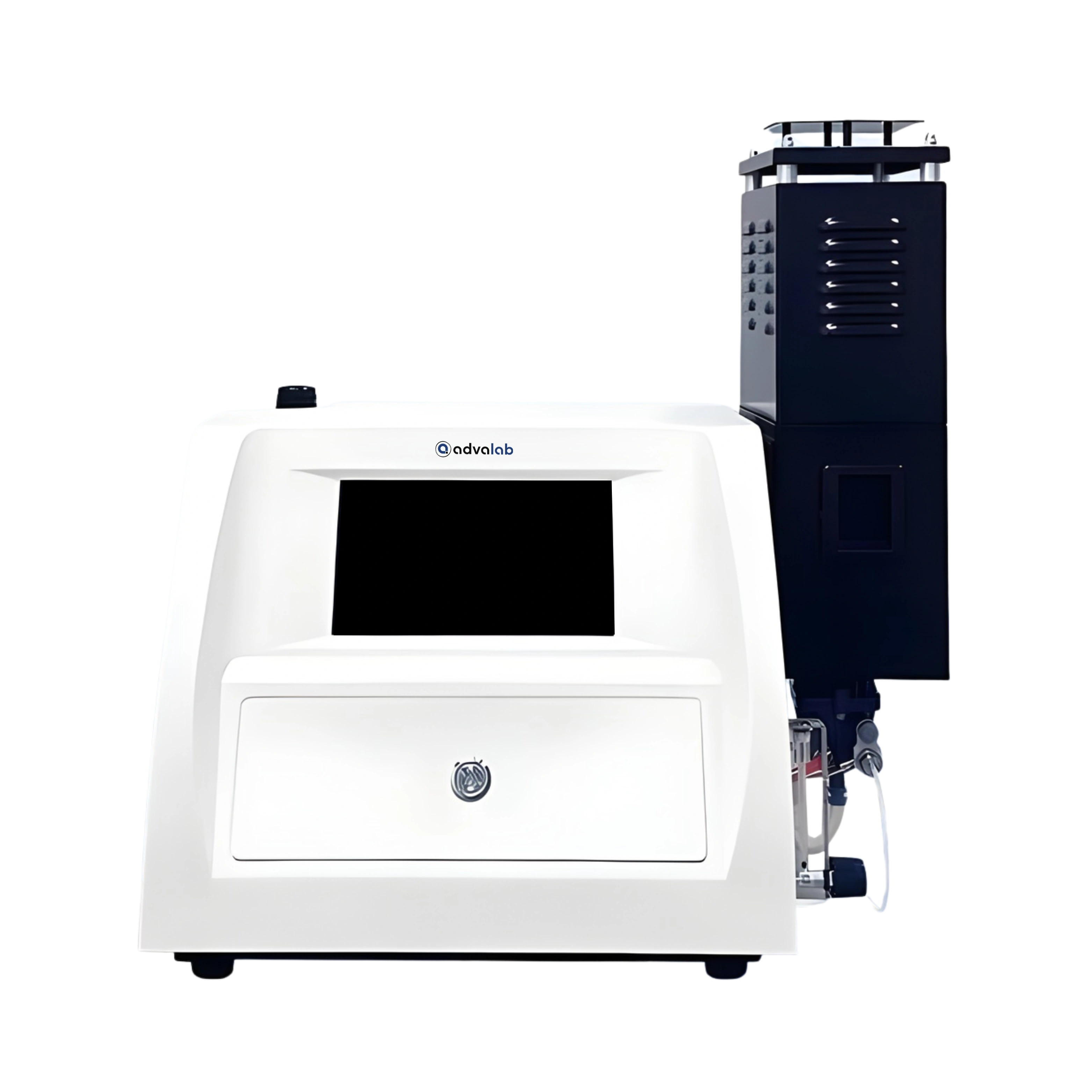
| Testing Elements | K, Na |
| Channels | 2 |
| Display Value | Concentration / Flame Intensity |