


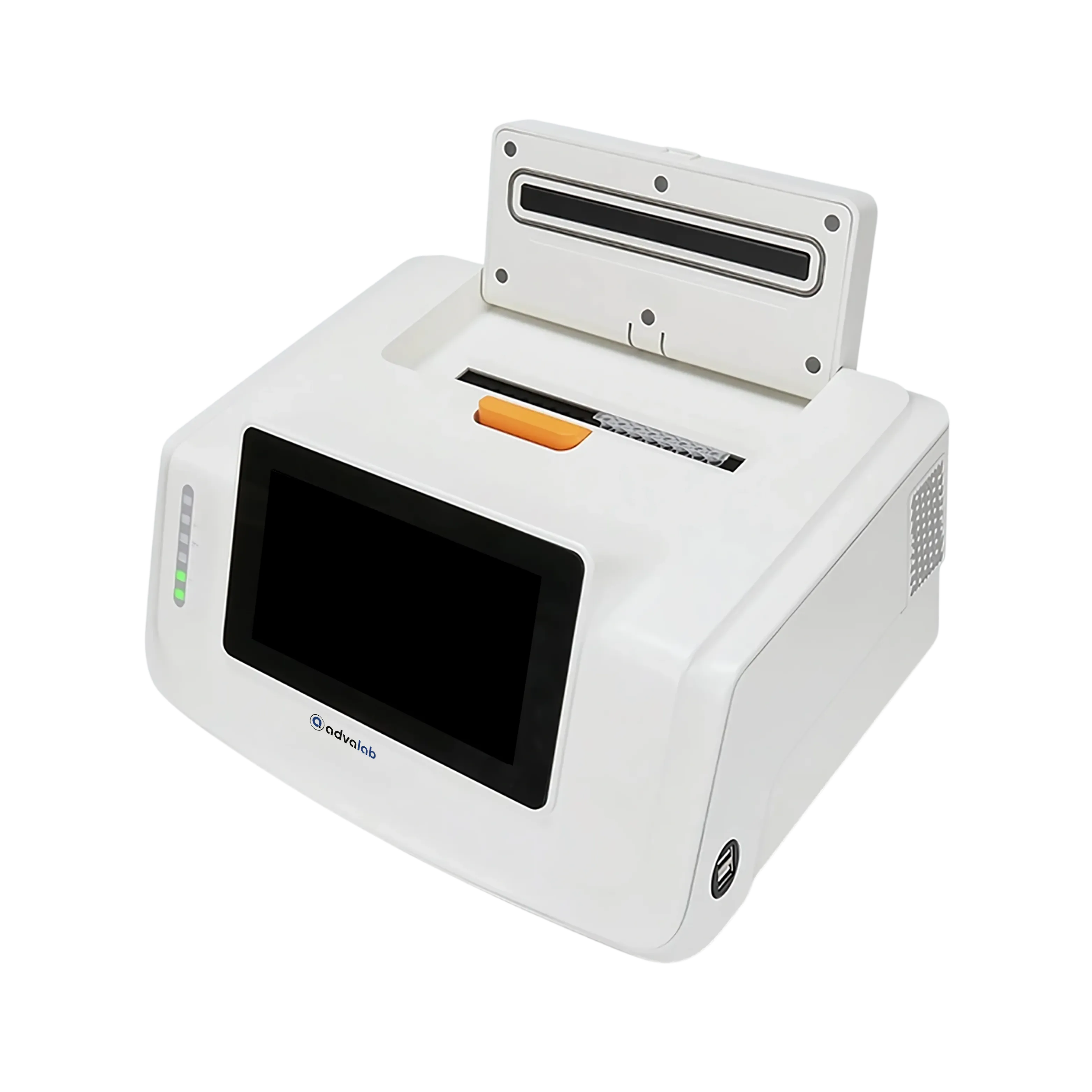
| Fluorescent Channels |
4 CH1: FAM/SYBR Green I CH2: HEX/JOE/VIC CH3: ROX/Texas Red CH4: CY5 |
| Sensitivity | 1 copy |
| Dynamic Range | 1 to 10¹⁰ copies |
| Temperature Accuracy | < 0.2°C |
| Temperature Uniformity | < ±0.2°C |
| Reaction Volume | 5 to 100 µl |
| Block Setting Range | 10 to 99.9°C |
| Max Ramp Rate | > 4°C/s |
| Average Ramp Rate | > 2.5°C/s (50 to 90°C) |
| Hot Lid Temperature | 30 to 105°C (Default: 105°C) |
| Temperature Control | Peltier technology |
| Optical Sensor | High-sensitivity photodiode module |
| Color Wavelength Range | 400 to 700 nm |
| Rn Value | > 0.998 |
| Coefficient of Variation | < 0.6% |
| Detection System | Four PD detection, independent excitation fluorescence detection, suitable for multiple PCR |
| Contamination Control | Built-in UV scan degradation function |
| Sample Compatibility | 16 × 0.2ml tubes, 8-strip tubes, non-skirted or half-skirted plates |
| Power Supply | 100 to 240V, 50/60Hz, 300 VA |
| Product Dimensions (L×W×H) | 341 × 274.5 × 188 mm |
| Packaging Dimensions (L×W×H) | 387 × 302 × 273 mm |
| Net Weight | 6.8 kg |
| Gross Weight | 11.8 kg |
Real-Time PCR Machine ADPCR-506 is employed in clinical laboratories for accurate and high-sensitivity identification of pathogens, enabling early detection and efficient treatment planning.


1. What is the sample capacity of Real-Time PCR Machine ADPCR-506?
The Real-Time PCR Machine ADPCR-506 supports a wide range of formats including 16 × 0.2 ml tubes, 8-strip tubes, and various PCR plates. This flexibility allows it to adapt to different experiment sizes and throughput needs. Its design accommodates both small and high-volume workflows. Ideal for academic, clinical, and industrial laboratories. Efficient layout ensures optimal heat contact and consistent performance.
2. What contamination control features does Real-Time PCR Machine ADPCR-506 offer?
It includes a built-in UV sterilization lamp for automatic disinfection. This reduces the risk of carryover contamination between runs. The closed-lid design ensures a sealed environment during amplification. These features support clean, safe operation in sensitive molecular settings. Especially beneficial for pathogen detection and high-sensitivity testing.
3. Is Real-Time PCR Machine ADPCR-506 easy to use for beginners?
Yes, it features a user-friendly touchscreen interface with intuitive controls. Built-in software supports step-by-step programming and automatic optimization. Visual graphs, preset templates, and real-time data tracking simplify the learning curve. It’s designed for both novice users and advanced professionals. Touch navigation ensures quick setup and monitoring.
4. What makes Real-Time PCR Machine ADPCR-506 suitable for multiplex assays?
The Real-Time PCR Machine ADPCR-506 is equipped with multiple optical channels, allowing simultaneous detection of various fluorophores. It facilitates multiplexing by enabling accurate identification of several targets in a single reaction. High-performance optics enhance resolution and signal precision. This ensures efficient detection without cross-channel interference. It’s ideal for complex diagnostic and research workflows.
5. How does Real-Time PCR Machine ADPCR-506 maintain temperature uniformity?
It uses advanced block technology with Peltier elements to provide even thermal distribution. This guarantees that all wells experience consistent conditions throughout cycles. Uniform ramping rates and controlled cooling further enhance stability. Such precision minimizes variability in amplification outcomes. It's crucial for reproducible and trustworthy qPCR results.
6. What are Real-Time PCR Machines?
Real-Time PCR Machines are high-precision instruments that perform polymerase chain reactions while monitoring the amplification process in real time using fluorescent dyes. These systems provide quantitative data on nucleic acid levels and allow users to track amplification as it happens, making them essential for applications requiring accuracy and speed.
7. Where are Real-Time PCR Machines used?
Real-Time PCR Machines are widely used across various fields, including clinical diagnostics for detecting viruses and bacteria, gene expression studies in research labs, agricultural biotechnology for GMO detection, and environmental testing for microbial contamination. Their ability to deliver rapid and reliable results makes them invaluable in both routine and specialized testing workflows.

| Fluorescent Channels |
2 CH1: FAM/SYBR Green I CH2: HEX/JOE/VIC |
| Sensitivity | 1 Copy |
| Temperature Accuracy | < 0.2°C |

| Fluorescent Channels |
2 CH1: FAM/SYBR Green I CH2: HEX/JOE/VIC |
| Sensitivity | 1 copy |
| Dynamic Range | 1 to 10¹⁰ copies |

| Fluorescent Channels | 4 (CH1: FAM/SYBR Green I,CH2: HEX/JOE/VIC, CH3: ROX/Texas Red, CH4: CY5) |
| Sensitivity | 1 Copy |
| Temperature Accuracy | < 0.2°C |
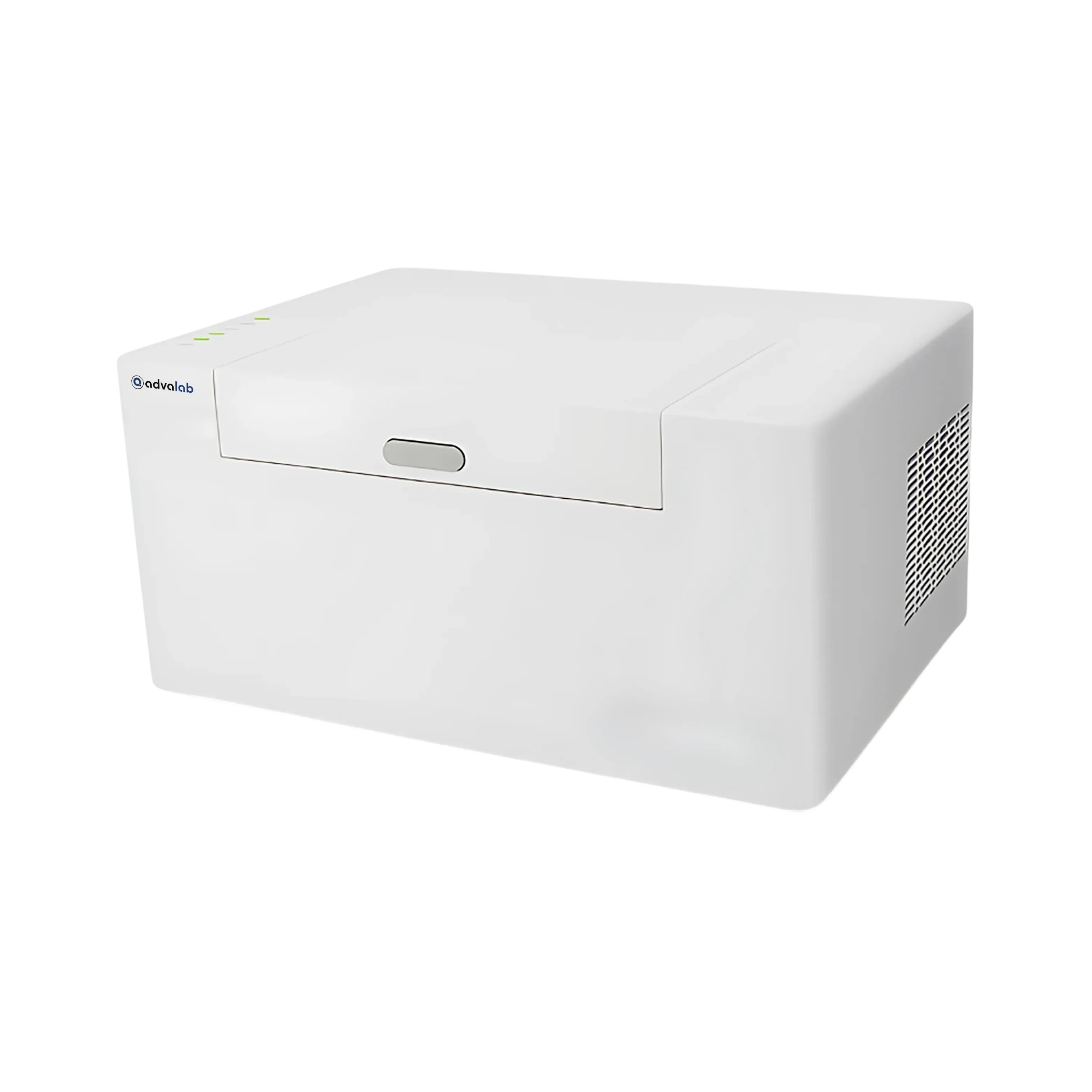
| Fluorescent Channels |
4 CH1: FAM/SYBR Green I CH2: HEX/JOE/VIC/TET CH3: ROX/Texas Red CH4: CY5 |
| Sensitivity | 1 copy |
| Dynamic Range | 1 to 10¹⁰ copies |