

| Capacity | 0.2 mL × 96-well, aluminum |
| Thermal Control System | Three independently controlled Peltier modules with peripheral edge heating |
| Temperature Control Accuracy | ±0.1°C |
| Block Temperature Precision | ≤±0.1°C |
| Temperature Uniformity | ≤±0.3°C at 55°C |
| Maximum Heating Rate | >5°C/s |
| Maximum Cooling Rate | >5°C/s |
| Average Ramp Rate | >2°C/s |
| Ramp Rate Adjustment Range | 0.1 to 3.5°C/s |
| Step Setting Range | 1 to 100 |
| Block Temperature Range | 0°C to 105°C |
| Heated Lid Temperature Range | 30°C to 105°C, ON or OFF switchable |
| Block Control Mode | Block-based or tube-based temperature control |
| Gradient Temperature Range |
30°C to 99°C gradient span: 0.1°C to 42°C |
| Temperature Touchdown Function | 0.1°C to 10°C per cycle |
| Time Touchdown Function | 1 to 120 sec per cycle |
| Waiting for Operation | Yes |
| Auto-Adaptive Heated Lid | Yes |
| Real-Time Curve | Yes |
| Display Interface | 7" WVGA full-color touchscreen, 64K color depth, LED backlit |
| Program Storage Capacity | 1000 folders maximum |
| Wizard Template | Yes |
| Power Failure Recovery | Yes |
| Post-Run Soak Mode | Yes |
| Remaining Time Display | Yes |
| On-the-Fly Program Editing | Yes |
| Remote Service Support | Yes, via We Chat platform |
| Certification | CE marked |
| Applicable Consumables | 96 Microplates (non-skirted/semi-skirted), 0.2 mL tubes (single/8-strip/12-strip), all tube shapes |
| Power Supply | 100 to 240V AC, 50/60 Hz, 600 VA |
| Product Dimensions (L × W × H) | 427 × 288 × 227 mm |
| Shipping Dimensions (L × W × H) | 540 × 450 × 385 mm |
| Net Weight | 9.7 kg |
| Gross Weight | 14.5 kg |
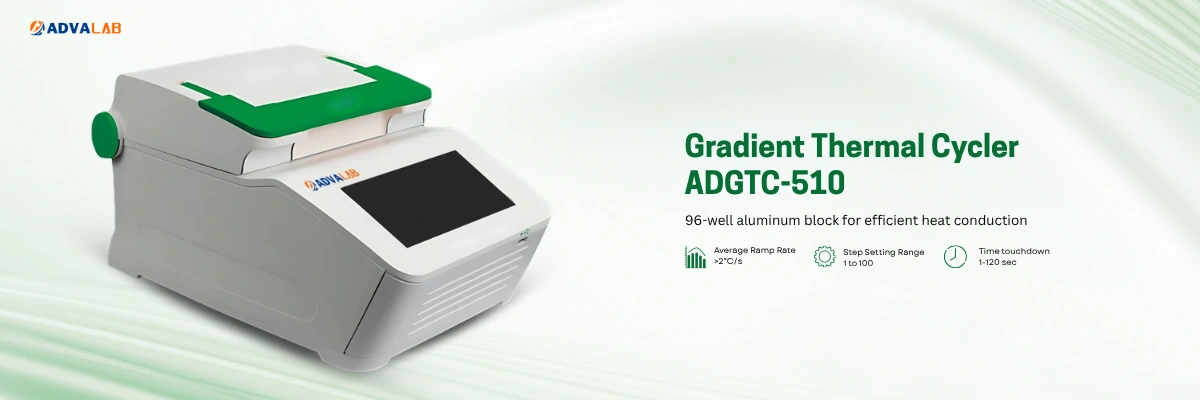
Our Gradient Thermal Cycler ADGTC-510 is designed for accurate DNA amplification in molecular biology labs, supporting reliable outcomes in diagnostics, scientific research, and genetic studies.

1. What is the sample capacity of the Gradient Thermal Cycler ADGTC-510?
Gradient Thermal Cycler ADGTC-510 features two independent blocks, each configured for 96 × 0.2 mL wells, offering significant throughput for PCR workflows. Its aluminum blocks enable quick and even heat transfer across all positions. This design is tailored for high-sample volume environments. Laboratories benefit from enhanced productivity without compromising accuracy. It’s optimized for scalable DNA amplification projects.
2. How accurate is the thermal control in the Gradient Thermal Cycler ADGTC-510?
With thermal precision reaching ±0.1°C, the Gradient Thermal Cycler ADGTC-510 ensures stable temperature conditions during each cycle. It employs Peltier-based thermal regulation for consistent block performance. This level of control is essential for preventing inconsistencies in sensitive applications. Heat is evenly distributed to avoid edge-to-center variation. It’s engineered for demanding molecular biology routines.
3. What interface and control system does the Gradient Thermal Cycler ADGTC-510 use?
Equipped with a vibrant 7" color touchscreen, the Gradient Thermal Cycler ADGTC-510 offers an intuitive and modern user experience. The LED-lit panel provides excellent clarity for real-time monitoring and programming. Touch-based controls simplify adjustments and navigation. Protocol editing and run tracking are both streamlined. The interface is designed for both novice and expert users.
4. How does adjustable ramp rate improve performance in Gradient Thermal Cycler ADGTC-510?
The ability to modify ramping speeds between temperature steps enables tailored PCR protocols. Users can match transition rates to enzyme or template needs for optimal results. Slower rates improve target specificity, while faster transitions save valuable time. This feature supports protocol refinement and reproducibility. It enhances experimental adaptability and output quality.
5. What unique features does the Gradient Thermal Cycler ADGTC-510 offer?
Key functions include a gradient mode for simultaneous annealing optimization and a self-adjusting heated lid to prevent sample evaporation. The system supports detailed ramp rate configuration and minimizes non-specific product formation. It includes safeguards for reaction consistency. Together, these capabilities ensure dependable performance and ease of use. Ideal for both routine and advanced applications.
6. What is Gradient Thermal Cycler?
Gradient Thermal Cycler is a technique that uses a thermal cycler with a temperature gradient across the heating block. This allows users to test multiple annealing temperatures in a single run, helping to quickly identify the optimal temperature for primer binding. It is especially useful during primer validation and assay development.
7. Why is Gradient Thermal Cycler used?
Gradient PCR is used to optimize PCR conditions, especially the annealing temperature, which is critical for specificity and efficiency. It helps reduce trial-and-error by allowing multiple conditions to be tested simultaneously. This improves accuracy while saving time and reagents during PCR setup.
8. What are the benefits of Gradient Thermal Cycler?
Gradient Thermal Cycler offers several benefits, particularly during the optimization phase of PCR. It saves time by allowing multiple annealing temperatures to be tested in a single run, eliminating the need for separate experiments. This approach also reduces reagent use and overall costs. Gradient PCR improves efficiency and specificity by quickly identifying the optimal annealing temperature.

| Capacity | 0.2 mL × 96-well, aluminum |
| Thermal Control System | Three independently controlled Peltier modules with peripheral edge heating |
| Temperature Control Accuracy | ±0.1°C |
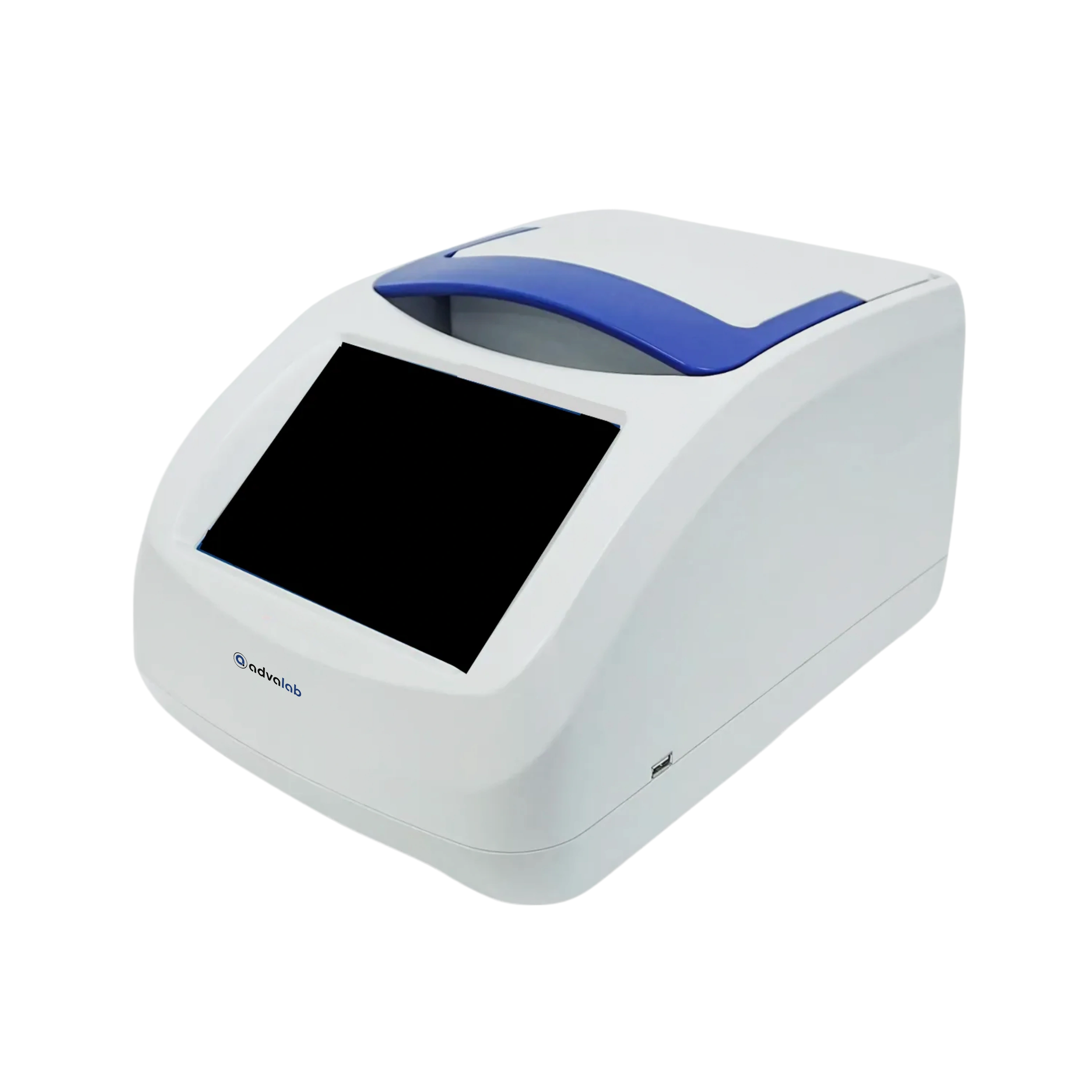
| Tubes Capacity |
0.2 ml microtubes 8 × 0.2 ml tube strips 96 × 0.2 ml PCR plate (no/semi-skirted) |
| Capacity | 96 × 0.2 ml |
| Maximum Heating Up Rate | 6℃/s |
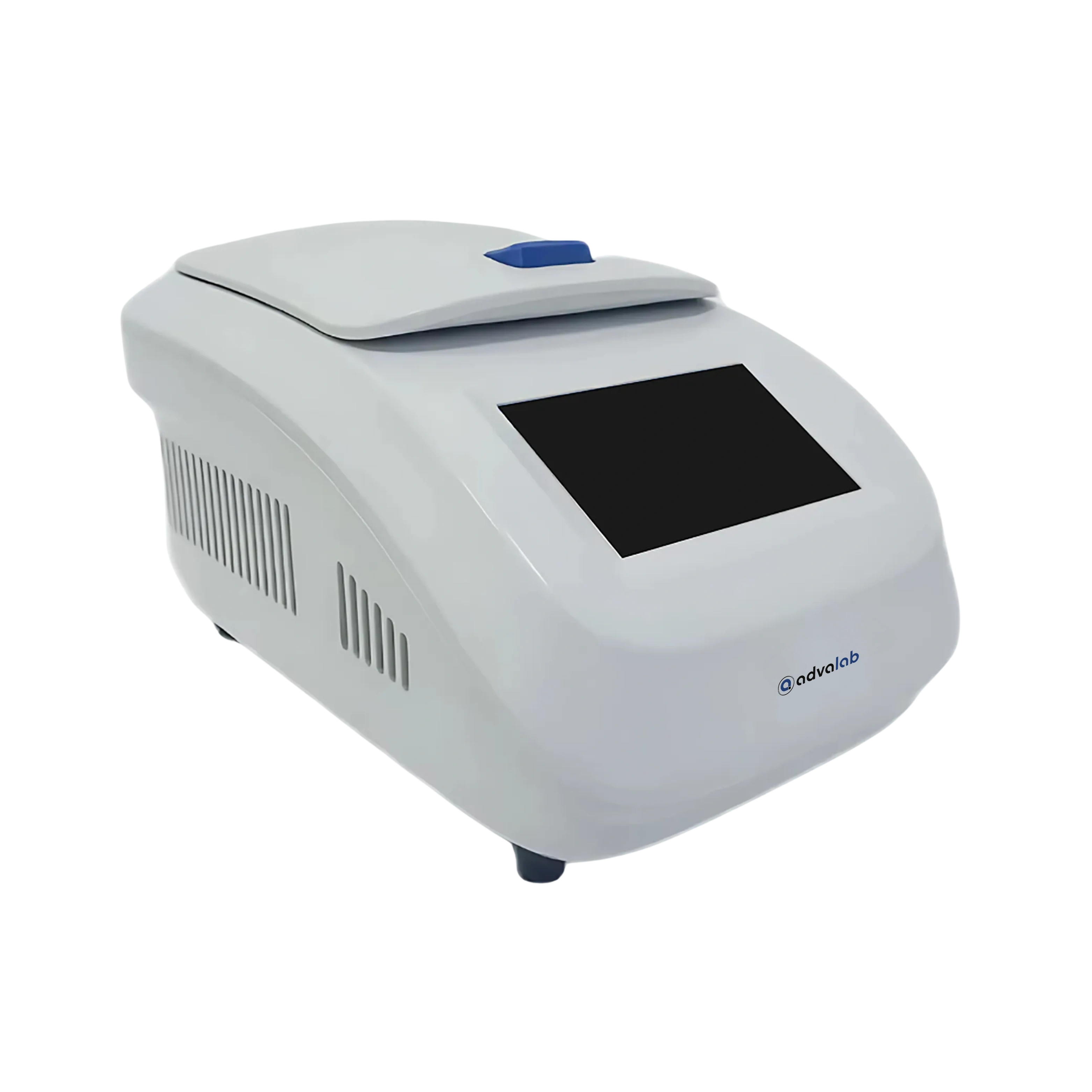
| Capacity |
96×0.2 ml (PCR plate without/semi skirt) 12×8×0.2 ml (strips) 8×12×0.2 ml (strips) 0.2ml tubes (height 20 to 23mm) |
| Maximum Heating Rate | 5℃/s |
| Maximum Cooling Rate | 4.5℃/s |
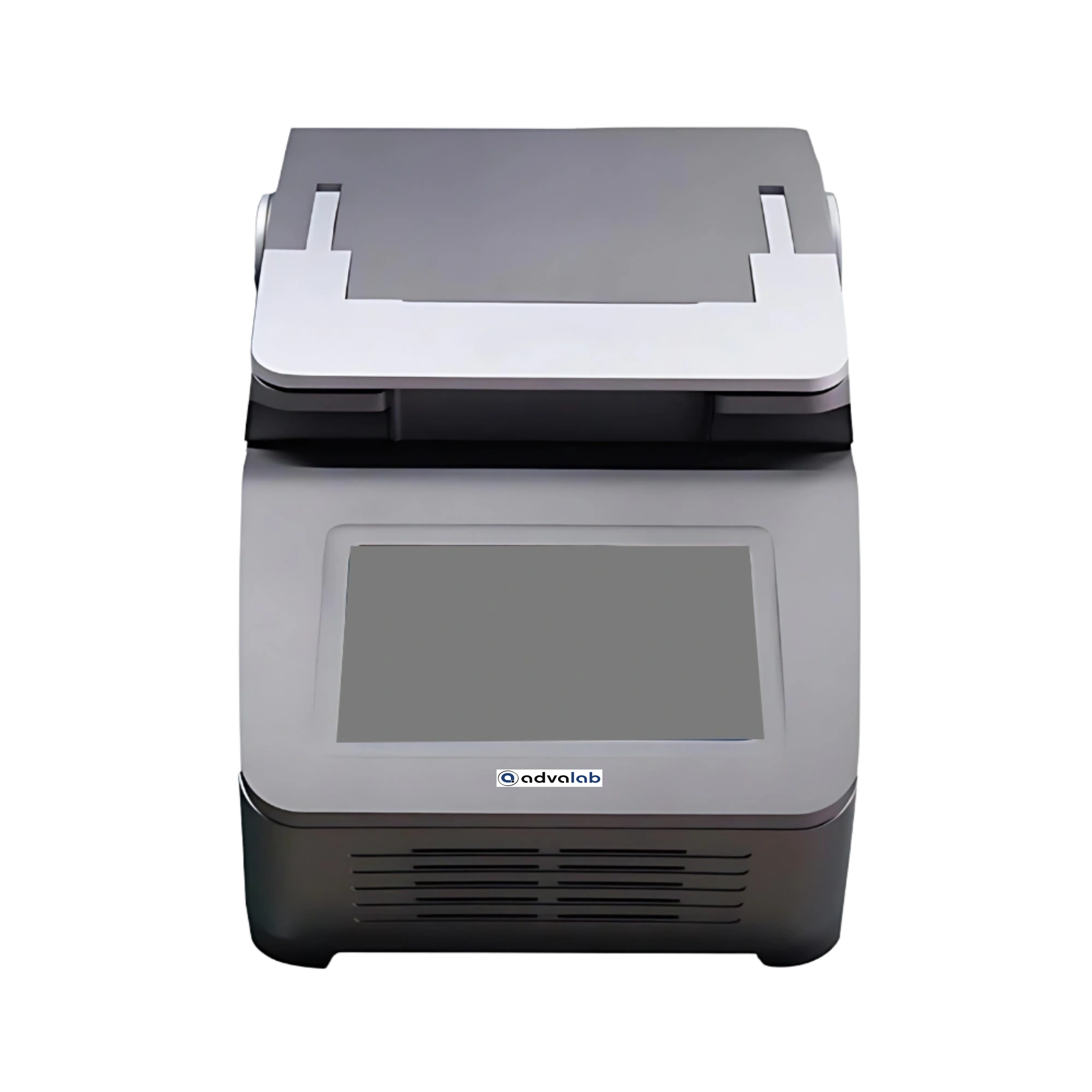
| Capacity | 0.2 mL × 384-well, aluminum |
| Thermal Control System | Three independently controlled Peltier modules with peripheral edge heating |
| Temperature Control Accuracy | ±0.1°C |

| Capacity: | 2 × 0.2 mL × 48-wells, aluminum |
| Thermal Control System : | Three independently controlled Peltier modules with peripheral edge heating |
| Temperature Control Accuracy : | ±0.1°C |

| Capacity: | 2 × 0.2 mL × 48-wells, aluminum |
| Thermal Control System: | Peltier |
| Temperature Control Accuracy : | ±0.1°C |

| Capacity: | 32 x 0.2ml tubes, 4 x 8 tube strips |
| Temperature Setting Range: | 0℃ to 100℃ |
| Maximum Heating Time: | 4℃/sec |