
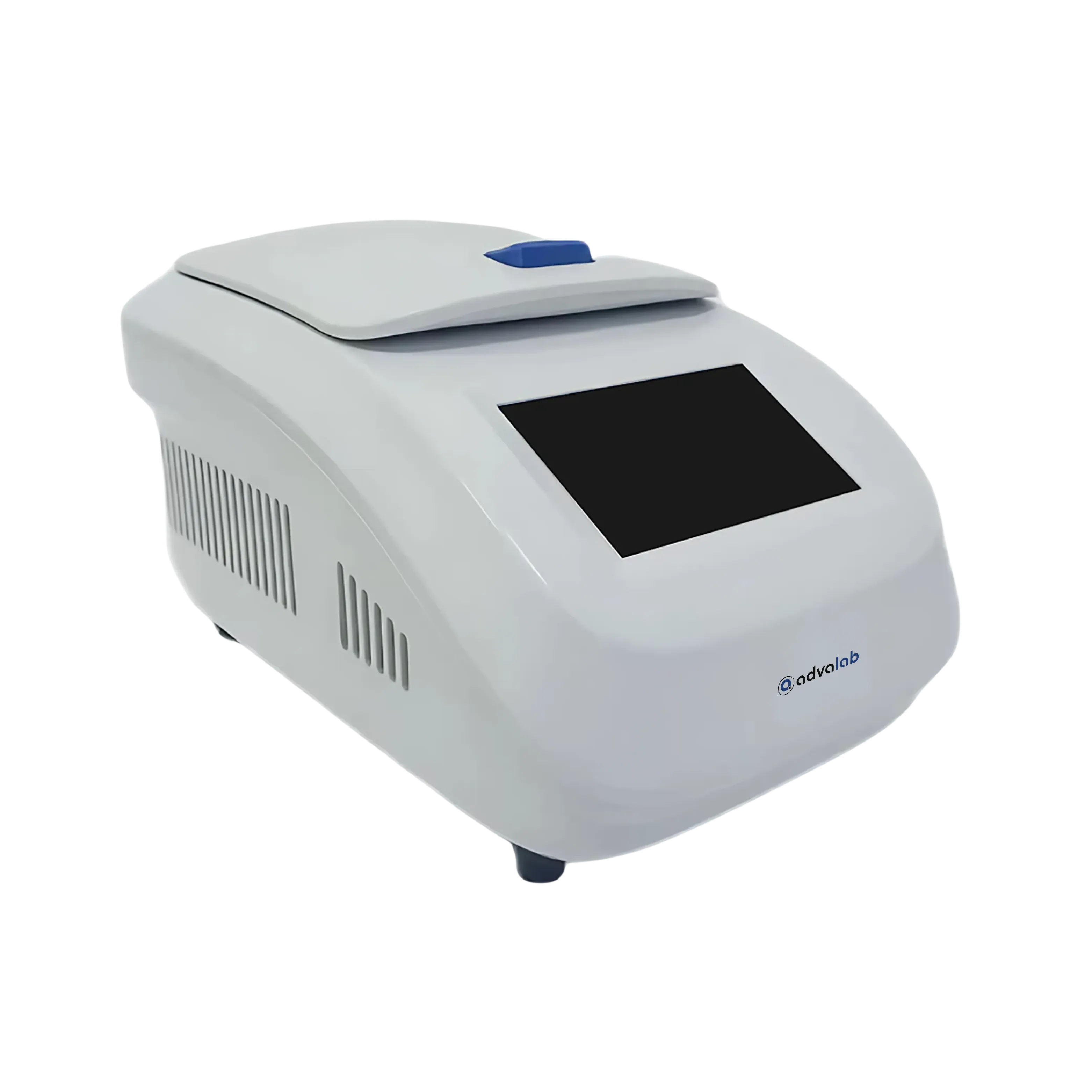
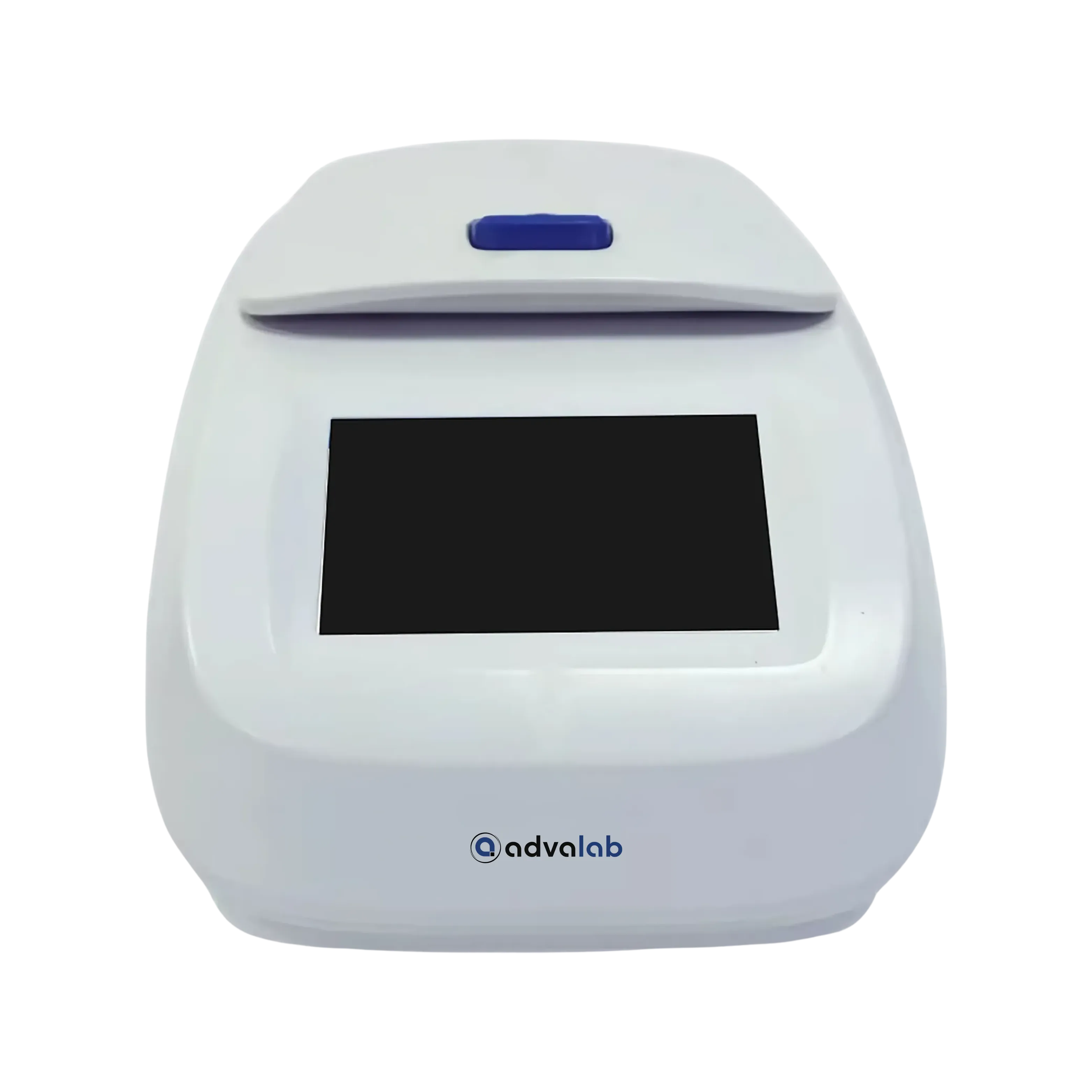
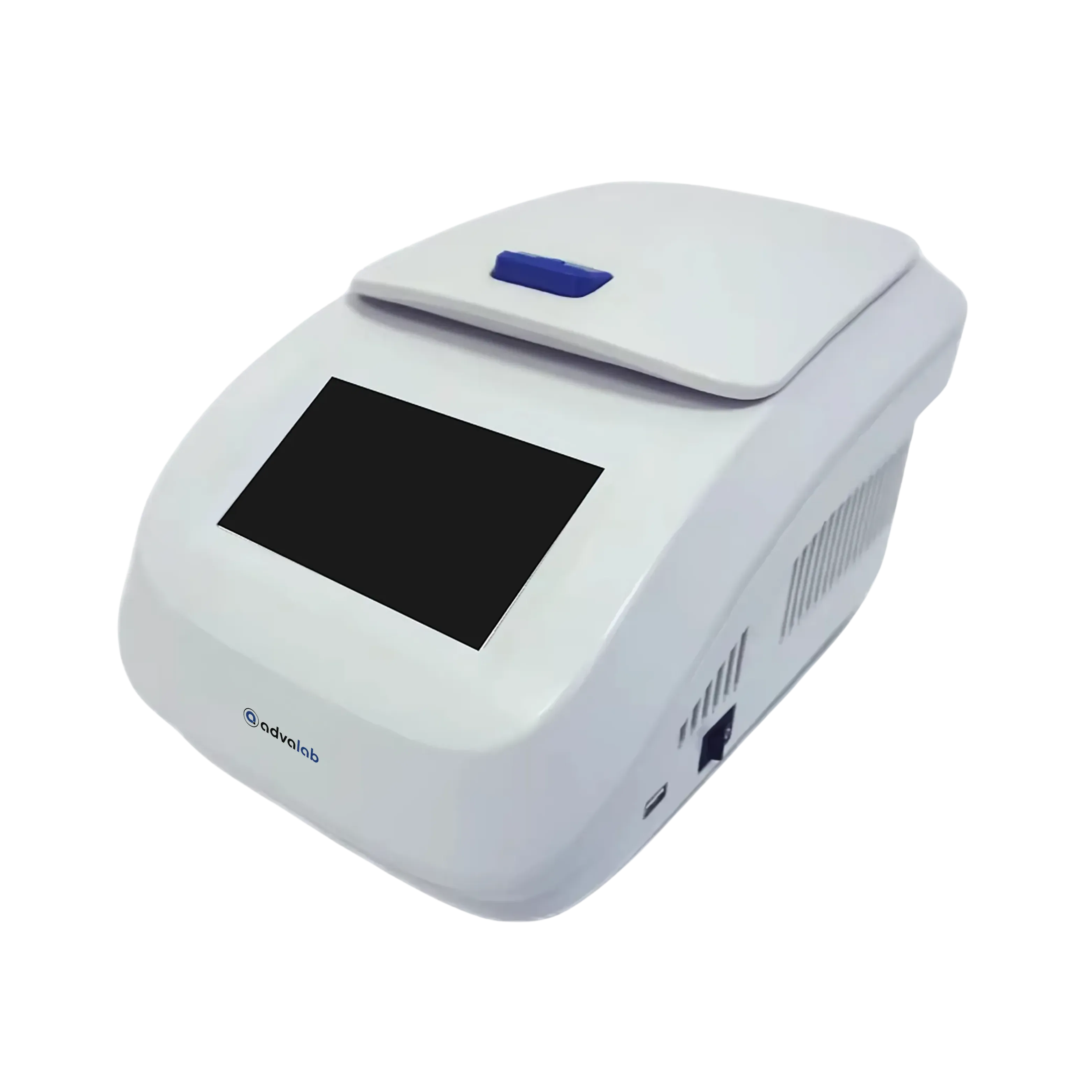
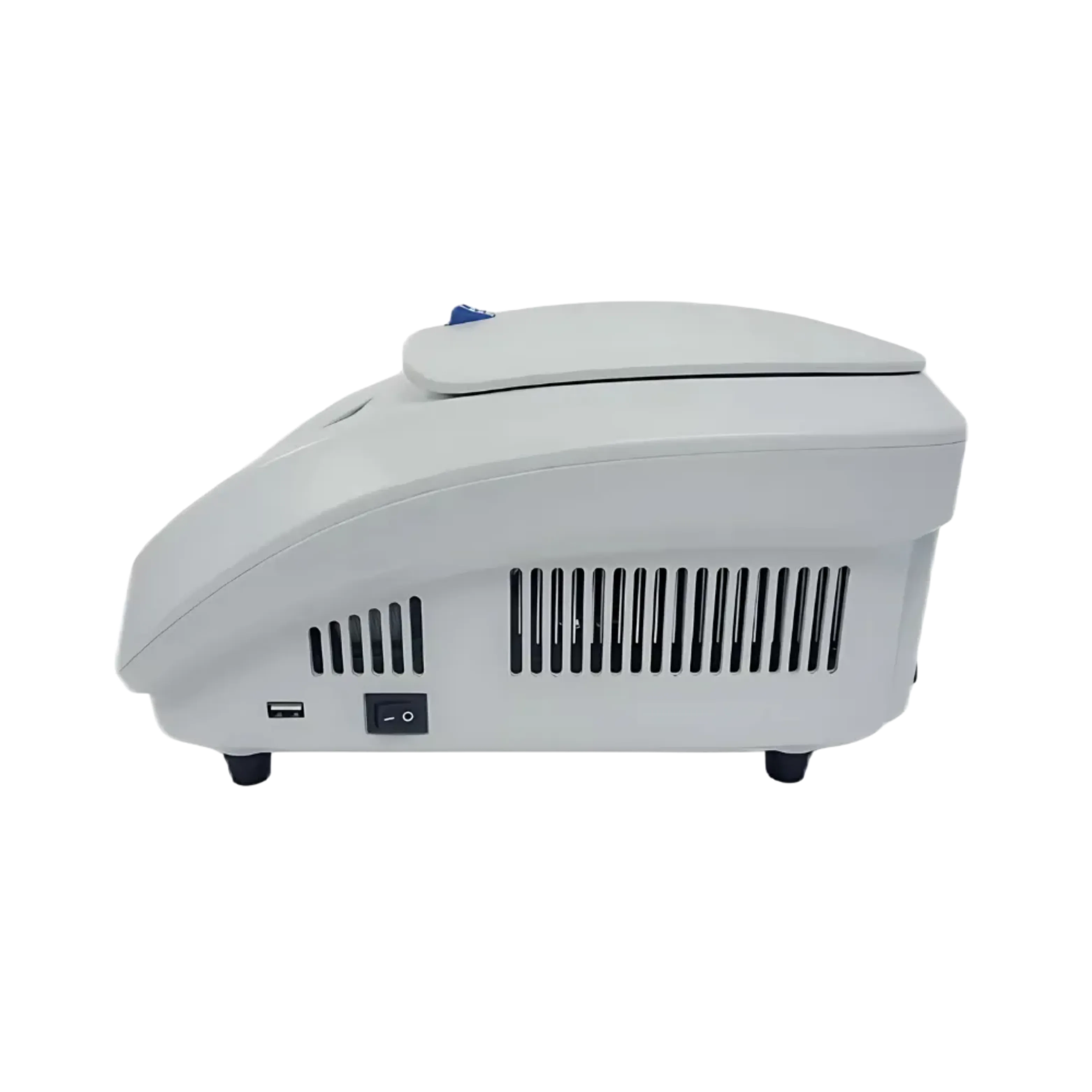
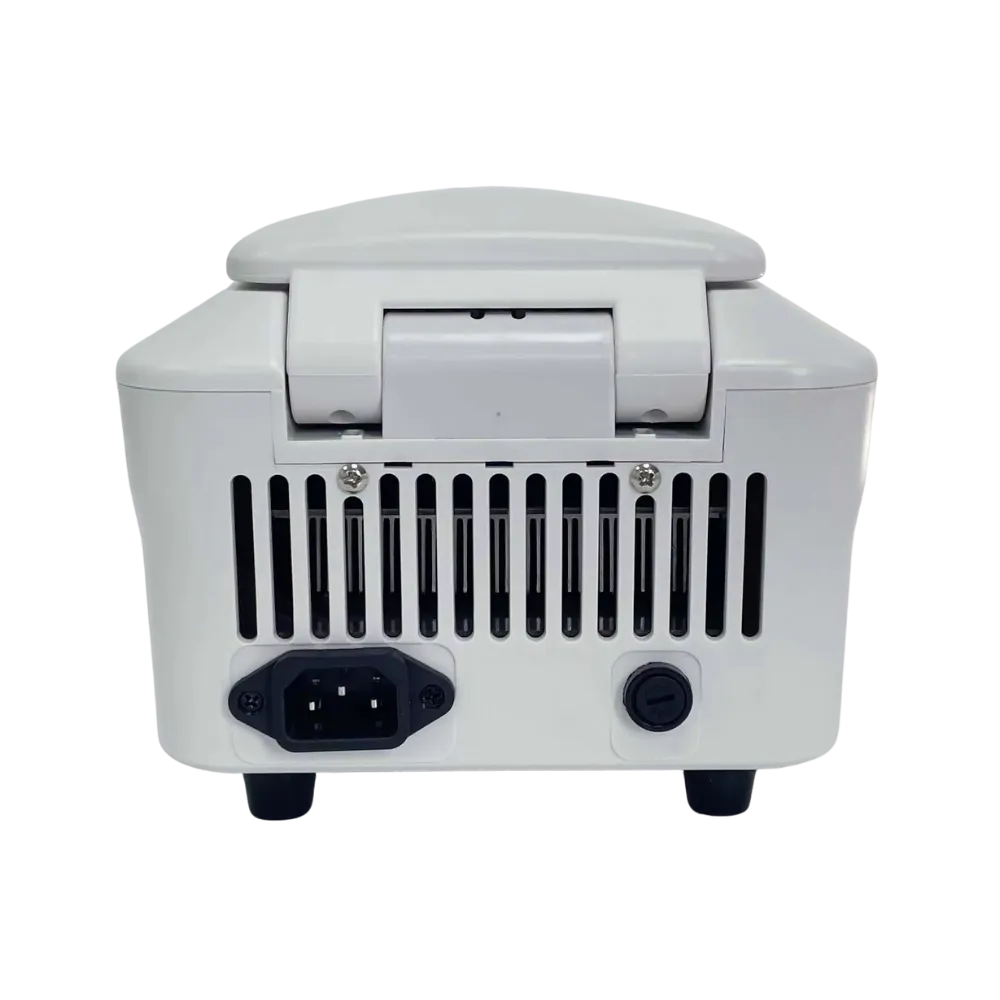
| Capacity |
32×0.2 ml (microtubes) 4×8×0.2 ml (tube strips) |
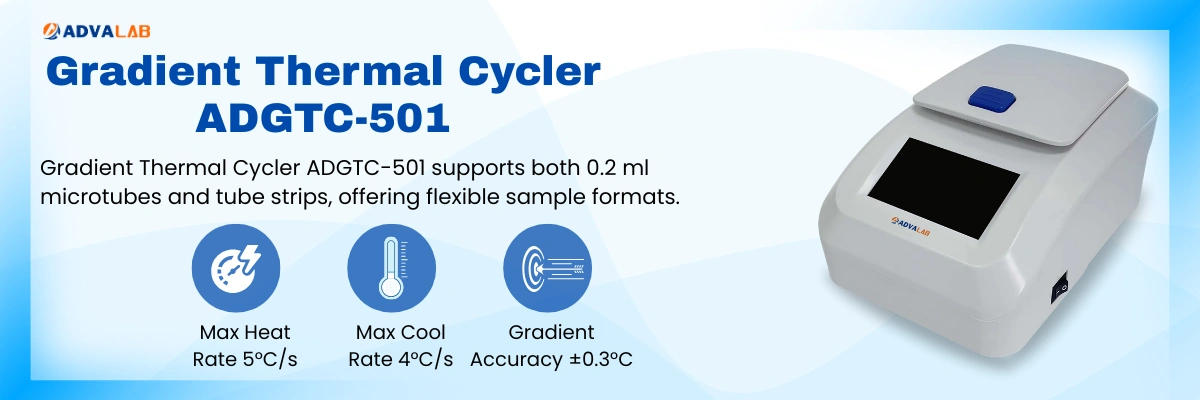
| Maximum Heating Up Rate | 5℃/s |
| Maximum Cooling Down Rate | 4℃/s |
| Block Temperature Range | 4 to 105℃ |
| Gradient Temperature Range | 30 to 105℃ |
| Gradient Temperature Accuracy | ±0.3℃ |
| Temperature Display Accuracy | 0.1℃ |
| Gradient Temperature Uniformity | ±0.3℃ |
| Block Temperature Uniformity | ≤±0.25℃ |
| Block Temperature Accuracy | ±0.2℃ |
| Number of Peltier Elements | 2 |
| Heating Lid Temperature Range | 30℃ to 110℃ |
| Temperature Control Methods | Block or Tube |
| Realtime Operation Status | Image text display |
| Programs Stored | 200 |
| Timer | 1s to 59min 59s / infinite duration |
| Timer Increase / Decrease | -599 to +599 seconds (long PCR) |
| Temperature Increase / Decrease | -9.9 to +9.9℃ (touchdown PCR) |
| Gradient Set Span | Maximum 30℃ |
| LCD Display | Touch screen display |
| Maximum Cycles | 99 |
| Maximum Steps per Program | 30 |
| Power Failure Recovery | Yes |
| Pause Function | Yes |
| 16℃ Temperature Holding Function | Infinite duration |
| Power Consumption | 225 W |
| Dimension (W×D×H) | 243×172×145 mm |
| Net Weight | 2.3 kg |
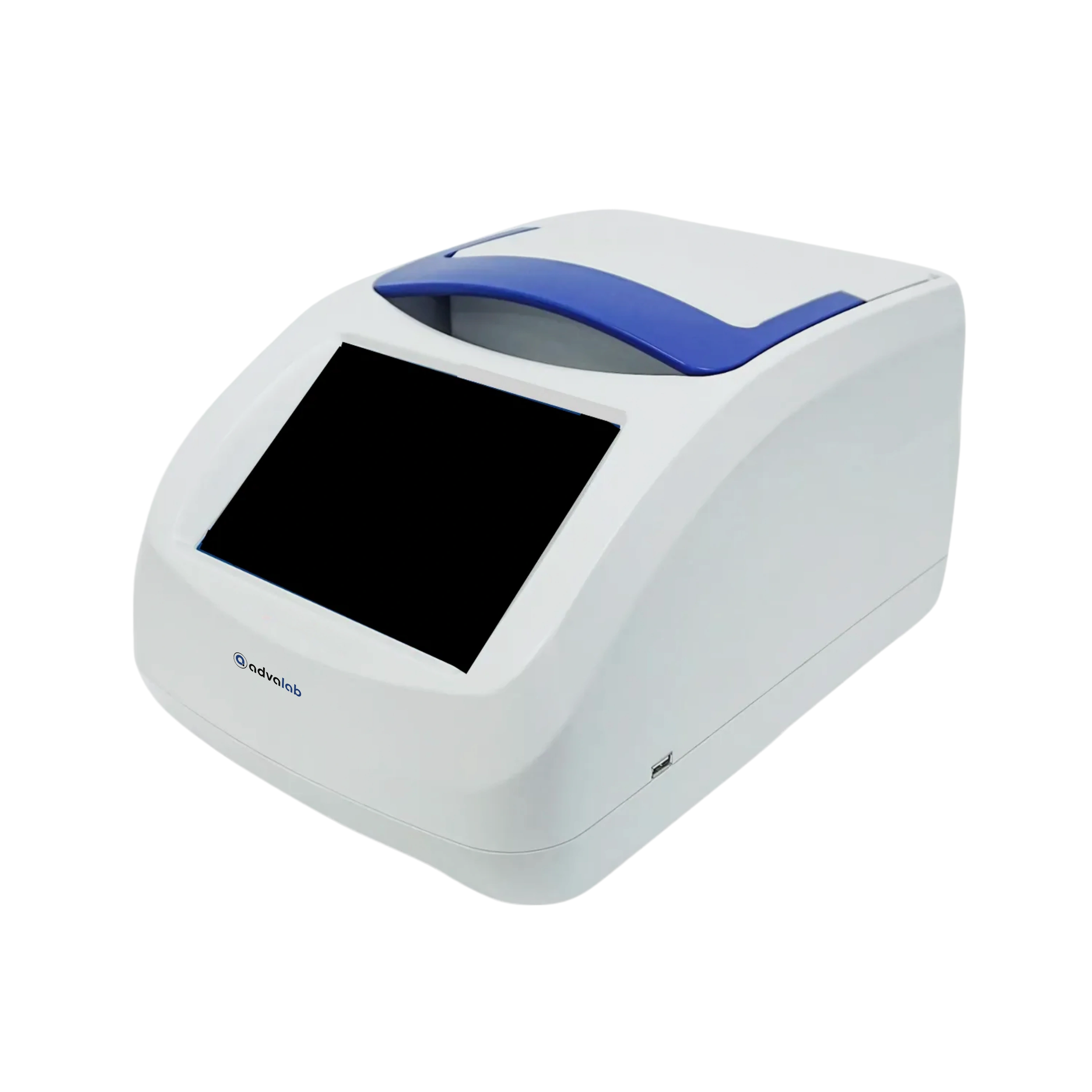
Our Gradient Thermal Cycler ADGTC-501 ensures precise accuracy in molecular biology, medical, food, and genetic testing applications.

1. Is the Gradient Thermal Cycler portable?
Yes, our Gradient Thermal Cycler features a small footprint and compact design, making it easy to move and ideal for limited lab spaces. It's lightweight yet durable for reliable transport. Suitable for use in mobile labs, classrooms, or shared lab environments.
2. What is the purpose of the heated lid in this Gradient Thermal Cycler?
The heated lid in this Gradient Thermal Cycler prevents condensation on tube caps, ensuring consistent reaction volumes. It also helps maintain uniform temperature across samples for accurate PCR results. It eliminates the need for oil overlays. The lid automatically adjusts to fit various tube types for optimal sealing.
3. What happens if the power goes off during a run in Gradient Thermal Cycler?
This Gradient Thermal Cycler features automatic power failure recovery. It resumes the program from the point of interruption once power is restored, ensuring experiment continuity and data integrity. No need to restart the entire protocol, saving time and reagents. A built-in memory safely stores run parameters even during outages.
4. What happens to the heated lid in the Gradient Thermal Cycler when the sample temperature drops below 30??
This Gradient Thermal Cycler’s heated lid automatically turns off when the sample temperature drops below 30? or once the program concludes, ensuring optimal energy efficiency and protection for the samples. This feature helps prevent unnecessary heat exposure and potential sample degradation. It also contributes to prolonging the lifespan of the equipment by reducing wear on the heating components.
5. How many programs can be stored in the Gradient Thermal Cycler?
This Gradient Thermal Cycler can store up to 200 programs, allowing for easy access and efficient management of multiple protocols without the need to re-enter settings. The stored programs can be quickly retrieved, saving valuable time and ensuring consistency in repeated experiments. Users can customize and update stored programs as needed for ongoing research or process changes.
6. What is Gradient Thermal Cycler?
Gradient Thermal Cycler is a technique that uses a thermal cycler with a temperature gradient across the heating block. This allows users to test multiple annealing temperatures in a single run, helping to quickly identify the optimal temperature for primer binding. It is especially useful during primer validation and assay development.
7. Why is Gradient Thermal Cycler used?
Gradient PCR is used to optimize PCR conditions, especially the annealing temperature, which is critical for specificity and efficiency. It helps reduce trial-and-error by allowing multiple conditions to be tested simultaneously. This improves accuracy while saving time and reagents during PCR setup.
8. What are the benefits of Gradient Thermal Cycler?
Gradient Thermal Cycler offers several benefits, particularly during the optimization phase of PCR. It saves time by allowing multiple annealing temperatures to be tested in a single run, eliminating the need for separate experiments. This approach also reduces reagent use and overall costs. Gradient PCR improves efficiency and specificity by quickly identifying the optimal annealing temperature.
| Capacity | 0.2 mL × 384-well, aluminum |
| Thermal Control System | Three independently controlled Peltier modules with peripheral edge heating |
| Temperature Control Accuracy | ±0.1°C |

| Capacity | 0.2 mL × 96-well, aluminum |
| Thermal Control System | Three independently controlled Peltier modules with peripheral edge heating |
| Temperature Control Accuracy | ±0.1°C |
| Capacity |
96×0.2 ml (PCR plate without/semi skirt) 12×8×0.2 ml (strips) 8×12×0.2 ml (strips) 0.2ml tubes (height 20 to 23mm) |
| Maximum Heating Rate | 5℃/s |
| Maximum Cooling Rate | 4.5℃/s |
| Tubes Capacity |
0.2 ml microtubes 8 × 0.2 ml tube strips 96 × 0.2 ml PCR plate (no/semi-skirted) |
| Capacity | 96 × 0.2 ml |
| Maximum Heating Up Rate | 6℃/s |

| Capacity: | 2 × 0.2 mL × 48-wells, aluminum |
| Thermal Control System : | Three independently controlled Peltier modules with peripheral edge heating |
| Temperature Control Accuracy : | ±0.1°C |

| Capacity: | 2 × 0.2 mL × 48-wells, aluminum |
| Thermal Control System: | Peltier |
| Temperature Control Accuracy : | ±0.1°C |

| Capacity: | 32 x 0.2ml tubes, 4 x 8 tube strips |
| Temperature Setting Range: | 0℃ to 100℃ |
| Maximum Heating Time: | 4℃/sec |