

| Glass Containers |
9 units capacity 1.2 L each |
| Wax Cups |
3 units capacity 1 L each |
| Temperature Control Range | 60 to 99 °C |
| Cup Operating Time | 0 to 59 hours 59 minutes |
| Operating Conditions |
Ambient temperature +5 °C to 40 °C relative humidity < 85% (at 20 ± 5 °C) |
| Vertical Reciprocating Motion | 3 cycles per minute |
| Tissue Basket Dimensions | Ø95 × 100 mm, Barrel type |
| Processing Mode | Independent operation of each cup |
| Packaging Method | Wooden case |
| Layer Nacelle Dimensions | Ø95 × 80 mm, 5-layer configuration |
| Net Volume | 0.2 m³ |
| Power Consumption | 400 to 500 W |
| Power Supply | AC 220 V 50 Hz / AC 110 V 50 Hz |
| Machine Exterior Dimensions | 750 × 760 × 700 mm |
| Tank Exterior Dimensions | 610 × 400 × 520 mm |
| Net Weight | 60 kg |
| Gross Weight | 100 kg |
Spin Tissue Processor ADSTP-501 is used in histopathology laboratories for automating tissue specimen processing, ensuring accuracy, efficiency, and consistent results in diagnostic and research applications.
Reagent bottle | 9 pcs |
Paraffin wax tank | 3 pcs |
Paraffin wax tank connection line | 3 pcs |
Tissue basket | 1 pc |
Tissue cassette | 20 pcs |
Hexagonal wrench | 1 pc |
Screwdriver | 1 pc |
Fuse (5A) | 2 pcs |
Power line | 1 line |
1. What is the capacity of the Spin Tissue Processor ADSTP-501?
It is equipped with 9 glass reagent containers, each holding up to 1.2 liters, and one dedicated paraffin wax cup with a 1-liter capacity. This arrangement accommodates multiple tissue samples simultaneously, reducing the need for frequent refilling. The design supports high-throughput laboratory environments. Each container is positioned for quick access and minimal spillage.
2. What is the temperature range of the Spin Tissue Processor ADSTP-501?
Spin Tissue Processor ADSTP-501 maintains a heating range between 60 °C and 99 °C, which is ideal for paraffin wax melting and tissue infiltration processes. This range allows precise control over temperature-sensitive stages of sample preparation. Uniform heating ensures consistent results across all samples. The insulated wax bath maintains stable temperatures without excessive energy consumption.
3. What makes the Spin Tissue Processor ADSTP-501 efficient?
It incorporates an exchange jar system, enabling quick switching between reagents with minimal manual intervention. This mechanism minimizes cross-contamination risks and enhances productivity. Automatic rotation and controlled immersion cycles optimize reagent usage. The design reduces turnaround time between runs, increasing laboratory output. Overall, it streamlines workflow while maintaining consistent processing quality.
4. How is the Spin Tissue Processor ADSTP-501 controlled?
Spin Tissue Processor ADSTP-501 is operated through an advanced PLC interface. This system allows users to set parameters such as immersion time, rotation cycles, and temperature with high accuracy. The touch control panel is user-friendly and supports multi-step programming. Automated alerts and error indicators enhance safety during operation. Such control ensures repeatable and accurate processing for every batch.
5. How does the Spin Tissue Processor ADSTP-501 prevent reagent evaporation?
Spin Tissue Processor ADSTP-501 features tightly sealed reagent containers and a controlled environment to reduce solvent evaporation. Its cover system minimizes exposure to air during operation. This ensures consistent reagent strength for every batch. The reduced loss helps maintain cost efficiency over time. By preserving reagent quality, it enhances the accuracy of histological results.
6. What is a Spin Tissue Processor?
A Spin Tissue Processor is a laboratory instrument designed for automated specimen processing in histopathology. It uses controlled rotation and negative pressure to ensure uniform reagent penetration. This system handles multiple cassettes in one cycle for high efficiency. Its design supports consistent results with minimal manual intervention.
7. What are Spin Tissue Processors used for?
Spin Tissue Processors are used for preparing biological samples for microscopic study. They perform sequential treatment with various reagents to preserve and embed tissues. These systems are essential in pathology labs for accurate diagnostic outcomes. Their capabilities improve workflow, save time, and enhance sample quality.

| Glass Containers |
9 units capacity 2.3 L each |
| Wax Cups |
3 units capacity 1.8 L each |
| Temperature Control Range | 60 to 99 °C |

| Capacity: | 1000 mL |
| Number of Tanks : | 12 tanks (including 3 paraffin wax tanks at the end) |
| Basket Capacity : | 60 specimens |

| Capacity: | 1500 mL |
| Number of Tanks: | 12 tanks (including 3 paraffin wax tanks at the end) |
| Basket Capacity : | 75 specimens |

| Capacity: | 200 (cassettes) |
| Number of Reagent Steps : | 9 reagent steps |
| Number of Paraffin Wax Steps : | 3 steps |

| Capacity: | 2200 mL |
| Number of Tanks : | 12 tanks (including 3 paraffin wax tanks at the end) |
| Temperature Setting : | 0 to 99 °C |
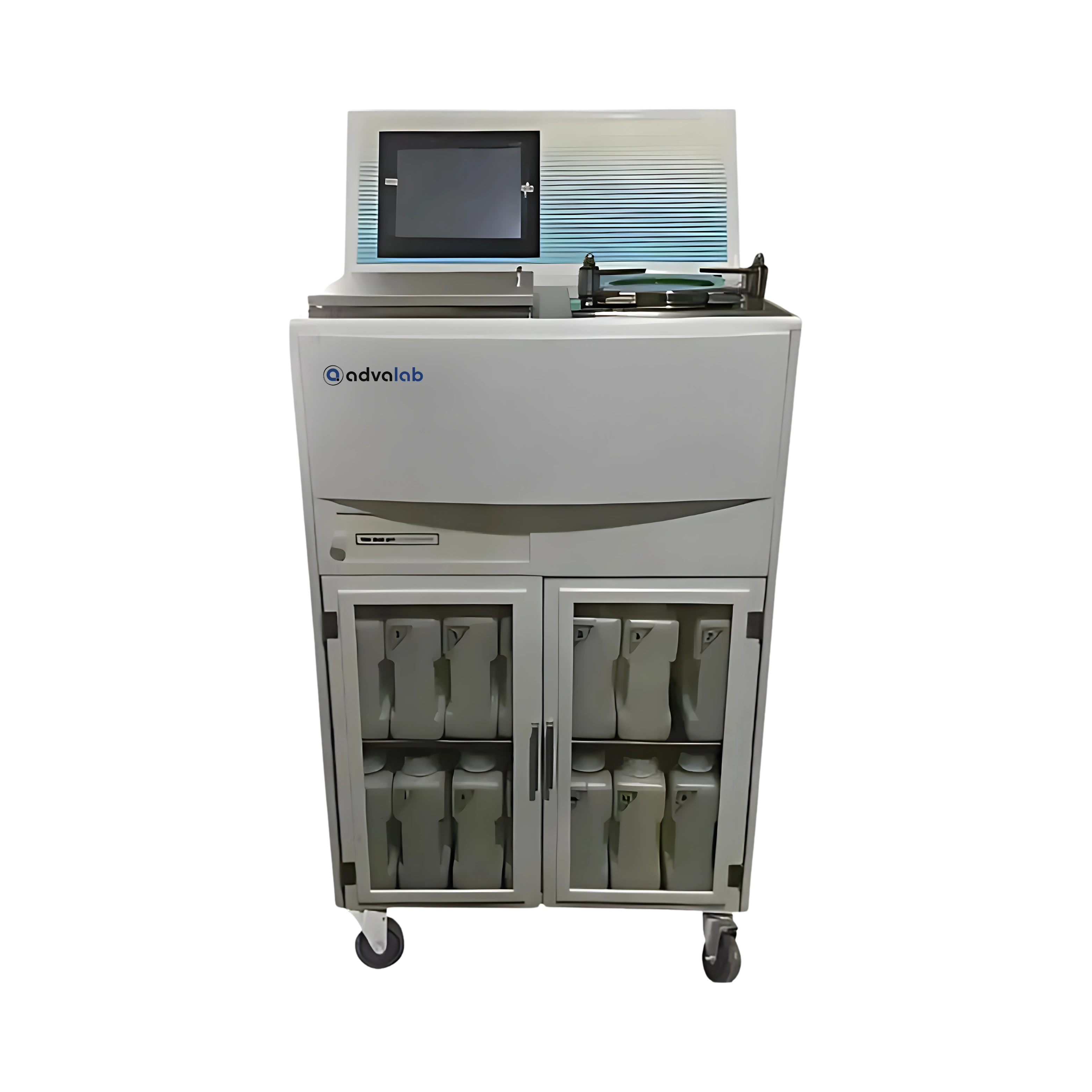
| Capacity: | 300 (cassettes) |
| Number of Reagent Steps : | 9 reagent steps |
| Number of Paraffin Wax Steps : | 3 steps |

| Capacity: | 100 (cassettes) |
| Number of Reagent Steps : | 9 reagent steps |
| Number of Paraffin Wax Steps : | 3 steps |

| Capacity: | 2 L |
| Number of Reagent Containers : | 144 |
| Processing Time : | 0 to 99 hours per container |