

| Capacity | 2200 mL |
| Number of Tanks | 12 tanks (including 3 paraffin wax tanks at the end) |
| Temperature Setting | 0 to 99 °C |
| Single Cylinder Working Time | Adjustable within 0 to 24 hours |
| Drip Retention Time | 5 to 999 seconds |
| Starting Time of the Cylinder | 45 to 120 seconds |
| Organization Protection Cylinder Position | 5 to 7th cylinder |
| Mixing Frequency | 3 times per minute |
| Packaging Type | Individually packed in a protective wooden case |
| Power Supply | AC 220 V ± 10%, 50 Hz ± 10% |
| Power Consumption | ≤ 500 W |
| Internal Dimensions (L × W × H) | 1250 × 410 × 560 mm |
| External Dimensions (L × W × H) | 1400 × 590 × 730 mm |
| Net Weight | 82 kg |
| Gross Weight | 173 kg |
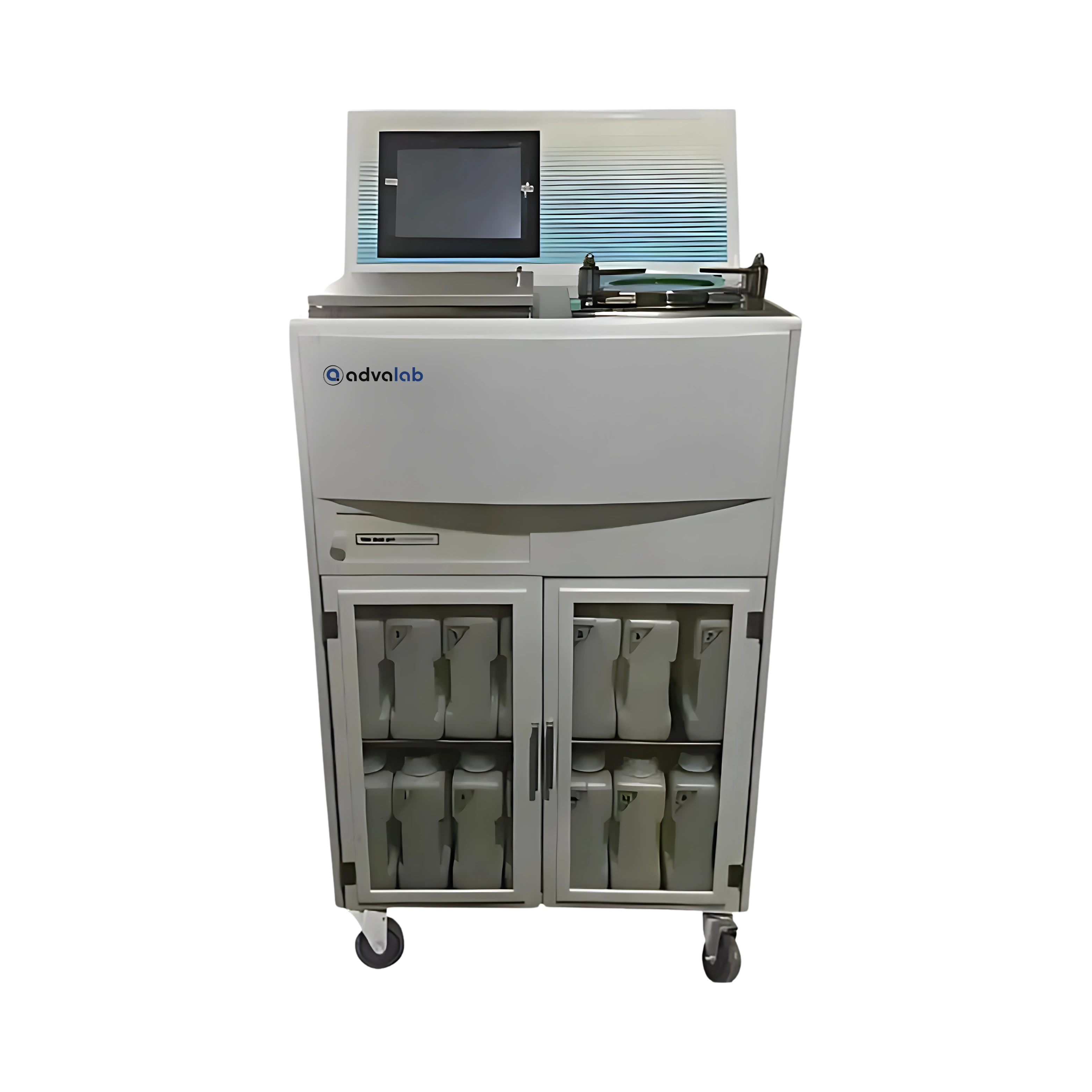
The Automatic Tissue Processor ADAT-503 serves in histopathology laboratories to process tissue specimens for accurate and detailed microscopic study.


1. What are the capacity and basket specifications of the Automatic Tissue Processor ADAT-503?
Automatic Tissue Processor ADAT-503 each tank holds 2200 mL of processing reagent for optimal efficiency. The specimen basket accommodates up to sixty standard dehydrating boxes, allowing multiple samples to be handled simultaneously. This setup enhances productivity while maintaining precision in preparation. The design supports smooth transfer between tanks without damaging specimens.
2. How many processing tanks does the Automatic Tissue Processor ADAT-503 have?
This unit features twelve tanks, including three dedicated paraffin wax units at the final stage. The arrangement supports a complete sequence of processing steps in a single run. Each tank is constructed for durability and chemical resistance. The configuration allows efficient reagent usage without unnecessary waste. Such capacity ensures high-throughput operation for busy laboratories.
3. Does the Automatic Tissue Processor ADAT-503 offer programmable operation?
Yes, it includes customizable running programs to suit different specimen types and processing requirements. Technicians can set time intervals and temperatures for each stage independently. These programs help achieve consistent results across different batches. The flexibility minimizes the risk of processing errors. Advanced programming supports overnight operation.
4. How energy efficient is the Automatic Tissue Processor ADAT-503?
Automatic Tissue Processor ADAT-503 consumes ?500 W, which is relatively low for continuous lab equipment. Its optimized heating and motor control reduce unnecessary power draw. This helps laboratories lower operating costs while maintaining performance. Energy efficiency contributes to reduced environmental impact. Efficient operation ensures sustainable daily use.
5. Can the Automatic Tissue Processor ADAT-503 handle different tissue types?
Yes, it is designed to process a variety of tissue samples, including delicate, dense specimens. Programmable settings allow adjustments for dehydration, clearing, and infiltration stages. Each program maintains precise control to prevent distortion. Versatility makes it valuable in pathology and research settings. This adaptability ensures consistent results across sample types.
6. What are Automatic Tissue Processors?
Automatic Tissue Processors automate the preparation of tissue samples through chemical treatments and embedding. They handle dehydration, clearing, and paraffin infiltration efficiently. These instruments ensure consistent and reliable specimen processing. This automation improves overall workflow in the laboratory.
7. Where are Automatic Tissue Processors used?
Automatic Tissue Processors are found in histopathology labs, research centers, and diagnostic facilities. They process tissue specimens for detailed microscopic examination. Their use supports accurate diagnosis and medical research. These processors are essential tools in pathology workflows.

| Capacity | 1500 mL |
| Number of Tanks | 12 tanks (including 3 paraffin wax tanks at the end) |
| Basket Capacity | 75 specimens |

| Capacity | 1000 mL |
| Number of Tanks | 12 tanks (including 3 paraffin wax tanks at the end) |
| Basket Capacity | 60 specimens |

| Capacity | 200 (cassettes) |
| Number of Reagent Steps | 9 reagent steps |
| Number of Paraffin Wax Steps | 3 steps |
| Capacity | 300 (cassettes) |
| Number of Reagent Steps | 9 reagent steps |
| Number of Paraffin Wax Steps | 3 steps |

| Glass Containers: | 9 units <br> capacity 2.3 L each |
| Wax Cups : | 3 units <br> capacity 1.8 L each |
| Temperature Control Range : | 60 to 99 °C |

| Glass Containers: | 9 units <br> capacity 1.2 L each |
| Wax Cups : | 3 units <br> capacity 1 L each |
| Temperature Control Range : | 60 to 99 °C |

| Capacity: | 2 L |
| Number of Reagent Containers : | 144 |
| Processing Time : | 0 to 99 hours per container |