

| Glass Containers |
9 units capacity 2.3 L each |
| Wax Cups |
3 units capacity 1.8 L each |
| Temperature Control Range | 60 to 99 °C |
| Vacuum Unit Pressure | 0.05 MPa |
| Standard Tissue Basket Size | Ø 130 × 110 mm |
| Standard Basket Capacity | 90 cassettes |
| Number of Standard Baskets | 1 (2 optional) |
| Programmable Infiltration Time | 99 h 59 min per station |
| Delayed Start | Up to 99 days, 99 hours, 59 minutes |
| Programs | 10 selectable programs |
| Additional Option | Two basket loading |
| Tissue Baskets | Made of metal, varying capacities up to 100 cassettes |
| Basket Stirring | 1-minute stirring every 4 minutes inside container |
| Battery Backup | 4 hours |
| Infiltration Time Control | Separately programmable for each station |
| Editing Capability | Programs can be edited or changed during processing run |
| Packaging Method | Wooden case |
| Net Volume | 0.3 m³ |
| Power Consumption | 400 to 500 W |
| Power Supply | AC 220 V 50 Hz / AC 110 V 50 Hz |
| Unit Dimensions (L × H) | 780 × 570 to 690 mm |
| Machine Exterior Dimensions | 880 × 880 × 800 mm |
| Tank Exterior Dimensions | 620 × 410 × 523 mm |
| Net Weight | 80 kg |
| Gross Weight | 110 kg |
The Spin Tissue Processor ADSTP-502 is utilized in histopathology laboratories to automate tissue specimen processing, delivering precise, efficient, and consistent outcomes for both diagnostic and research purposes.
Reagent bottle | 9 pcs |
Paraffin wax tank | 3 pcs |
Paraffin wax tank connection line | 3 pcs |
Tissue basket | 1 pc |
Tissue cassette | 20 pcs |
Hexagonal wrench | 1 pc |
Screwdriver | 1 pc |
Fuse (5A) | 2 pcs |
Power line | 1 line |
1. What safety features are included in the Spin Tissue Processor ADSTP-502?
The Spin Tissue Processor ADSTP-502 is designed with multiple safety functions, including over-temperature protection for the wax bath. It features secure container placement to avoid spills dislodging during rotation. The PLC system issues alert in case of operational errors. Non-slip supports keep the unit stable on the workbench. These measures protect both the user and the samples being processed.
2. How easy is it to maintain the Spin Tissue Processor ADSTP-502?
The Spin Tissue Processor ADSTP-502 is engineered for straightforward maintenance with easily removable containers and accessible internal components. Smooth surfaces and minimal crevices simplify cleaning. The design allows for quick reagent replacement without complex disassembly. Built-in diagnostics assist in identifying issues early. This reduces downtime and keeps the processor in optimal working condition.
3. What is the processing cycle time of the Spin Tissue Processor ADSTP-502?
Spin Tissue Processor ADSTP-502 offers customizable processing cycles, enabling adjustments in immersion time from minutes to several hours. This flexibility allows laboratories to adapt the unit for routine tissue protocols. Its automated rotation ensures even reagent penetration. Programmable settings help reduce manual intervention during long runs.
4. Is the Spin Tissue Processor ADSTP-502 energy efficient?
The Spin Tissue Processor ADSTP-502 is designed with insulated heating elements and a low-power consumption system. This ensures that energy is used efficiently during the heating and rotation stages. The reduced energy demand lowers operational costs over time. Stable temperature retention minimizes the need for frequent reheating. These features make it an environmentally conscious choice for laboratories.
5. What is the capacity of the Spin Tissue Processor ADSTP-502?
Spin Tissue Processor ADSTP-502 is equipped with 9 glass reagent containers, each holding up to 2.3 liters, and one dedicated paraffin wax cup with a 1.8-liter capacity. This arrangement accommodates multiple tissue samples simultaneously, reducing the need for frequent refilling. The design supports high-throughput laboratory environments. Each container is positioned for quick access and minimal spillage.
6. What is a Spin Tissue Processor?
A Spin Tissue Processor is a laboratory instrument designed for automated specimen processing in histopathology. It uses controlled rotation and negative pressure to ensure uniform reagent penetration. This system handles multiple cassettes in one cycle for high efficiency. Its design supports consistent results with minimal manual intervention.
7. What are Spin Tissue Processors used for?
Spin Tissue Processors are used for preparing biological samples for microscopic study. They perform sequential treatment with various reagents to preserve and embed tissues. These systems are essential in pathology labs for accurate diagnostic outcomes. Their capabilities improve workflow, save time, and enhance sample quality.

| Glass Containers |
9 units capacity 1.2 L each |
| Wax Cups |
3 units capacity 1 L each |
| Temperature Control Range | 60 to 99 °C |

| Capacity: | 200 (cassettes) |
| Number of Reagent Steps : | 9 reagent steps |
| Number of Paraffin Wax Steps : | 3 steps |

| Capacity: | 2200 mL |
| Number of Tanks : | 12 tanks (including 3 paraffin wax tanks at the end) |
| Temperature Setting : | 0 to 99 °C |
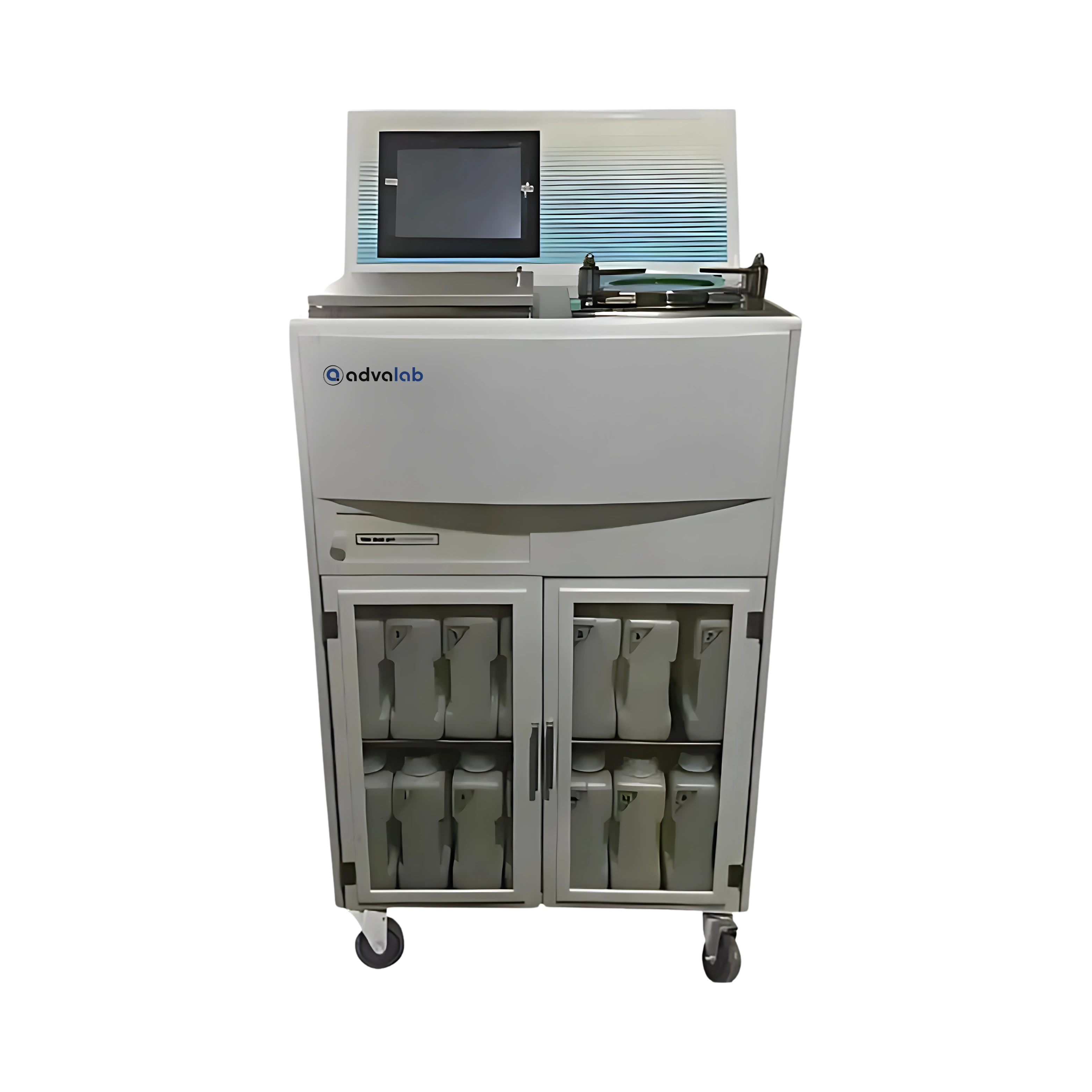
| Capacity: | 300 (cassettes) |
| Number of Reagent Steps : | 9 reagent steps |
| Number of Paraffin Wax Steps : | 3 steps |

| Capacity: | 1500 mL |
| Number of Tanks: | 12 tanks (including 3 paraffin wax tanks at the end) |
| Basket Capacity : | 75 specimens |

| Capacity: | 100 (cassettes) |
| Number of Reagent Steps : | 9 reagent steps |
| Number of Paraffin Wax Steps : | 3 steps |

| Capacity: | 1000 mL |
| Number of Tanks : | 12 tanks (including 3 paraffin wax tanks at the end) |
| Basket Capacity : | 60 specimens |

| Capacity: | 2 L |
| Number of Reagent Containers : | 144 |
| Processing Time : | 0 to 99 hours per container |