
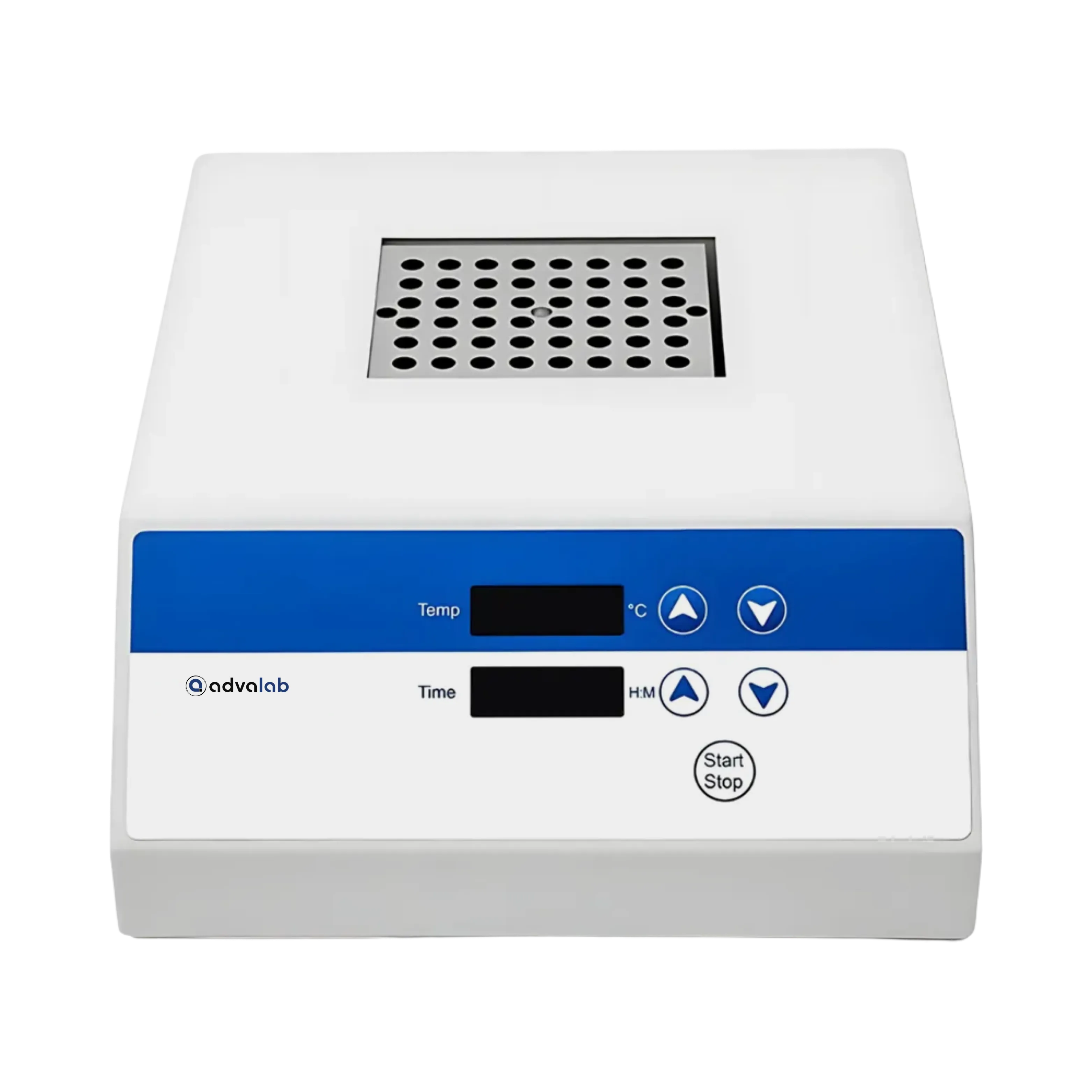
| Temperature Range | RT + 5℃ to 150℃ |
| Heating Up Rate |
≤ 10 min, 20℃ to 100℃ ≤ 30 min, 20℃ to 150℃ |
| Temperature Stability |
±0.3℃ at 40℃ ±0.5℃ at 100℃ ±1℃ at 120℃ |
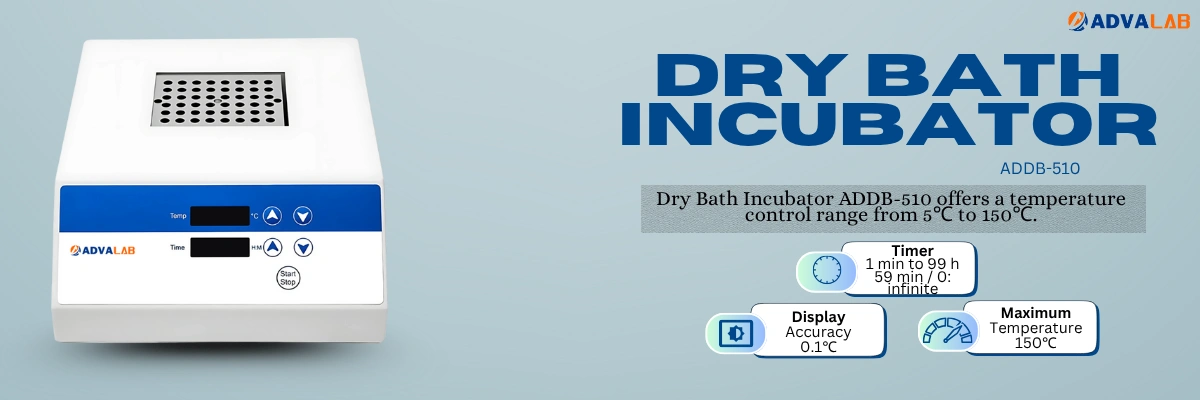
| Display Accuracy | 0.1℃ |
| Timer | 1 min to 99 h 59 min / 0: infinite |
| Maximum Temperature | 150℃ |
| Power Consumption | 200W |
| Dimensions (W × D × H) | 220 × 260 × 100 mm |
Our Dry Bath Incubator ADDB-510 is widely used in laboratory applications such as sample preservation and reaction processes. It provides precise temperature control, making it ideal for DNA amplification, enzyme reactions, and other molecular biology applications.
Tube Diameter | Capacity | Size (W×D×H) | Quantity |
Block 01 for 6mm (φ6.5×47) | 48 ml | 96.5×76.5×50 mm | 1 Pc |
Block 02 for 7mm (φ7.5×47) | 48 ml | 96.5×76.5×50 mm | 1 Pc |
Block 03 for 10mm (φ10.5×47) | 24 ml | 96.5×76.5×50 mm | 1 Pc |
Block 04 for 12mm (φ12.5×47) | 24 ml | 96.5×76.5×50 mm | 1 Pc |
Block 05 for 13mm (φ13.5×47) | 24 ml | 96.5×76.5×50 mm | 1 Pc |
Block 06 for 15mm (φ15.5×47) | 12 ml | 96.5×76.5×50 mm | 1 Pc |
Block 07 for 16mm (φ16.5×47) | 12 ml | 96.5×76.5×50 mm | 1 Pc |
Block 08 for 19mm (φ19.5×47) | 12 ml | 96.5×76.5×50 mm | 1 Pc |
Block 09 for 20mm (φ20.5×47) | 12 ml | 96.5×76.5×50 mm | 1 Pc |
Block 10 for 26mm (φ26.5×47) | 8 ml | 96.5×76.5×50 mm | 1 Pc |
Block 11 for 28mm (φ28.5×47) | 6 ml | 96.5×76.5×50 mm | 1 Pc |
Block 12 for 38mm (φ38.5×47) | 3 ml | 96.5×76.5×50 mm | 1 Pc |
Block 13 for 0.2ml tubes (φ6.1×17) | 48 ml | 96.5×76.5×50 mm | 1 Pc |
Block 14 for 0.5ml tubes (φ8×23) | 48 ml | 96.5×76.5×50 mm | 1 Pc |
Block 15 for 1.5ml tubes (φ10.8×31) | 24 ml | 96.5×76.5×50 mm | 1 Pc |
Block 16 for 2ml tubes (φ10.8×31) | 24 ml | 96.5×76.5×50 mm | 1 Pc |
Lid | - | 145×105×62.5 | 1 Pc |

1. What types of tubes can it accommodate in a Dry Bath Incubator?
Dry Bath Incubators can accommodate various tube sizes such as 0.2 mL, 0.5 mL, 1.5 mL, 2.0 mL, 15 mL, and 50 mL. The compatibility depends on the interchangeable heating block installed in the unit. This allows flexibility for a wide range of laboratory applications and sample volumes.
2. Which types of samples are suitable for incubation in a Dry Bath Incubator?
Dry Bath Incubators are highly versatile and can accommodate a variety of sample types commonly used in molecular biology, clinical diagnostics, and biochemical research. They are ideal for temperature-sensitive processes such as DNA and RNA amplification (e.g., PCR), as well as enzyme-driven reactions. In clinical settings, they are also used to warm blood, serum, and other biological fluids that require precise thermal control.
3. Does the Dry Bath Incubator have any safety features for temperature control?
Yes, the Dry Bath Incubator is equipped with built-in over-temperature protection. This feature automatically prevents the unit from exceeding safe temperature limits, ensuring both user safety and the integrity of sensitive samples during operation.
4. Does the Dry Bath Incubator require any special maintenance?
• Minimal maintenance is required to keep the Dry Bath Incubator operating efficiently. • Regularly clean the unit to prevent dust and residue buildup. • Avoid spilling liquids into the chamber to protect internal components. • Inspect the power cord and heating block periodically for signs of wear or damage.
5. Can Dry Bath Incubators be used for long incubation periods?
Yes, Dry Bath Incubators are designed to maintain temperature stability over extended periods, making them suitable for overnight or multi-hour protocols. They provide consistent and precise thermal control, ensuring reliable results for long-term incubation. The incubators are equipped with features like built-in timers and temperature accuracy, which help prevent overheating or fluctuations during extended use. For best results, avoid opening the incubator frequently to maintain a stable internal environment.
6. What is a Dry Bath Incubator?
A Dry Bath Incubator is a laboratory instrument designed to regulate and maintain a stable temperature for samples, eliminating the need for water. It is commonly used for heating, growing, or storing biological or chemical samples under controlled conditions. Its precise temperature control makes it ideal for applications such as enzyme reactions, DNA denaturation, and sample incubation.
7. Can a Dry Bath Incubator be used for cell culture?
A Dry Bath Incubator is not suitable for cell culture, as it lacks the ability to control humidity and CO? levels, which are essential for proper cell growth. It is designed for molecular biology applications like PCR or enzyme reactions. For cell culture, a CO? incubator with precise environmental control is more appropriate. These incubators also maintain optimal temperature, pH, and gas conditions crucial for maintaining cell viability.
8. How do I ensure even heating in a Dry Bath Incubator?
To ensure even heating in a Dry Bath Incubator, always use the appropriate block size for your sample containers. Make sure the block is correctly positioned and seated within the incubator. Regularly calibrating the incubator ensures accurate temperature readings. Avoid overcrowding to allow for uniform heat distribution, and ensure the incubator door remains closed during operation to maintain stable conditions.
9. What are the typical features of a Dry Bath Incubator?
Features of a Dry Bath Incubator: • Digital temperature control: Allows for precise adjustments and displays the current temperature. • Timer function: Allows users to set incubation times. • Multiple blocks: Our incubators offer interchangeable blocks to accommodate different sample sizes. • Over-temperature alarm: Alerts users if the temperature exceeds the set point.
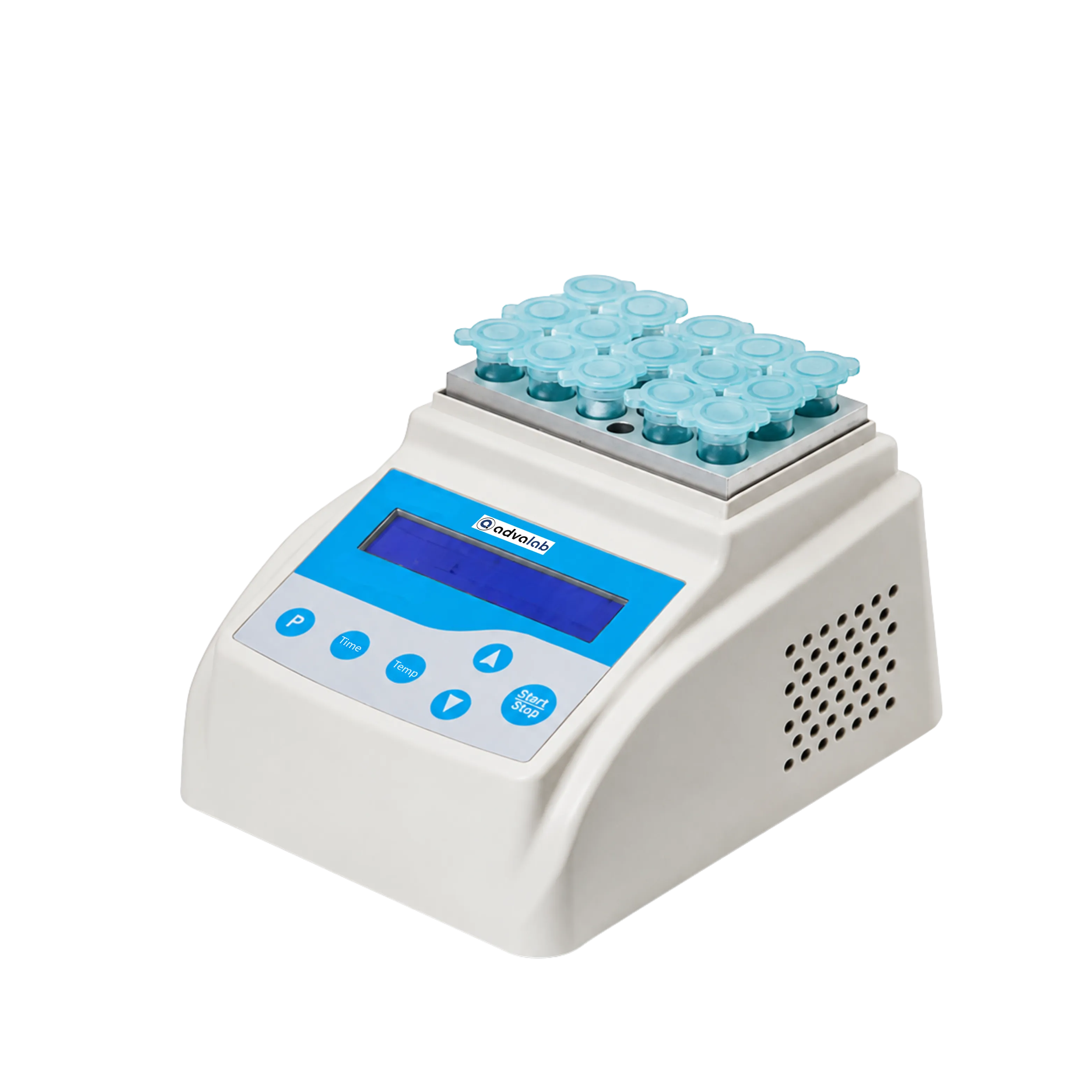
| Temperature Setting Range | 0℃ to 100℃ |
| Temperature Control Range | RT. -20℃ to 100℃ |
| Temperature Accuracy | ≤ ± 0.3℃ |
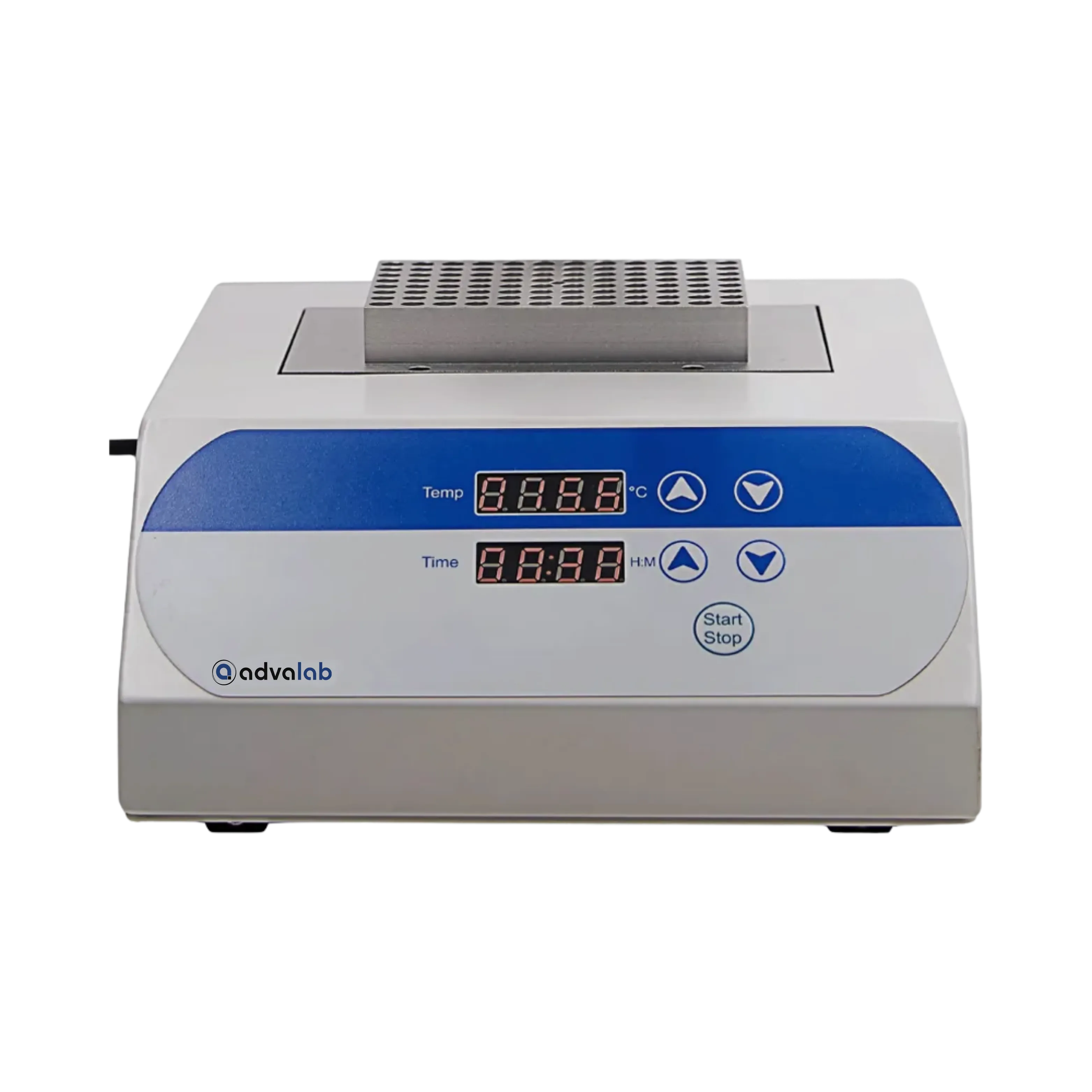
| Temperature Range | RT + 5℃ to 150℃ |
| Heating Up Rate |
≤ 10 min, 20℃ to 100℃ ≤ 30 min, 20℃ to 150℃ |
| Temperature Stability |
±0.3℃ at 40℃ ±0.5℃ at 100℃ ±1℃ at 120℃ |
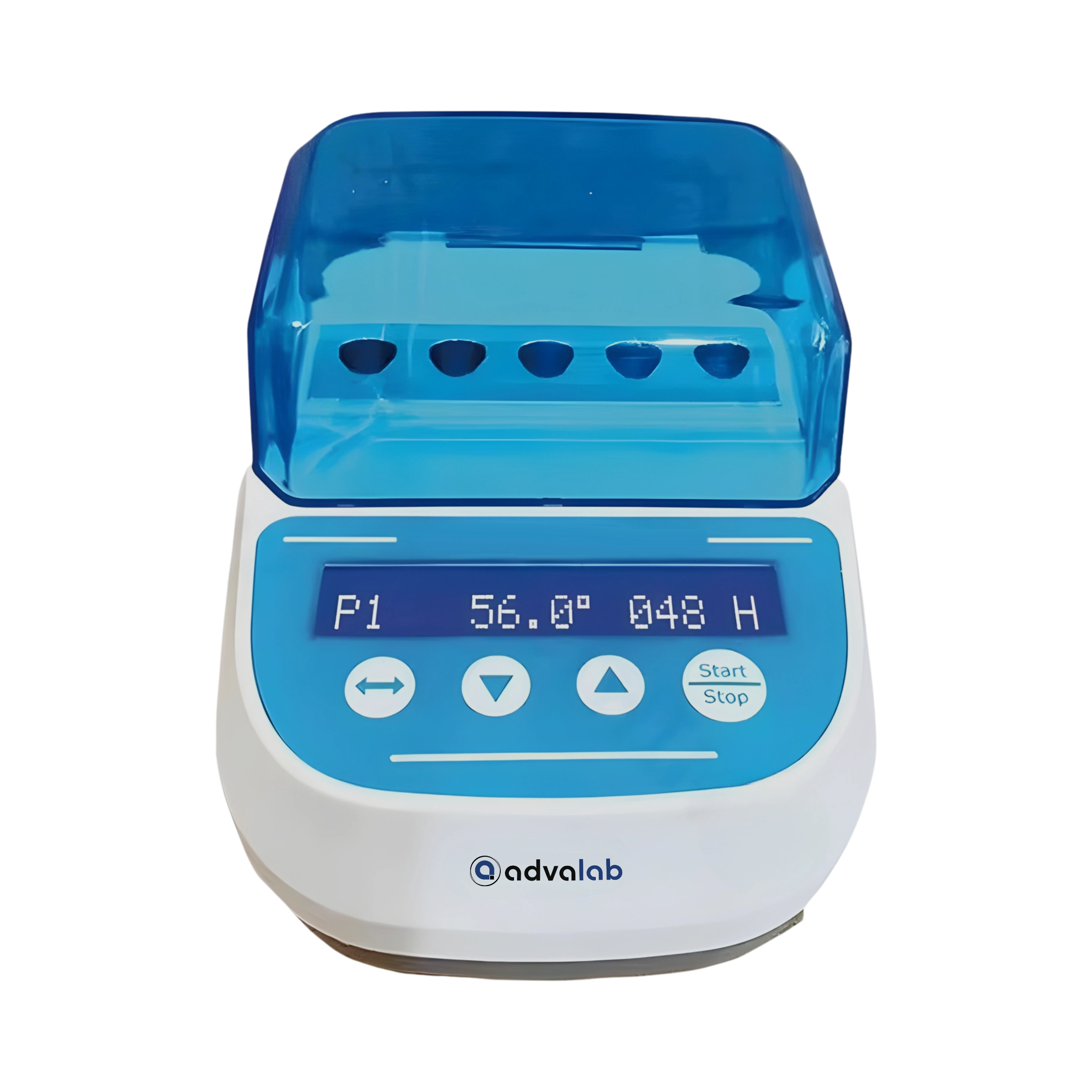
| Temperature Setting Range | 0℃ to 100℃ |
| Temperature Control Range | RT +5℃ to 100℃ |
| Temperature Accuracy | ≤ ± 0.5℃ at 37℃ |
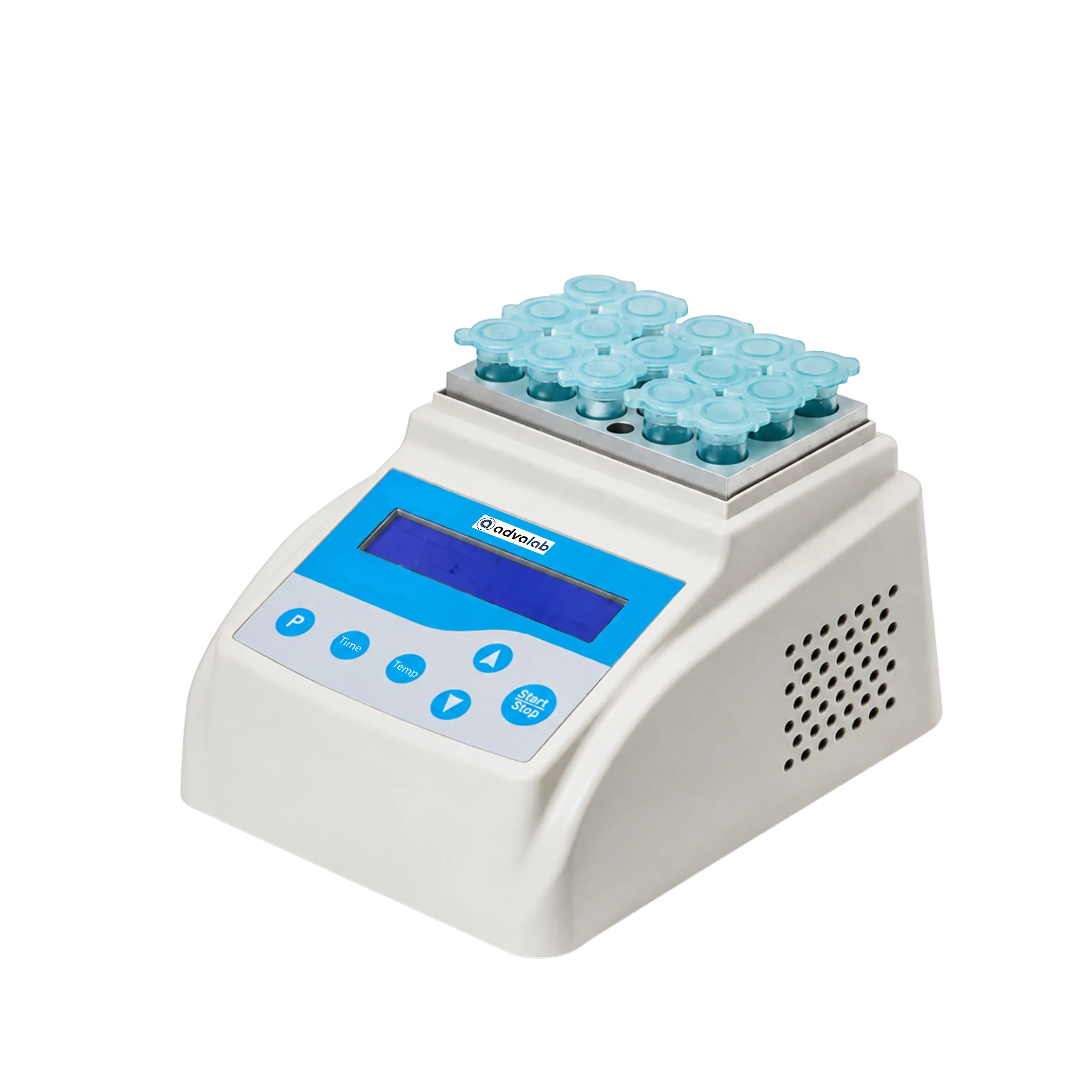
| Temperature Setting Range | 0℃ to 100℃ |
| Temperature Control Range | RT+5℃ to 100℃ |
| Temperature Accuracy | ≤ ± 0.3℃ |
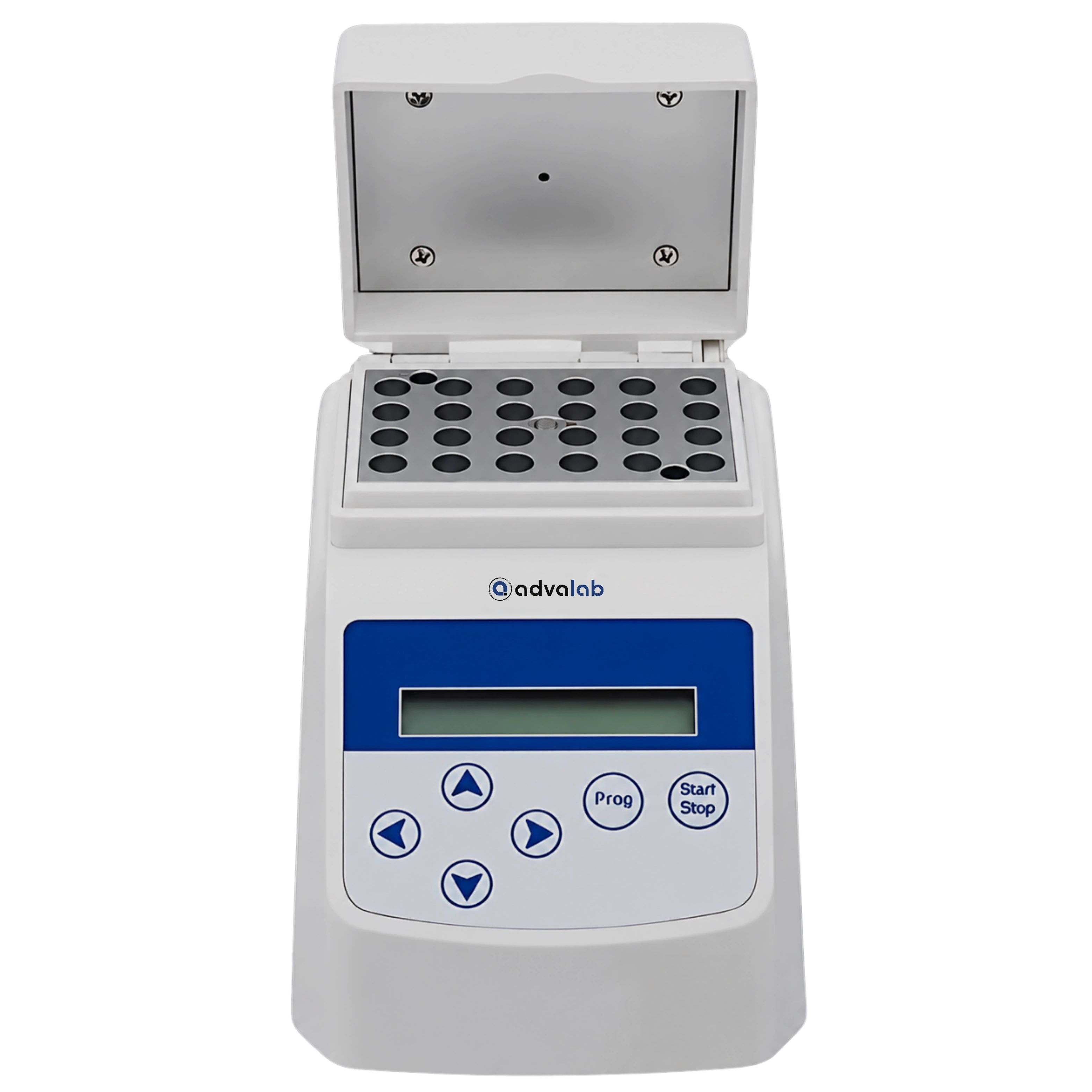
| Temperature Range: | RT+5℃ to 100℃ |
| Temperature Accuracy: | ±0.3℃ |
| Temperature Set Range: | 0℃ to100℃ |
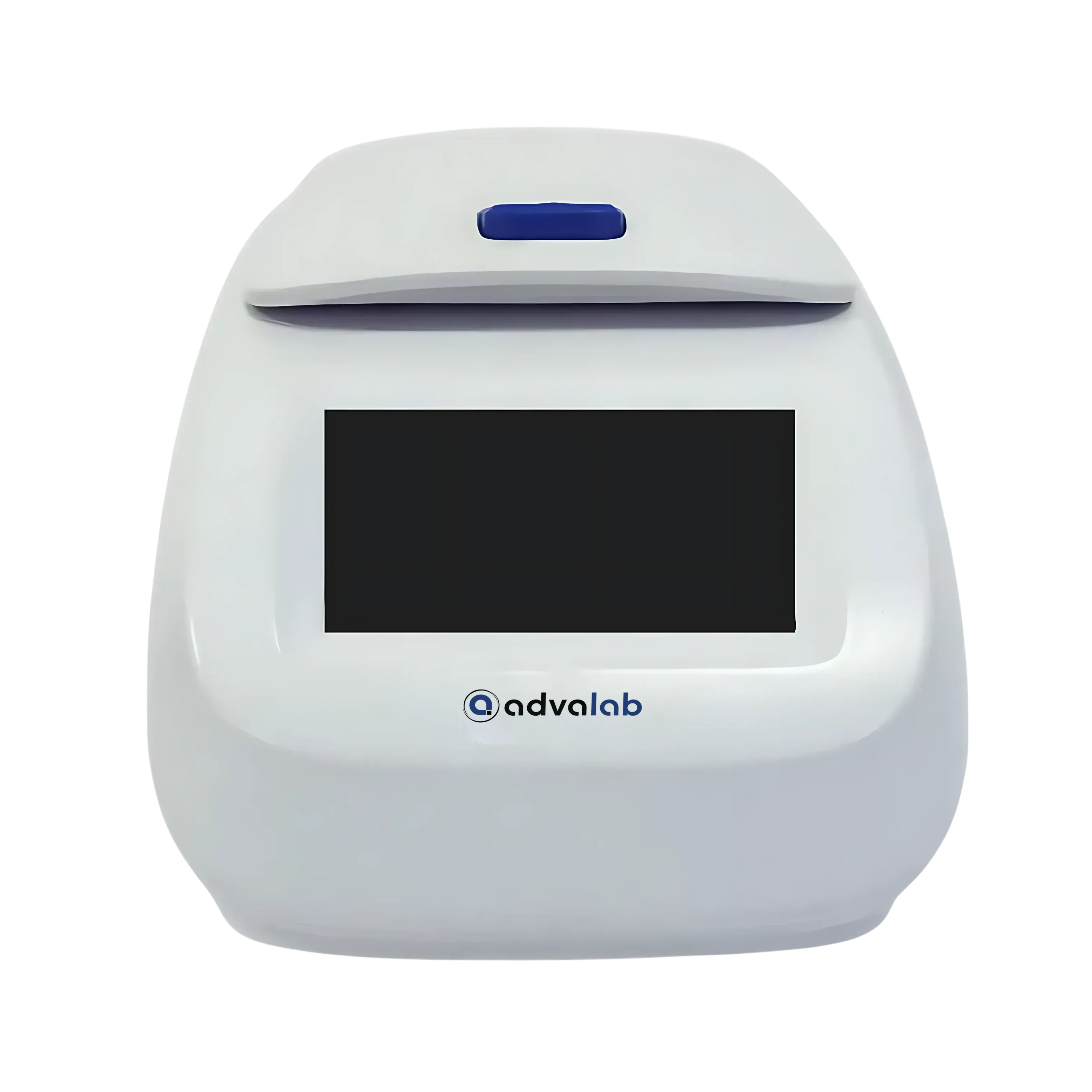
| Block Temperature Setting Range: | RT +5℃ to 105℃ |
| Temperature Set Range: | 0℃ to 105℃ |
| Lid Temperature Setting Range: | RT +5°C to 110°C |
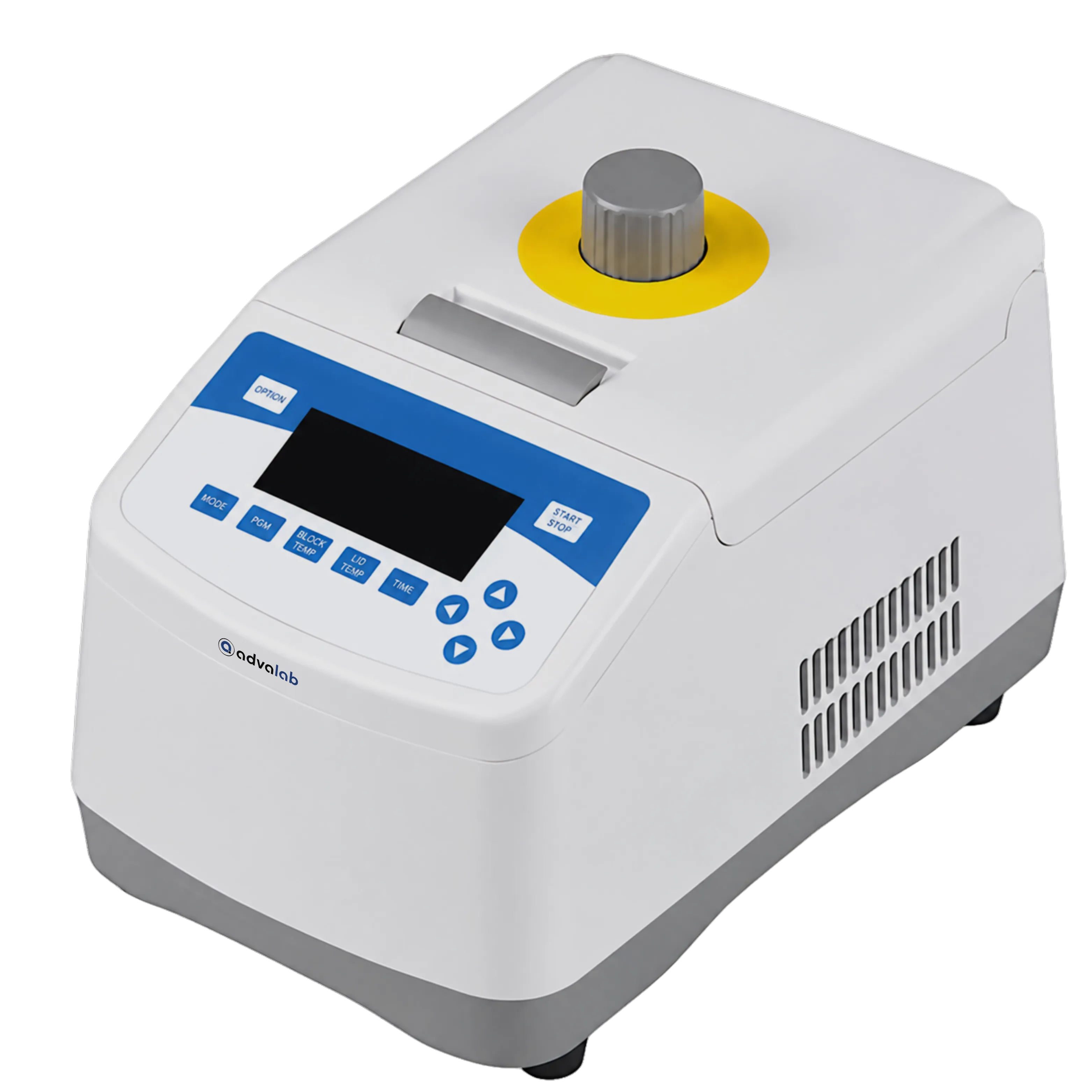
| Temperature Setting Range: | 0℃ to 100℃ |
| Temperature Control Range: | RT +5℃ to 100℃ |
| Temperature Accuracy: | ≤ ± 0.3℃ at 37℃ |
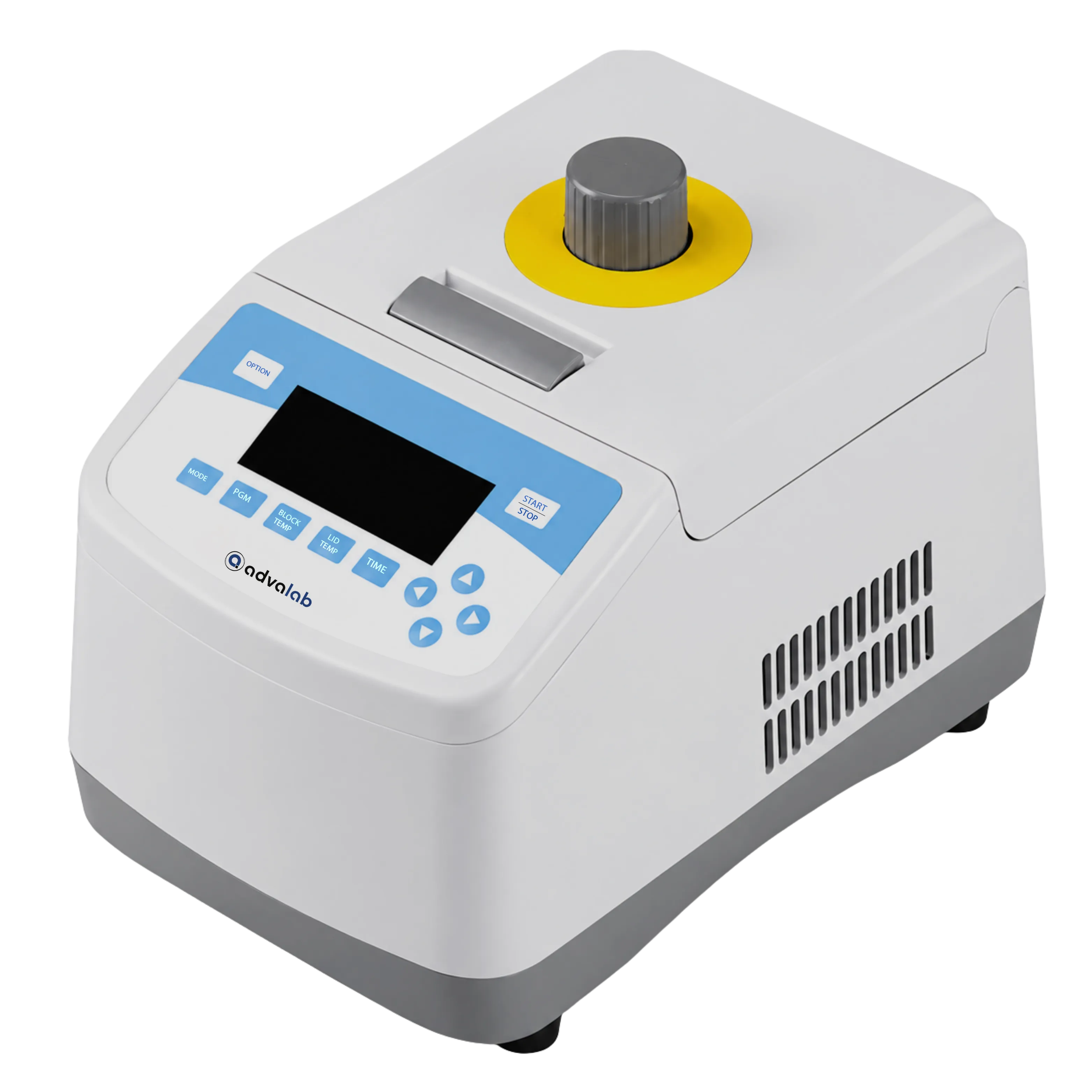
| Temperature Setting Range: | -10℃ to 100℃ |
| Temperature Control Range: | RT -25℃ to 100℃ |
| Temperature Accuracy: | ≤ ± 0.3℃ at 37℃ |
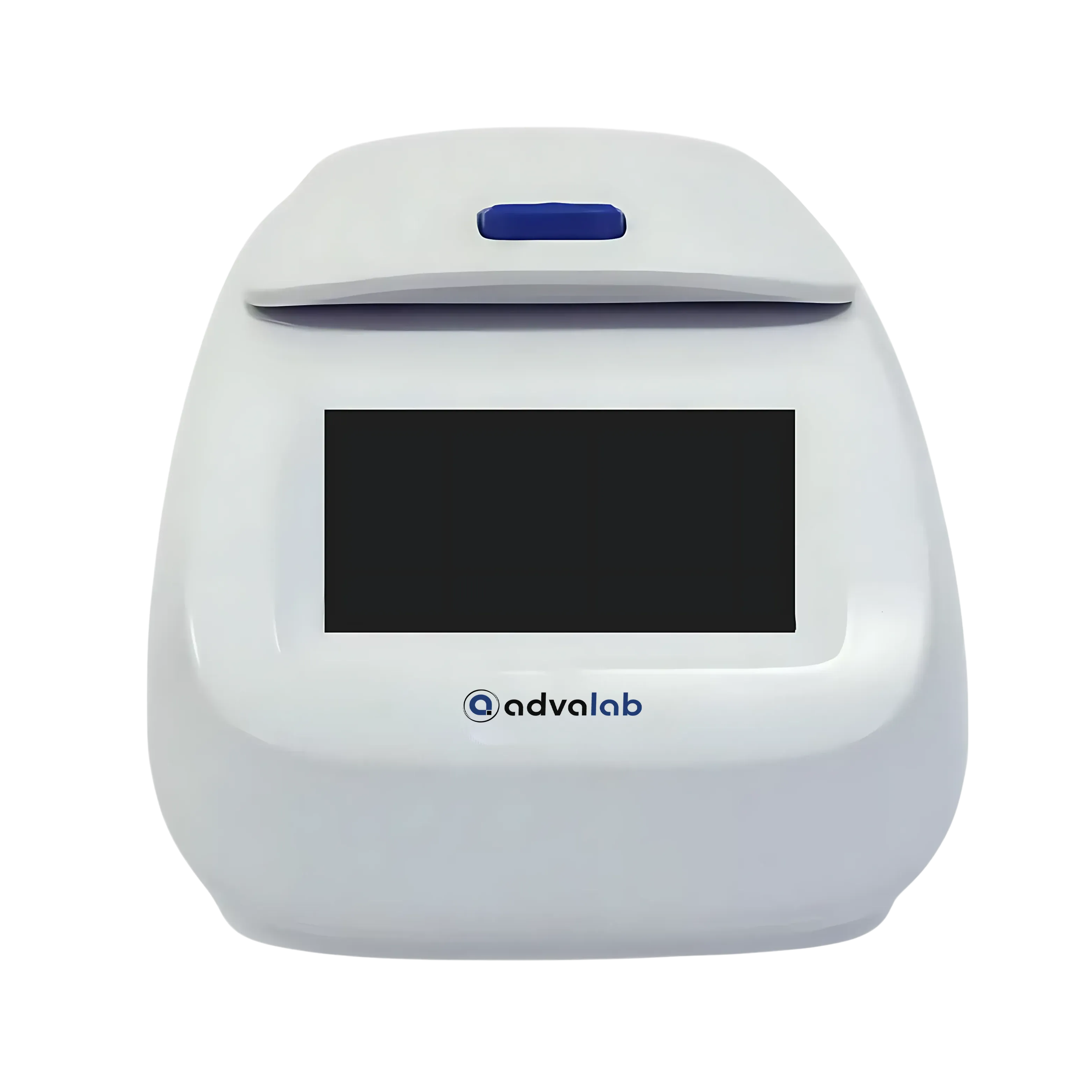
| Block Temperature Setting Range: | RT -30°C to 105°C |
| Temperature Set Range: | -10°C to 105°C |
| Lid Temperature Setting Range: | RT +5°C to 110°C |