


| Cold Trap Temperature | -60℃ (below) |
| Freeze Drying Time | 36 to 48 h |
| Cold Trap Volume | 9.5 L |
| Freeze Drying Area | 0.12 (to 0.18) m² |
| Water Capture Capacity | 4 Kg/batch |
| Vacuum Degree | 10 Pa (below) |
| Vacuum Pump | 2 L/s |
| Refrigerant | R600a + R290 + R23 |
| Shelf Quantity | 4 (to 6) pcs |
| Shelf Space | 76 (to50) mm |
| Loading Capacity | 300 ml |
| Total Loading Capacity | 1200 (to1800) ml |
| Tray Size | ф200 × 20 mm |
| Tray Quantity | 4 (to 6) pcs |
| Manifold | 8 pcs |
| Vial Capacity |
Ø22:260 vials Ø16:480 vials Ø12:920 |
| Cold Trap Size | ф217 × 250 mm |
| Drying Chamber Dimension | ф240 (260) × 450 mm |
| Noise Level | 66 dB (below) |
| Power Consumption | 0.95 (to1.5) kW |
| Main Unit packing size (W x D x H) | 730 × 600 × 1180 mm |
| Dimension (W x D x H) | 410 × 410 × 640 mm |
| Vacuum Pump packaging size (W x D x H) | 220 × 580 × 370 mm |
| Overall Dimensions (W x D x H) | 480 × 610 × 905 (to 1355) mm |
| Net Weight | 70 (to 83) Kg |
| Gross Weight | 135 (to155) Kg |
The Floor Type Freeze Dryer ADFFD-503 features vacuum pump starts protection, optimal performance and sample integrity, makes it perfect for the pharmaceutical, biotech, and food industries, preventing damage during startup.
Vacuum Pump | 1unit |
Trays | 4 unit |
Drying Rack | 1unit |
Acrylic Cover | 1unit |
Acrylic Bucket | 1unit |
Drying Flask | 8 unit |
Switch Valve | 8 unit |
Vacuum Pump Outlet Oil Mist Filter | 1unit |
Vacuum Pump Inlet Dust Filter | 1unit |
Vacuum Pump Inlet Vapor Filter | 1unit |
| Electric Defrosting | 1unit |
| Shelf Heating | 1unit |
| 100ml round bottom freeze drying flask | 1unit |
| 200ml round bottom freeze drying flask | 1unit |
| 250ml round bottom freeze drying flask | 1unit |
| 600ml round bottom freeze drying flask | 1unit |
| 1000ml round bottom freeze drying flask | 1unit |
| 1200ml round bottom freeze drying flask | 1unit |


1. How does a Floor Type Freeze Dryer ensure sample quality during the drying process?
A Floor Type Freeze Dryer ensures high sample quality by maintaining precise temperature and vacuum control throughout the drying process. By keeping the sample at low temperatures and applying controlled vacuum levels, the system prevents thermal degradation of sensitive materials. This low-temperature environment preserves the structural integrity and bioactivity of the sample, which is particularly for biological, pharmaceutical, and food products.
2. How is temperature and vacuum controlled in a Floor Type Freeze Dryer?
Floor Type Freeze Dryer is managed through an advanced digital control system, which offers precise regulation. The cold trap within the system reaches ultra-low temperatures, ensuring effective moisture condensation during the drying process. The vacuum system creates a low-pressure environment where sublimation occurs, allowing frozen water to transition directly from ice to vapor without passing through the liquid phase.
3. What is the typical drying time for materials in a Floor Type Freeze Dryer?
The drying time in a Floor Type Freeze Dryer can vary based on several factors, including the type of sample, its initial water content, and the target end point for dryness. On average, the process takes anywhere from 12 to 48 hours. The freeze-drying process occurs in two distinct phases: the primary drying phase, where ice sublimates, and the secondary drying phase, which removes any bound moisture left in the sample.
4. Can the Floor Type Freeze Dryer be used for large-scale production?
Yes, Floor Type Freeze Dryers are specifically designed for large-scale freeze-drying applications. Their larger chamber sizes and higher processing capacities make them ideal for handling larger sample volumes, making them suitable for industries. The scalability of the system allows users to seamlessly transition from research-scale to industrial-scale production, while maintaining product quality and efficiency.
5. What maintenance is required for a Floor Type Freeze Dryer?
To ensure a Floor Type Freeze Dryer continues to perform optimally, regular maintenance is essential. Key tasks include cleaning the cold trap, replacing vacuum seals, and calibrating the temperature systems. The cold trap must be regularly defrosted to avoid ice buildup, which could reduce efficiency. Vacuum seals should be checked for wear and tears to prevent leaks, which could compromise the environment.
6. What are the key features of a Floor Type Freeze Dryer?
Floor Type Freeze Dryers are equipped with several key features for efficient, high-quality drying. These include large chamber capacities, which allow for processing larger sample volumes, and programmable controls. Real-time monitoring tracks key parameters like temperature and vacuum pressure, ensuring optimal drying conditions. Low-noise operation makes them suitable for continuous use in laboratory settings.
7. How does a Floor Type Freeze Dryer work?
The Floor Type Freeze Dryer works through a three-stage process. First, the sample is frozen to ultra-low temperatures, turning the water content into ice. Next, during the primary drying phase, a vacuum is applied to sublimate the ice directly into vapor, bypassing the liquid phase. In the secondary drying phase, residual moisture is removed by gradually increasing the temperature. This ensures that the sample reaches its final dry state while preserving its integrity.
8. What is a Floor Type Freeze Dryer used for?
A Floor Type Freeze Dryer is used for efficiently Freeze-Drying large volumes of sensitive materials in industries like pharmaceuticals, biotechnology, food processing, and chemicals. They preserve vaccines, enzymes, plant extracts, and other moisture-sensitive materials by removing moisture through sublimation. This process maintains the integrity, potency, and stability of the sample without altering its structure or bioactivity, making it ideal for long-term storage.
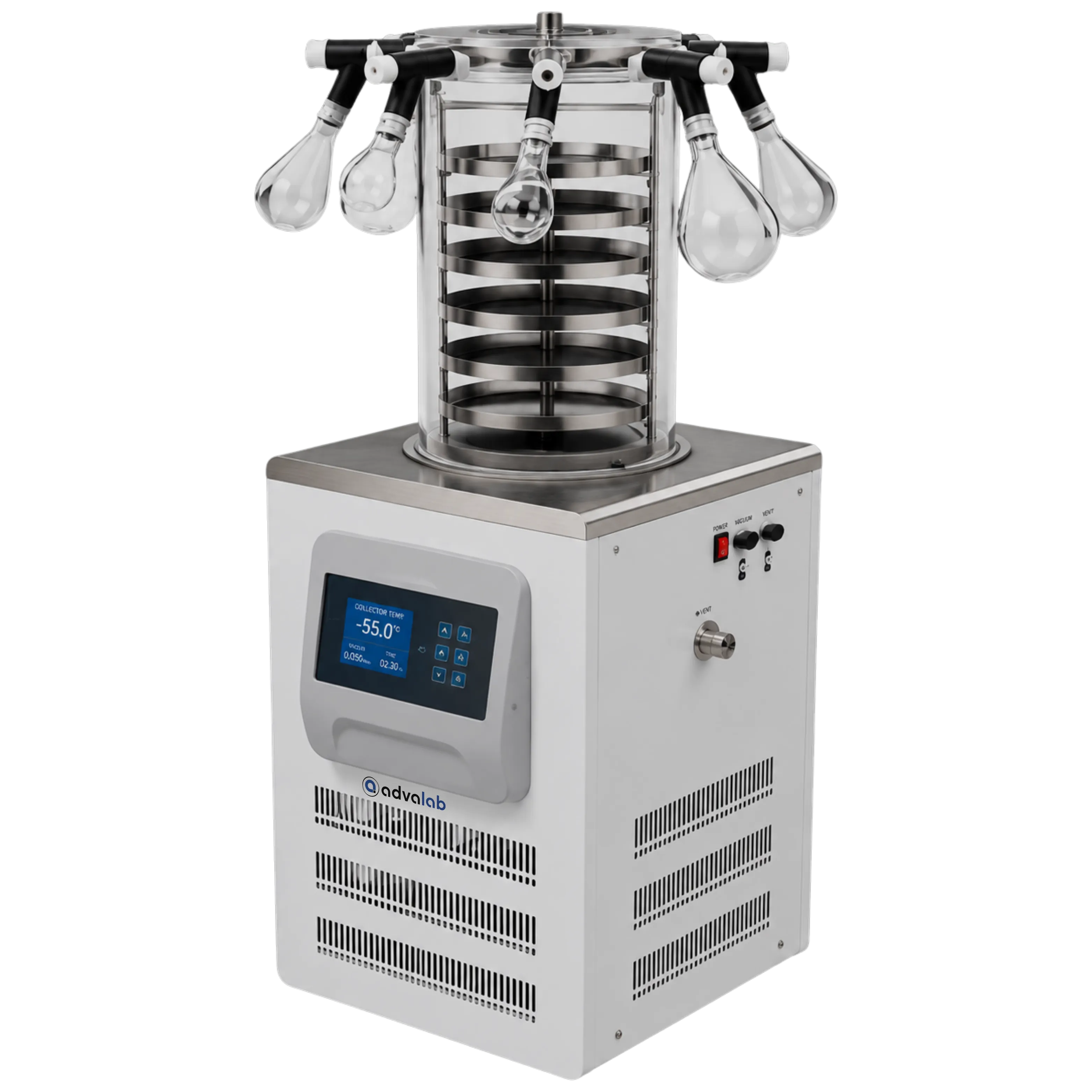
| Temperature Range | ≤–80℃ |
| Vacuum Level | < 10 Pa |
| Total Drying Area | 0.12m² |
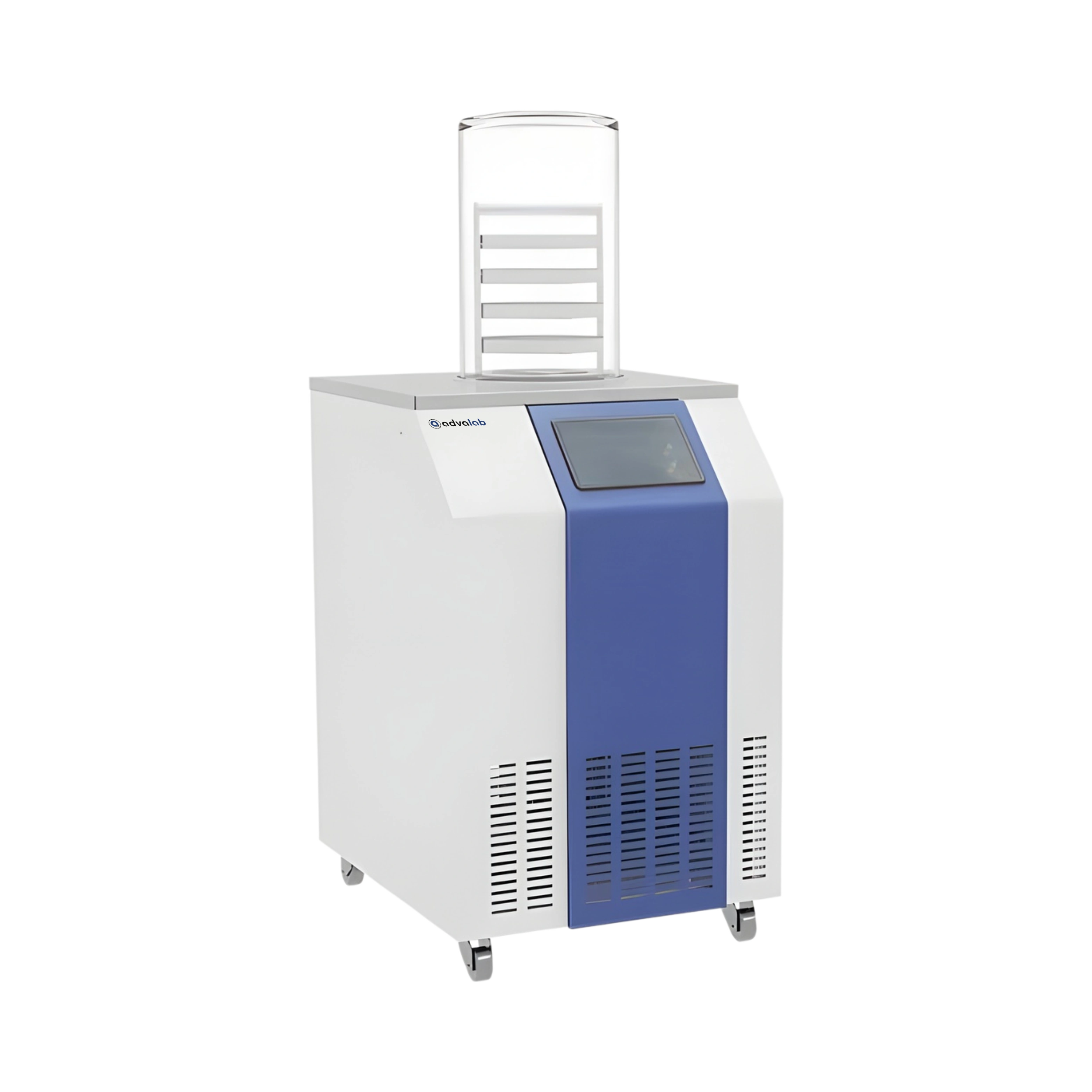
| Cold Trap Temperature | -60℃ (below) |
| Freeze Drying Time | 36 to 48 h |
| Cold Trap Volume | 9.5 L |
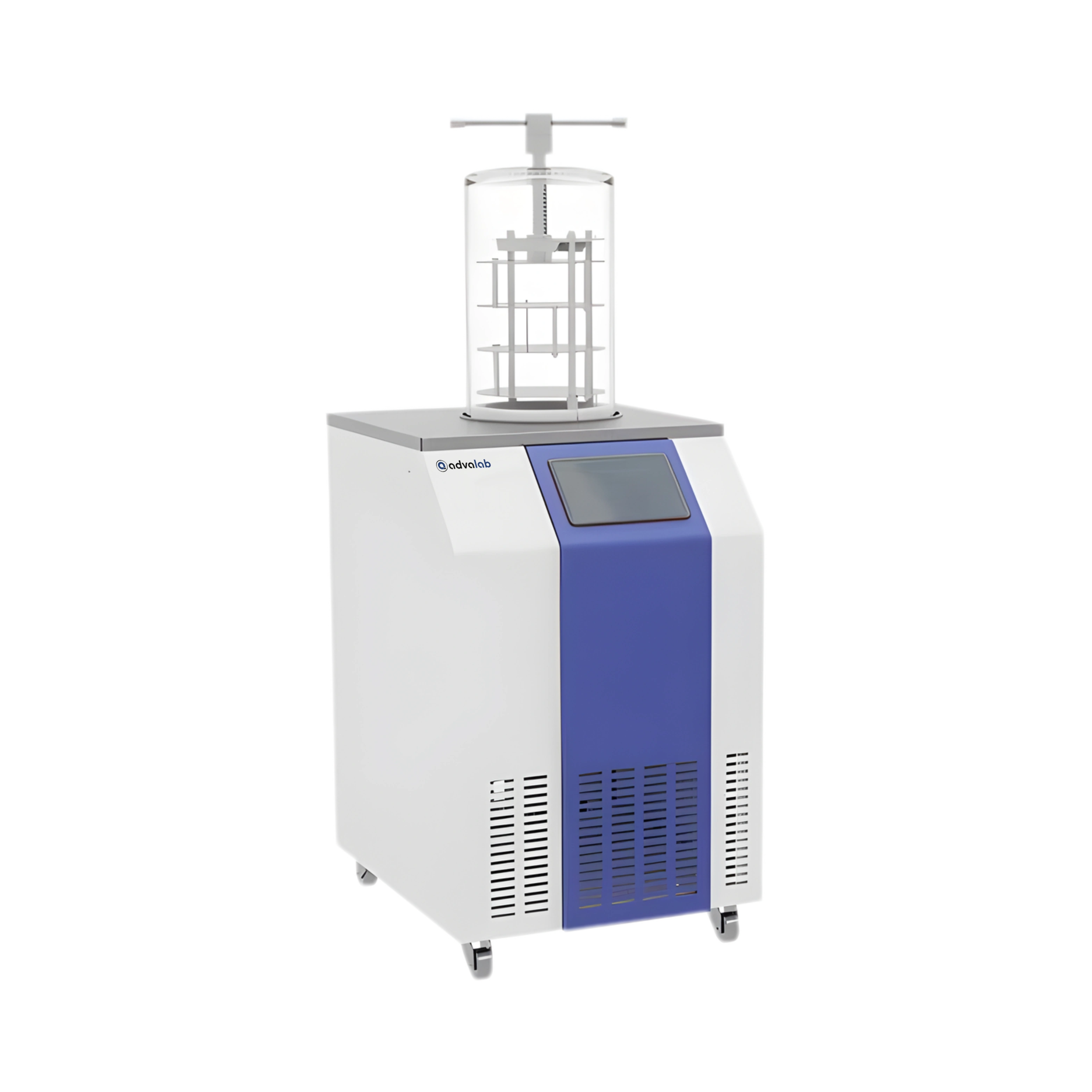
| Cold Trap Temperature | -60℃ (below) |
| Freeze Drying Time | 36 to 48 h |
| Cold Trap Volume | 9.5 L |

| Cold Trap Temperature | ≤ -60℃ |
| Freeze Drying Time | 36 to 48 h |
| Cold Trap Volume | 28 L |
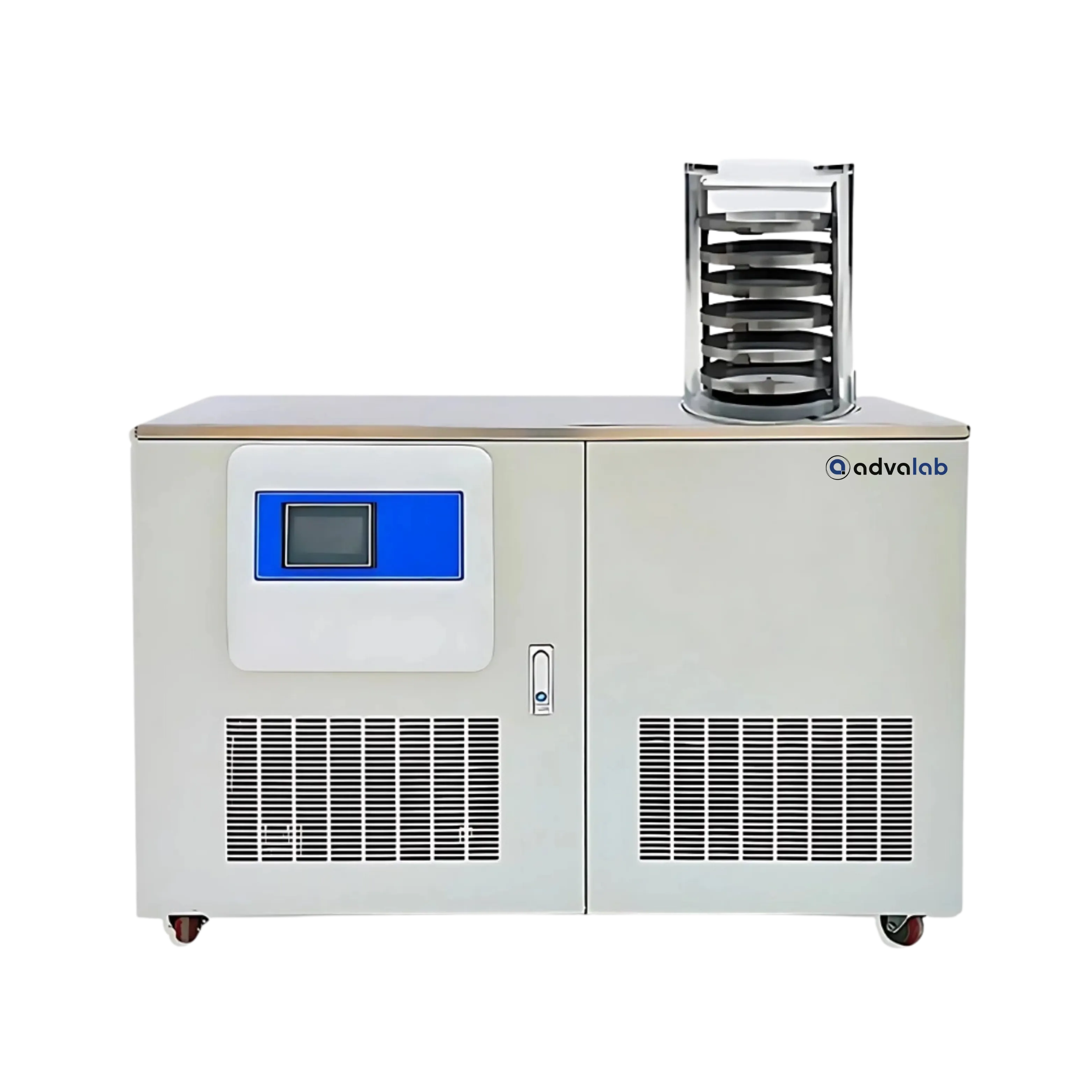
| Temperature Range: | ≤–80℃ |
| Vacuum Level: | < 10 Pa |
| Total Drying Area: | 0.27m² |

| Temperature Range: | ≤-50℃ |
| Vacuum Level: | <10 Pa |
| Freeze-Dry Area: | 0.12 m² |
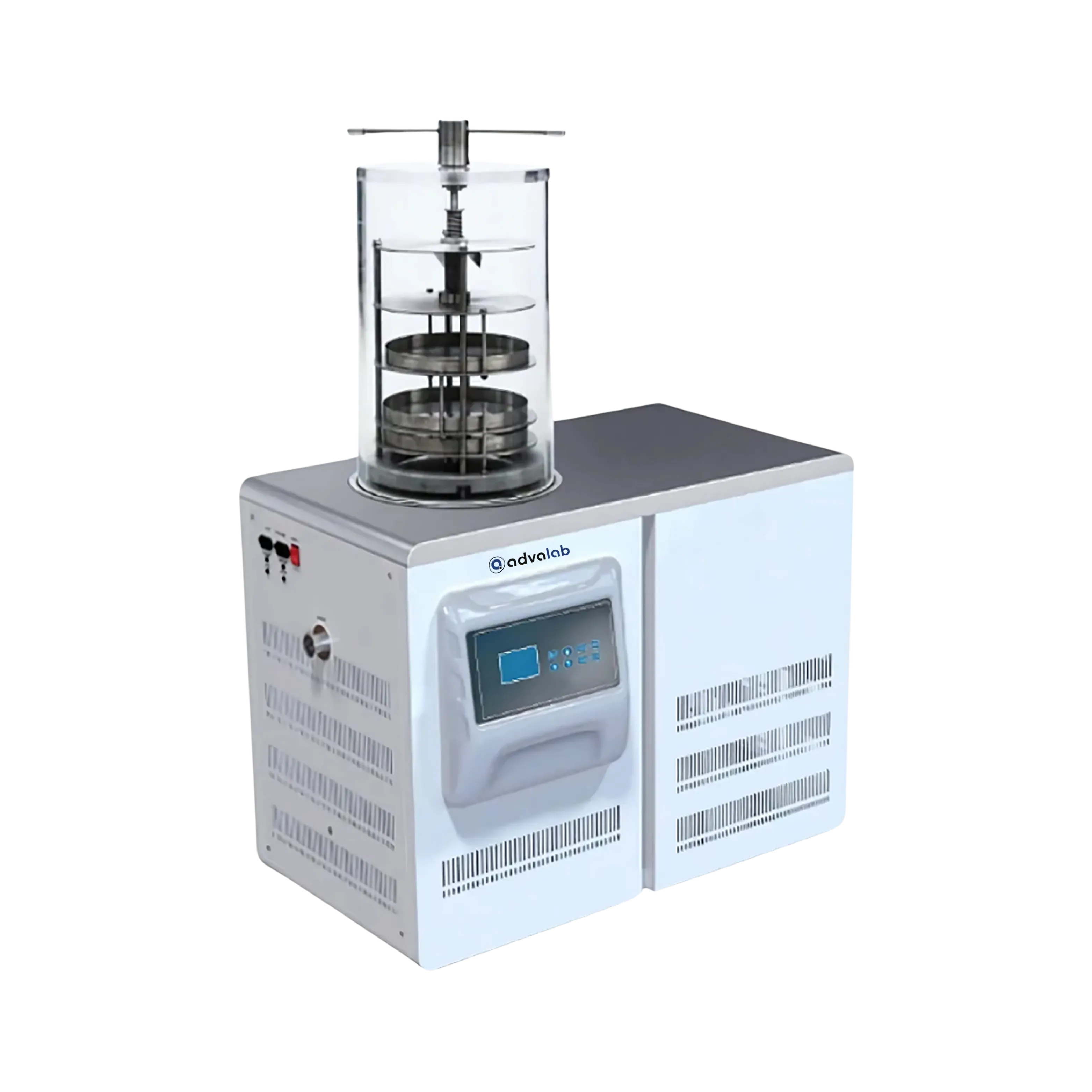
| Temperature Range: | ≤–80℃ |
| Vacuum Level: | < 10 Pa |
| Total Drying Area: | 0.11m² |
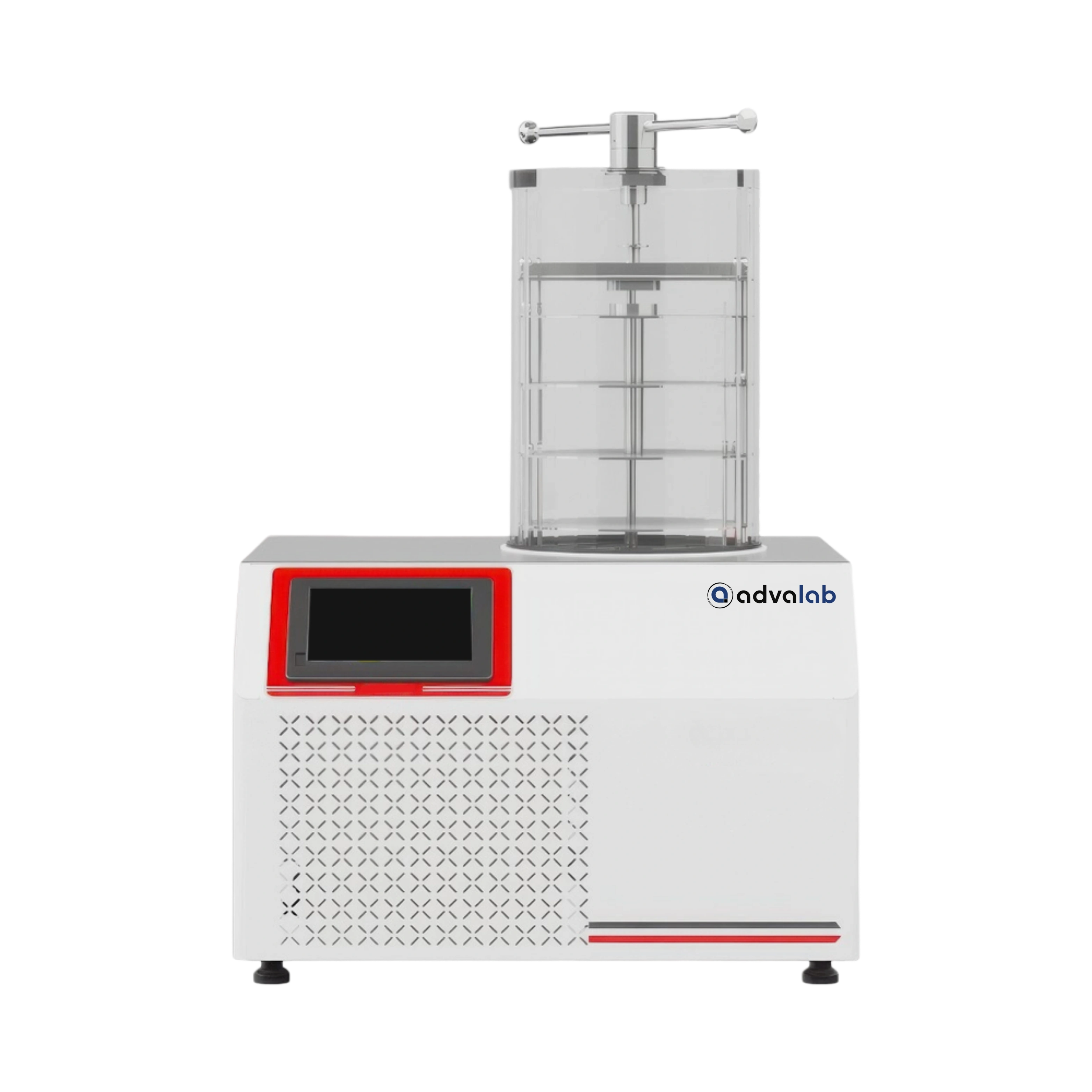
| Type: | Stoppering chamber |
| Freeze Dry Area: | 0.09 m² |
| Water Capture Capacity: | 4kg/24h |
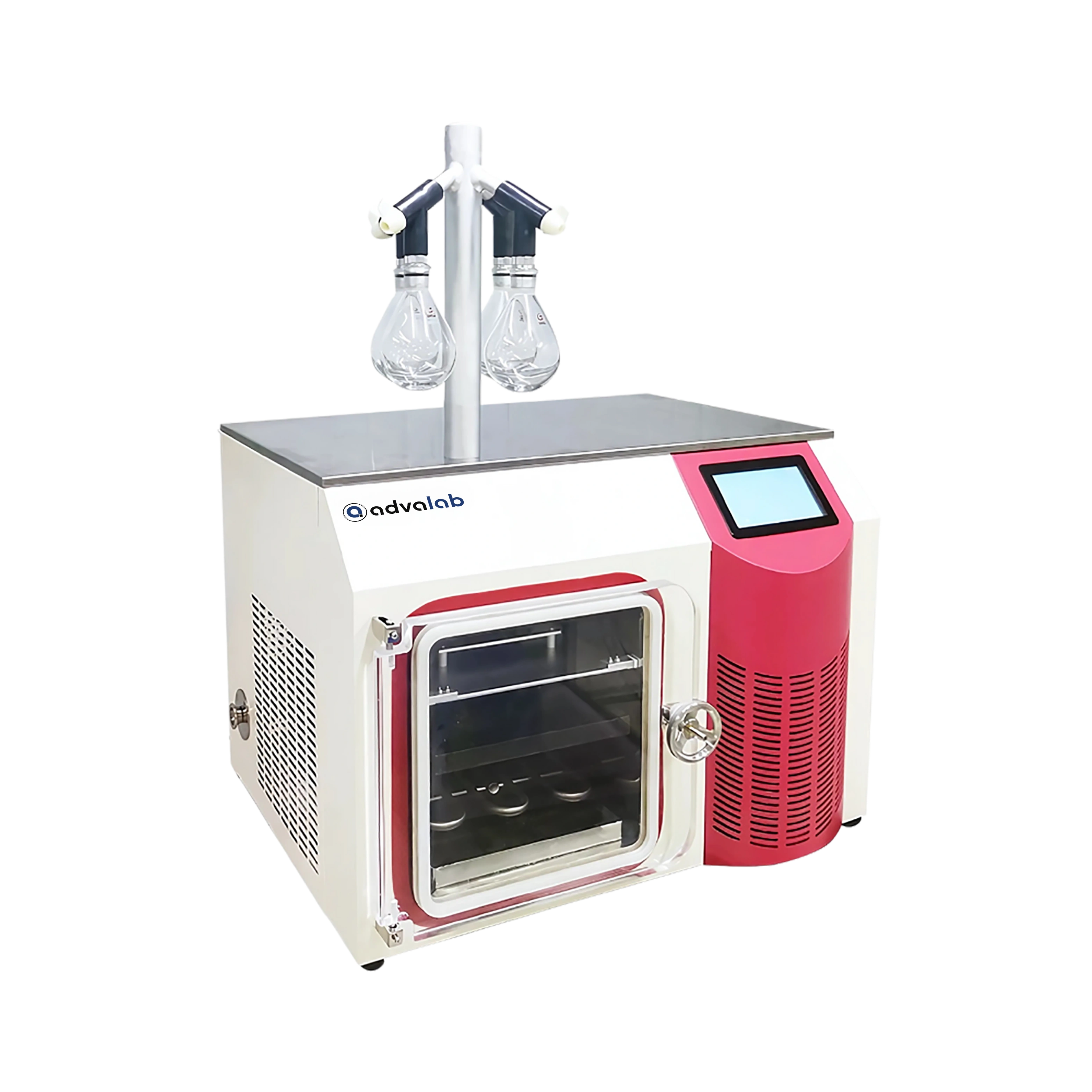
| Condenser Temperature: | -88 °C |
| Shelf Temperature Range: | -60 °C to +70 °C |
| Temperature Uniformity: | ±1 °C |

| Type: | Standard chamber with 8 port manifolds |
| Freeze Dry Area: | 0.12m² |
| Water Capture Capacity: | 4kg/24h |

| Type: | Standard chamber |
| Freeze Dry Area: | 0.12m² |
| Water Capture Capacity: | 4kg/24h |
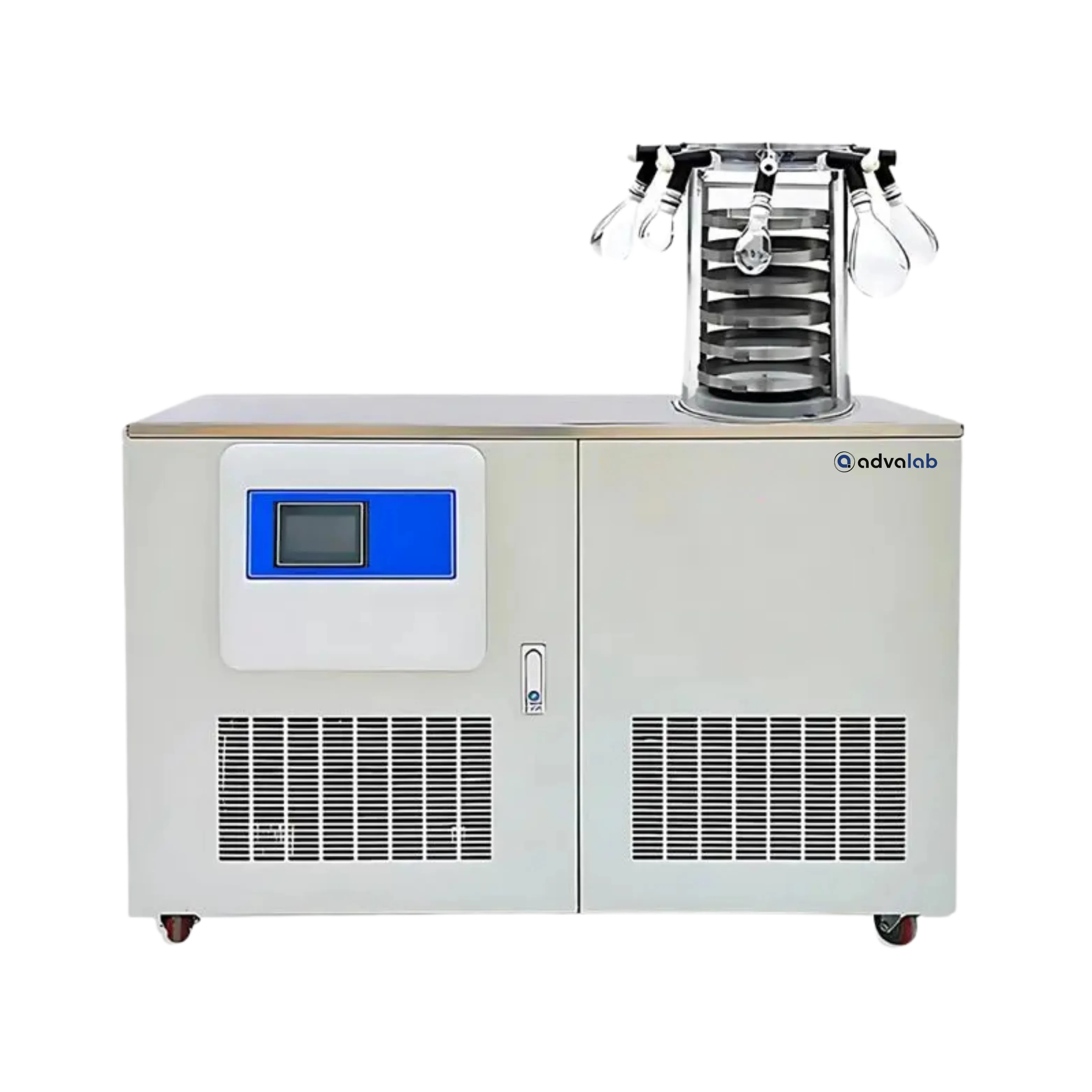
| Temperature Range: | ≤–80℃ |
| Vacuum Level: | < 10 Pa |
| Total Drying Area: | 0.27m² |
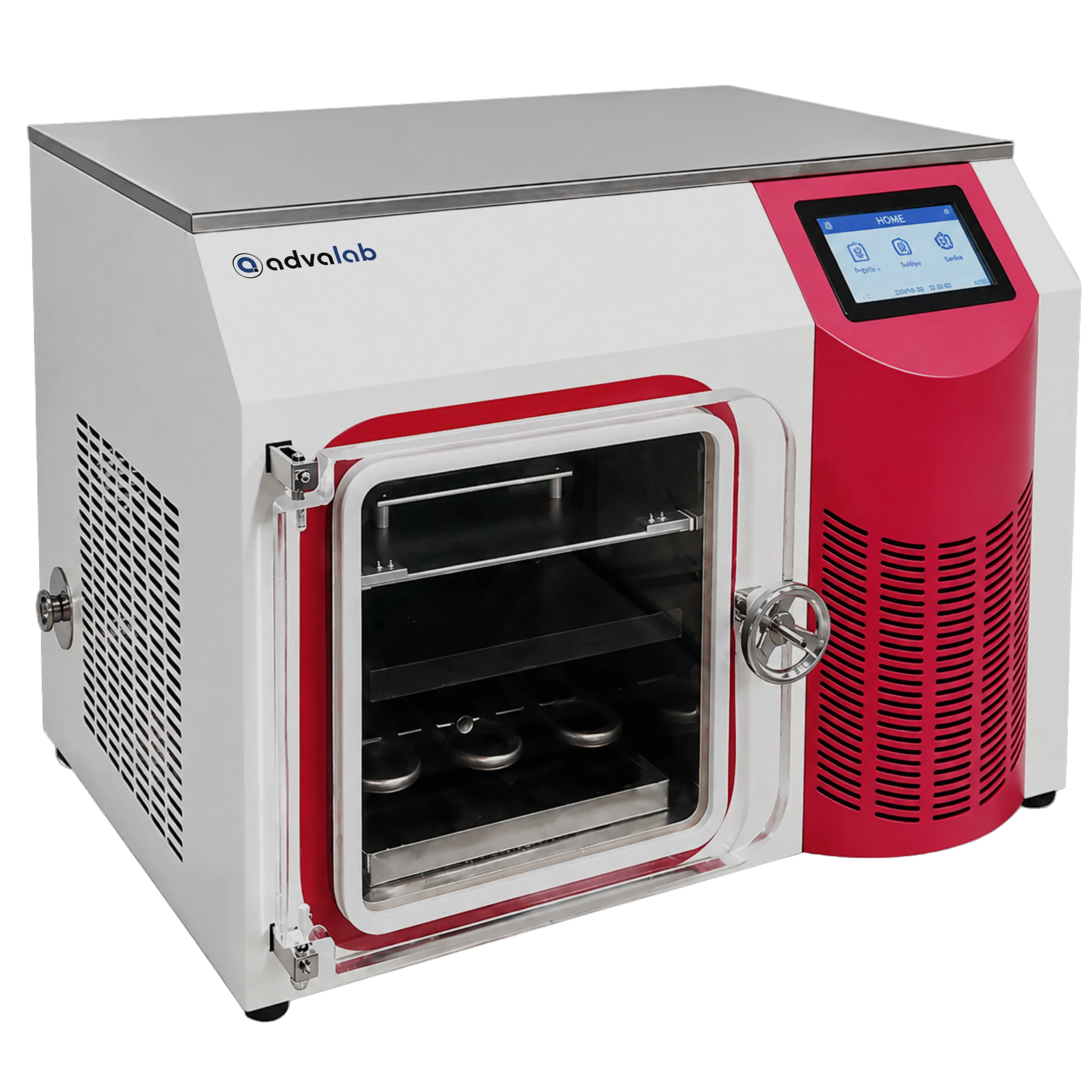
| Condenser Temperature: | -88 °C |
| Shelf Temperature Range: | -60 °C to +70 °C |
| Temperature Uniformity: | ±1 °C |
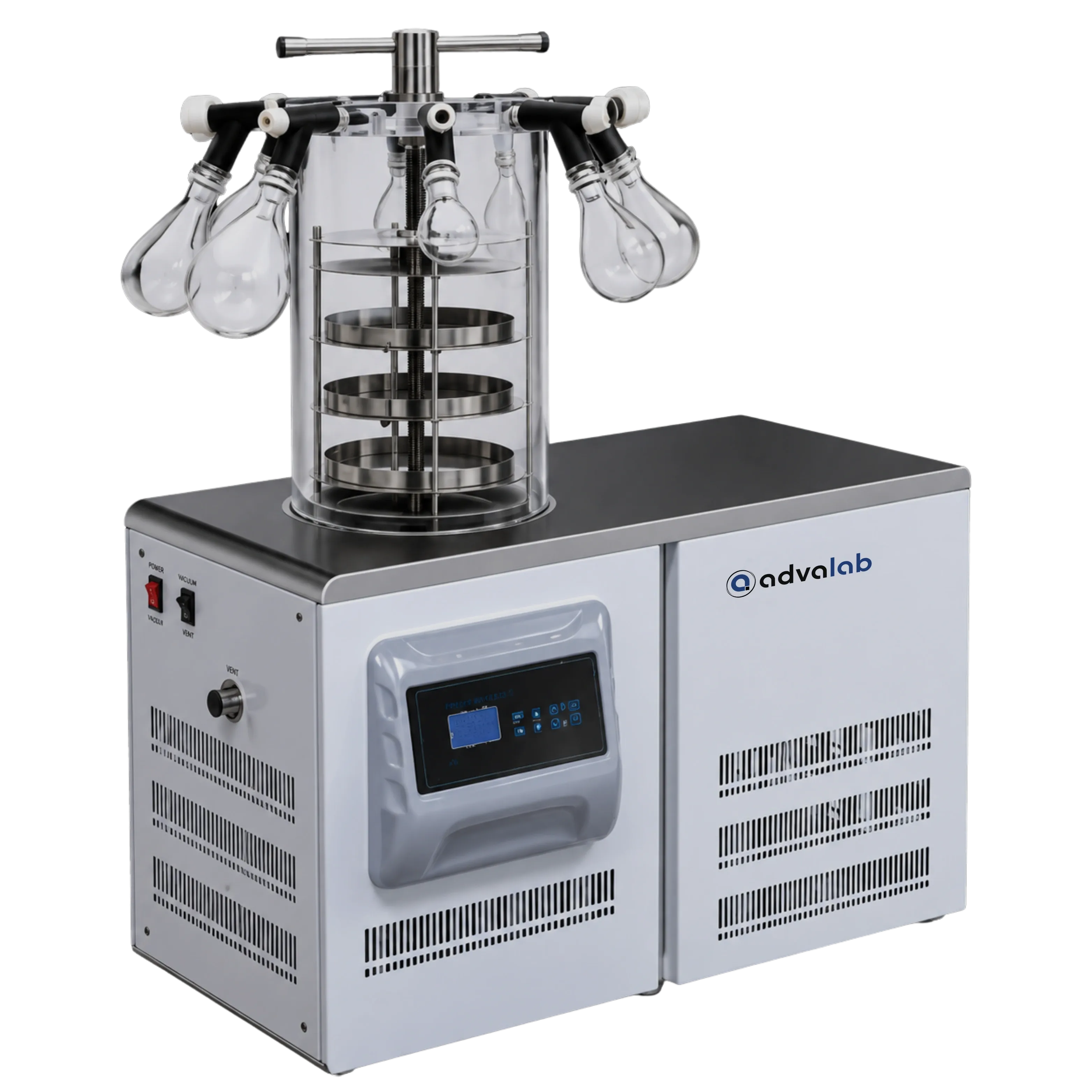
| Temperature Range: | ≤–80℃ |
| Vacuum Level: | < 10 Pa |
| Total Drying Area: | 0.11m² |
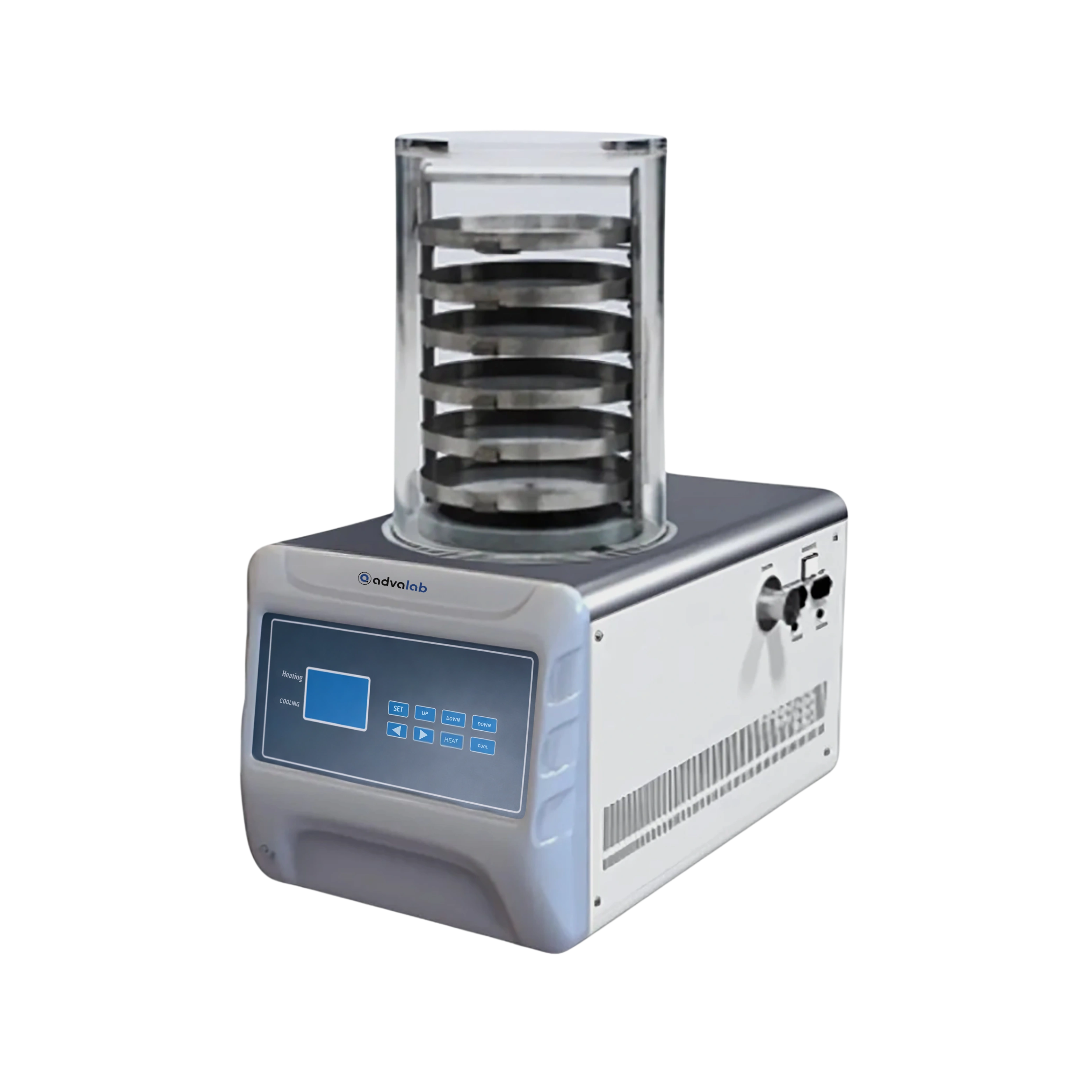
| Temperature Range: | ≤-50℃ |
| Vacuum Level: | <10 Pa |
| Freeze-Dry Area: | 0.12 m² |
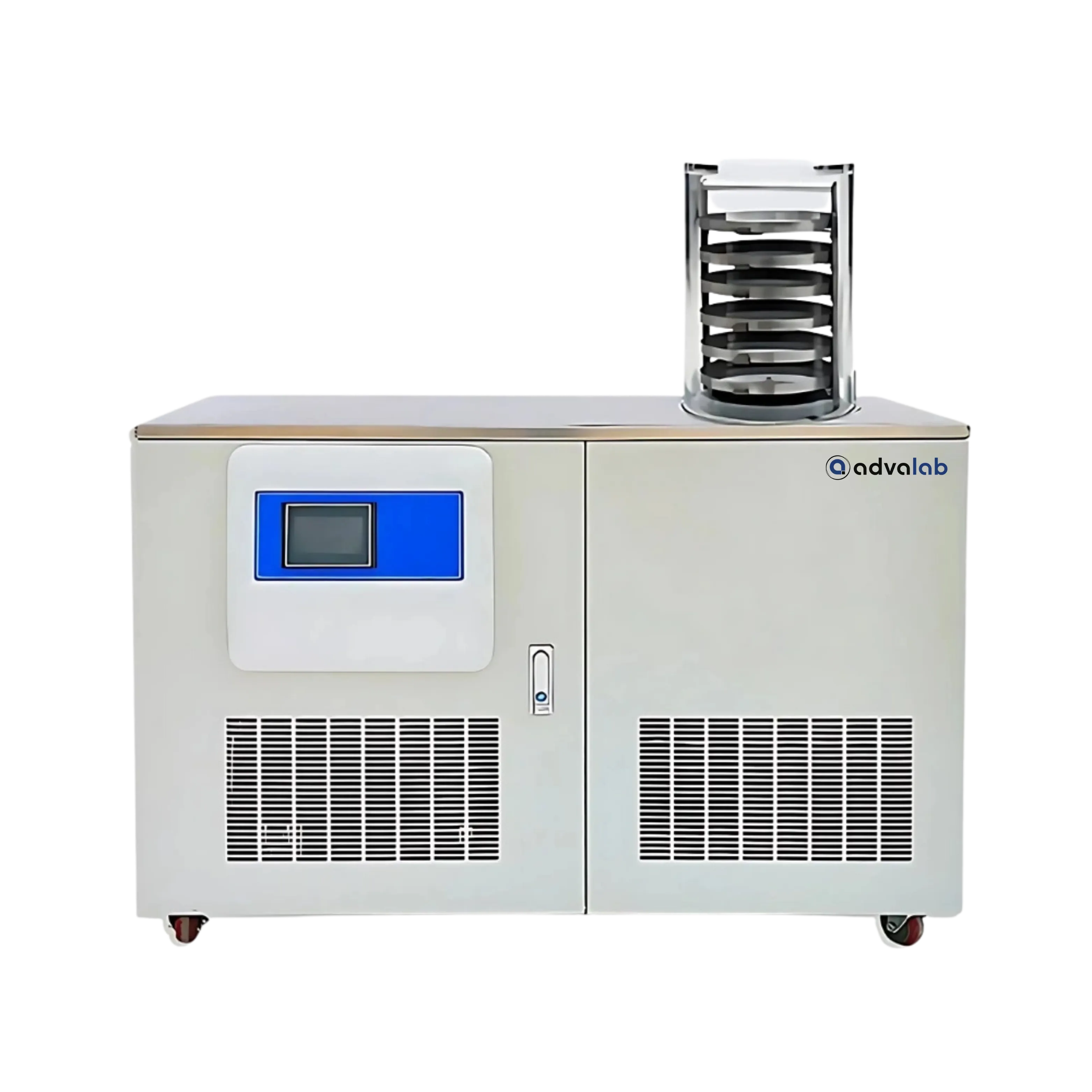
| Temperature Range: | ≤–80℃ |
| Vacuum Level: | < 10 Pa |
| Total Drying Area: | 0.27m² |
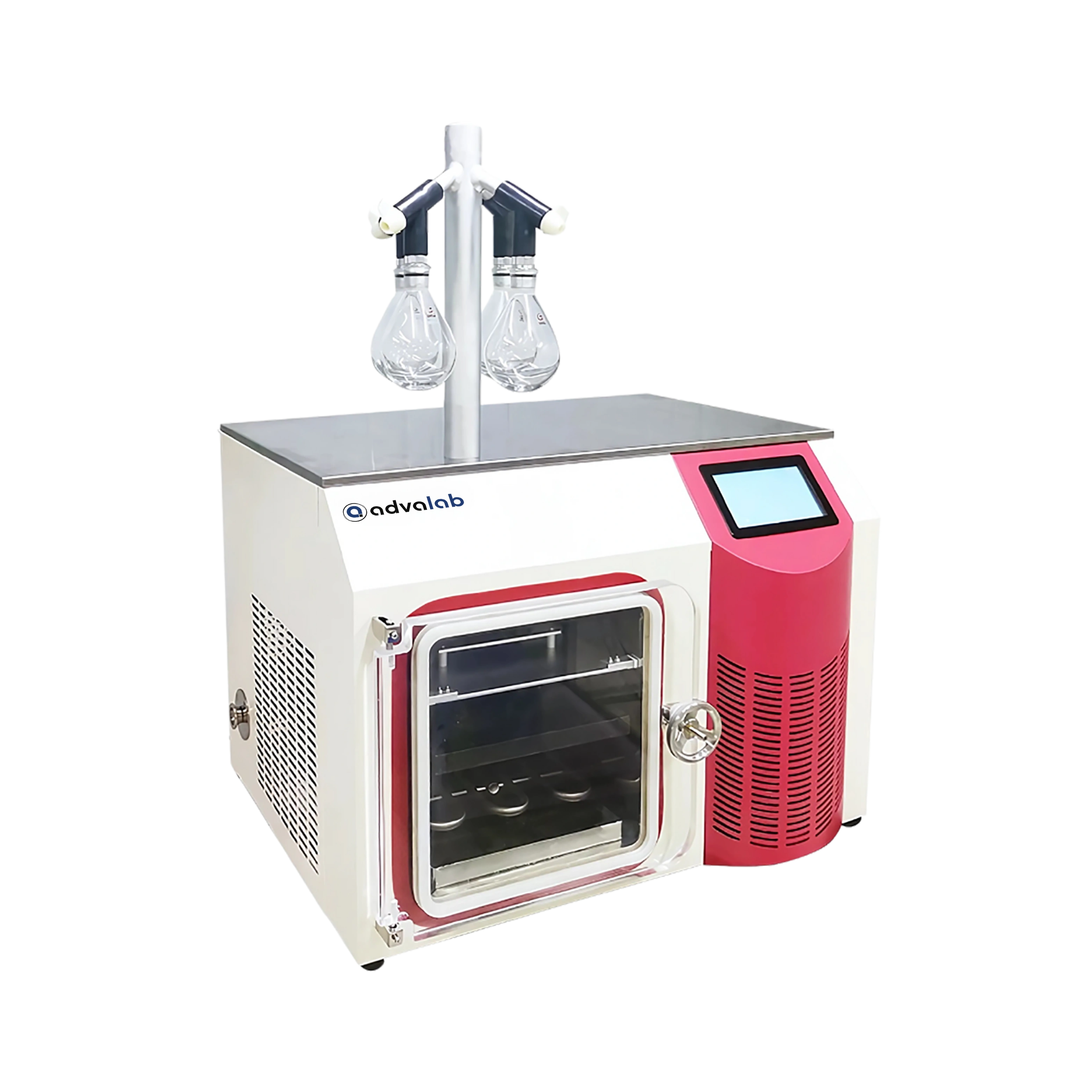
| Condenser Temperature: | -88 °C |
| Shelf Temperature Range: | -60 °C to +70 °C |
| Temperature Uniformity: | ±1 °C |

| Condenser Temperature: | -88 °C |
| Shelf Temperature Range: | -60 °C to +70 °C |
| Temperature Uniformity: | ±1 °C |
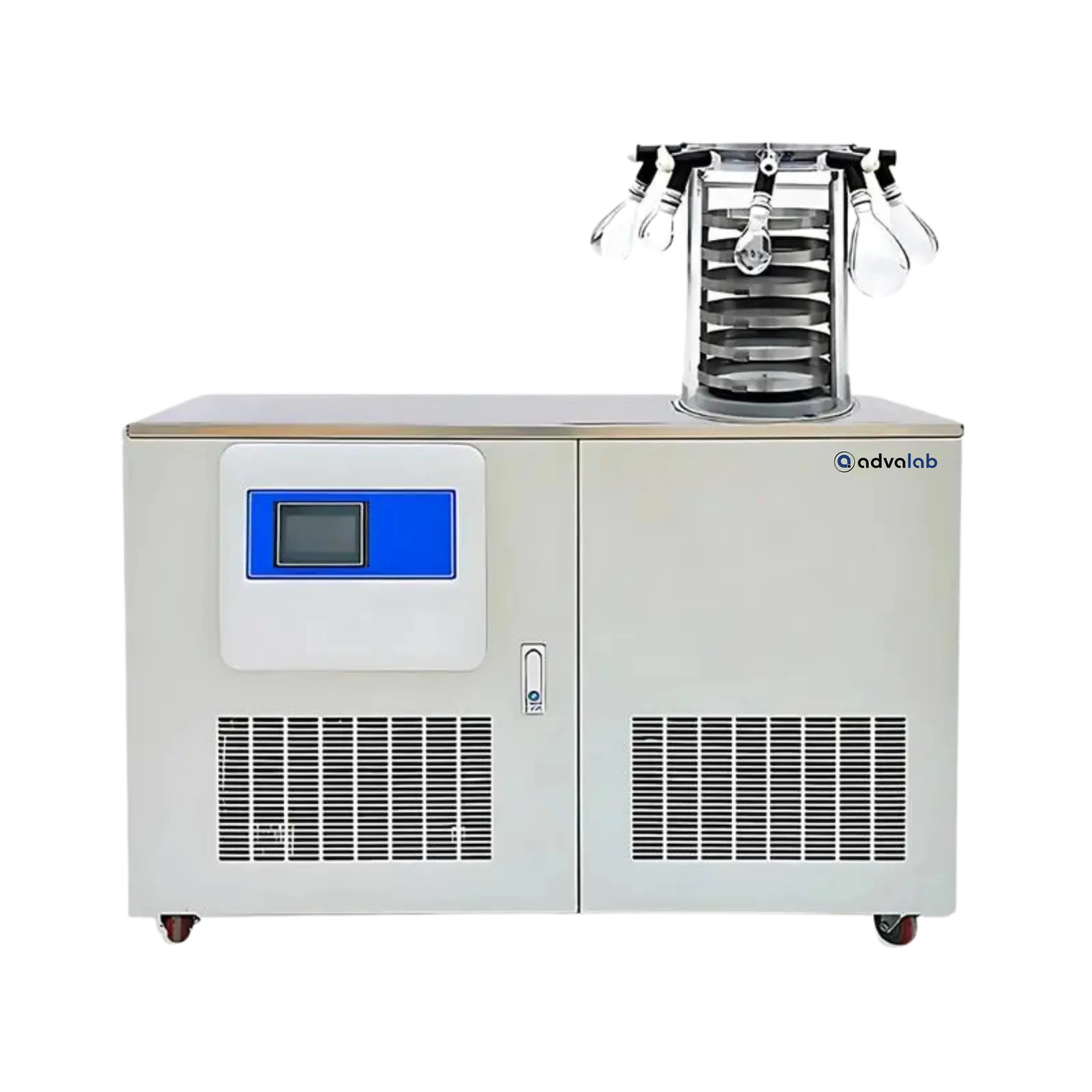
| Temperature Range: | ≤–80℃ |
| Vacuum Level: | < 10 Pa |
| Total Drying Area: | 0.27m² |
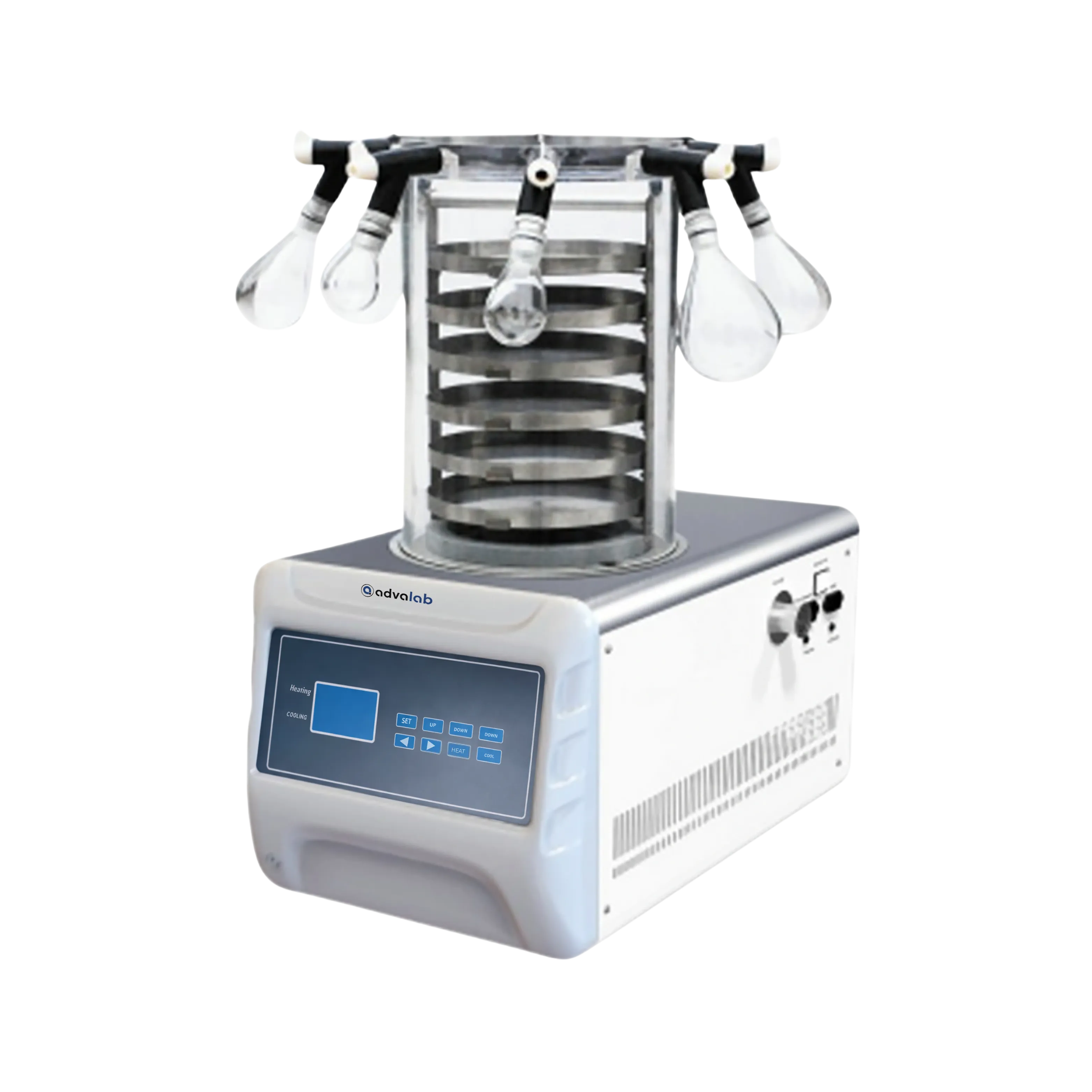
| Temperature Range: | ≤-50℃ |
| Vacuum Level <10 Pa: | <10 Pa |
| Freeze-Dry Area : | 0.07 m² |
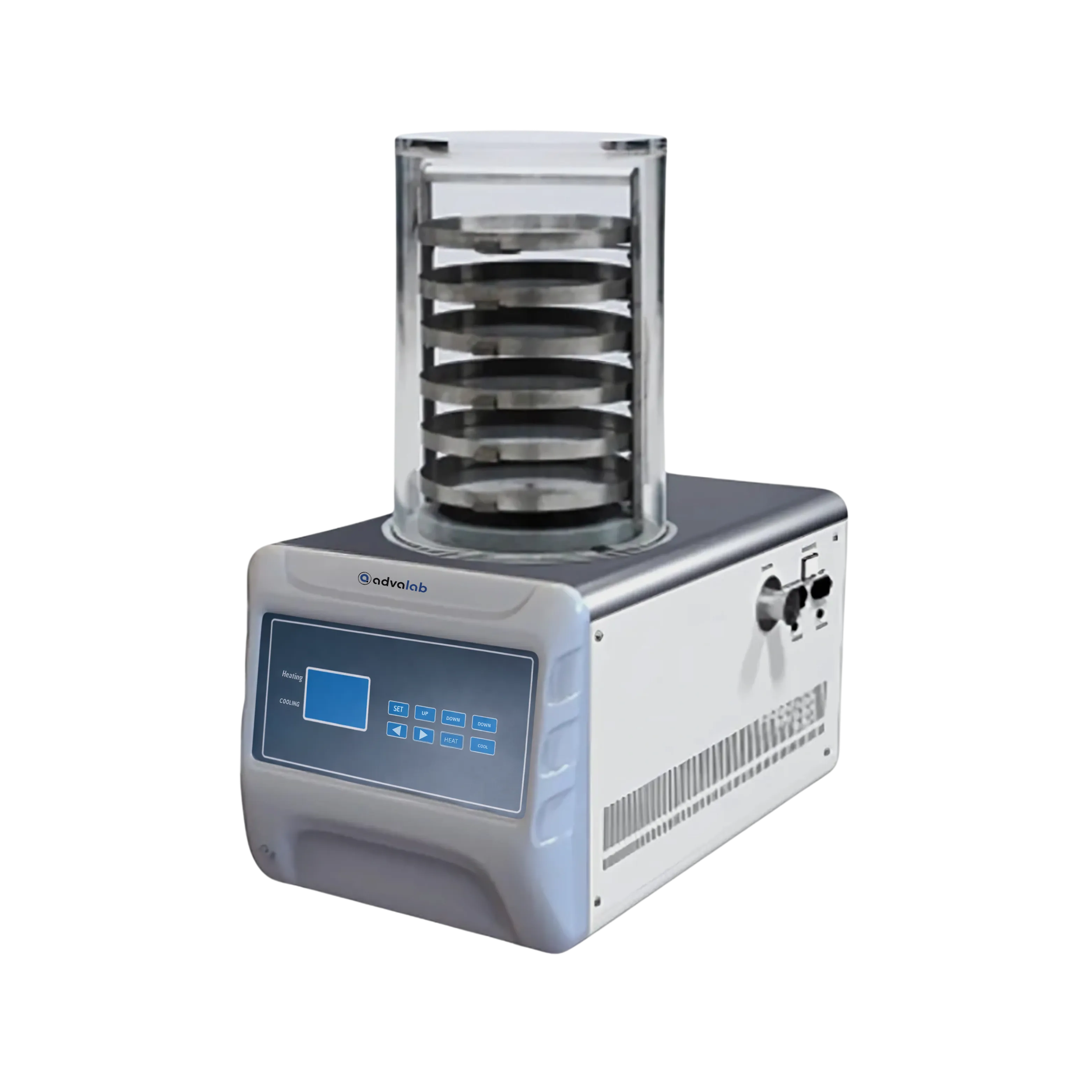
| Temperature Range: | ≤-50℃ |
| Vacuum Level: | <10 Pa |
| Freeze-Dry Area: | 0.07 m² |