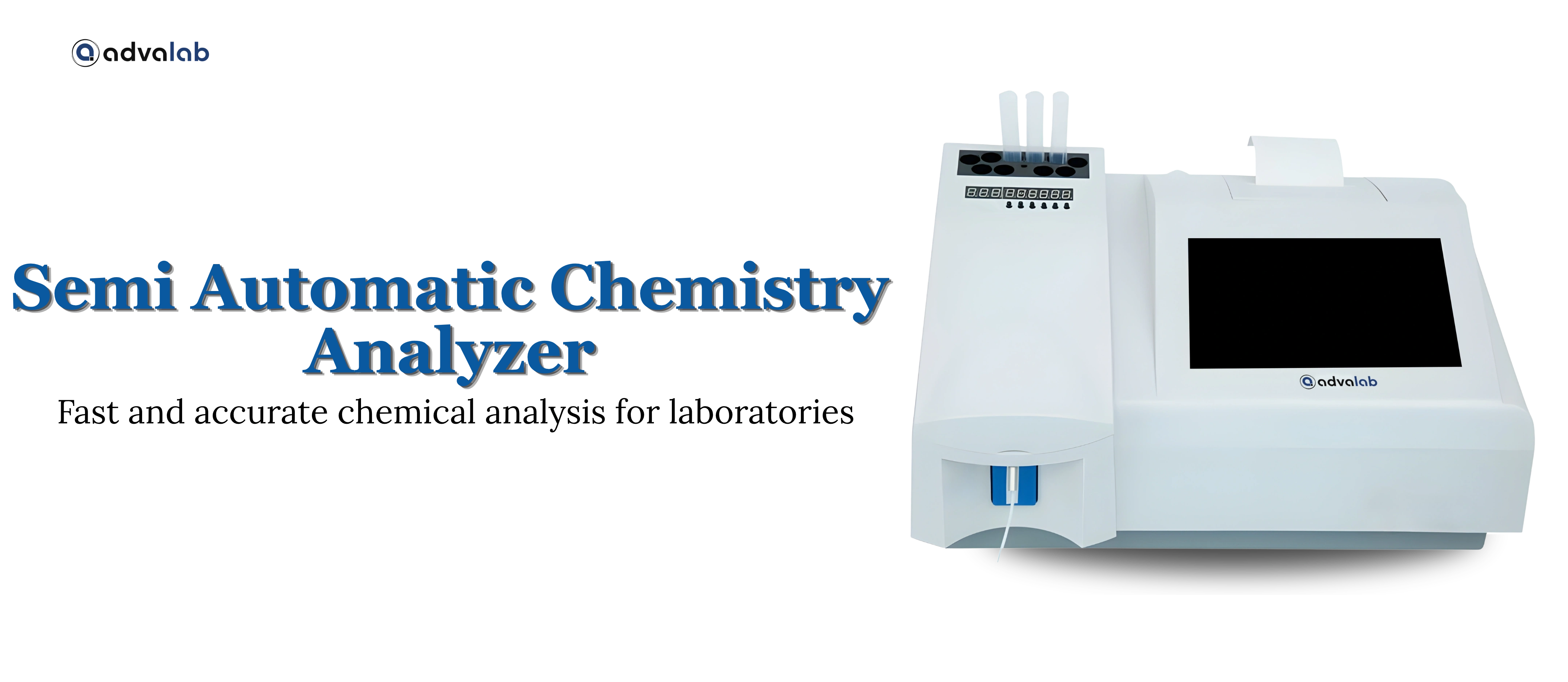
Introduction
The Role of Chemistry Analysis in Modern Laboratory Medicine
Biochemical analysis of serum, plasma, urine, and other biological fluids forms the quantitative backbone of clinical diagnosis and patient monitoring. From hepatic enzyme panels to electrolyte profiles and lipid studies, chemistry analyzers translate the molecular composition of a specimen into actionable clinical data. Within this landscape, the semi-automatic chemistry analyzer occupies a considered position — offering analytical accuracy and method flexibility that suits mid-volume laboratories, satellite facilities, and institutions where workflow demands do not justify a fully automated biochemistry analyzer platform.
This article examines what a semi automatic biochemistry analyzer is, how it functions, the range of configurations available, where it is most appropriately deployed, and the selection criteria that matter when specifying an instrument for a defined laboratory context.
Working Principles
Optical Measurement and Reaction Chemistry — How the Instrument Analyses Samples
A Semi Automated Analyzer operates on the same fundamental optical principles as a fully automated biochemistry analyzer but transfers a defined portion of the analytical workflow — reagent pipetting, sample addition, or cuvette handling — to the operator. Understanding the measurement physics helps laboratories evaluate instrument specifications meaningfully.
Semi-Automatic Chemistry Analyzer — Analytical Workflow
Sample + Reagent Pipetting
(operator)
→Incubation & Reaction
(instrument)
→Photometric Reading
(instrument)
→Calculation & Output
(instrument)
Fig 1. Typical analytical workflow in a semi-automatic chemistry analyzer — operator handles sample/reagent addition; photometry and calculation are automated
Spectrophotometry — The Core Measurement Method
A tungsten-halogen or LED light source generates a beam passed through a monochromator (diffraction grating or interference filter) to isolate a specific wavelength. This monochromatic beam traverses the sample cuvette, and the transmitted intensity is measured by a photodetector. Beer-Lambert law relates absorbance to analyte concentration: A = εcl, where ε is the molar absorption coefficient, c is concentration, and l is the path length. The auto analyzer biochemistry platform exploits this relationship across wavelength ranges typically spanning 340–700 nm, enabling multi-analyte measurement by filter selection.
Temperature-Controlled Cuvette Chamber
Enzymatic assays — ALT, AST, LDH, amylase — are highly temperature-dependent. Rate reactions measuring enzyme activity require precise temperature control at 37°C ± 0.1°C throughout the measurement interval. A Peltier element or thermostat-controlled flow cell maintains this stability in a well-specified semi auto analyzer. Temperature drift outside this tolerance introduces proportional error in enzyme units reported — a critical parameter often understated in entry-level instrument specifications.
Endpoint and Kinetic Measurement Modes
Endpoint assays measure absorbance after the reaction has reached completion — glucose, urea, creatinine, cholesterol, and bilirubin are typically measured this way. Kinetic (rate) assays track absorbance change per unit time (ΔA/min) during the linear phase of an ongoing enzymatic reaction. A capable semi automatic blood chemistry analyzer supports both modes with user-programmable reaction times, blank subtraction, and bichromatic wavelength pairs to minimise interference from turbidity or haemolysis.
Calibration Architecture
Calibration in a semi auto chemistry analyzer is performed by measuring one or more standards of known concentration. The instrument generates a calibration factor (for single-point calibration) or a multi-point curve (for analytes with non-linear response). Most platforms store multiple calibration profiles simultaneously — one per analyte — and flag when a calibration is due for renewal based on elapsed time or QC performance. Traceability of calibrators to reference materials (NIST, JCTLM) is a prerequisite for result accuracy.
Instrument Types
Categories Within the Semi-Automated Analyzer Landscape
Semi Automated Analyzer are not a monolithic category. Several subcategories exist, distinguished by throughput, measurement architecture, and the degree of operator involvement retained by design.
Single-Beam Photometer
Uses a single optical path with interchangeable filters. The operator pipettes sample and reagent into a cuvette and places it into the instrument. Throughput is modest — typically 60–100 tests per hour in skilled hands. This is the foundational configuration of the semi auto chemistry analyzer and remains widely deployed in district hospitals, teaching laboratories, and satellite facilities.
Bichromatic / Dual-Wavelength Analyzer
Measures absorbance simultaneously at a primary (analytical) wavelength and a reference wavelength. The reference measurement compensates for non-specific absorbance from sample turbidity, haemolysis, or background colour. This substantially improves result accuracy on lipaemic or icteric specimens — common in clinical biochemistry — without requiring additional sample pre-treatment.
Programmable Multi-Analyte Platform
Stores method parameters (wavelength, reaction time, temperature, calibration type, normal range) for a user-defined test menu — typically 50–200 methods. The operator selects the test, pipettes the sample, and the instrument executes measurement and calculation automatically. This is the configuration most commonly described when laboratories ask what is semi automatic biochemistry analyzer in a clinical context.
Discrete Cuvette vs. Flow-Through Cell
Discrete cuvette instruments use individual, washable quartz or plastic cuvettes — carryover between tests is eliminated by washing. Flow-through cell instruments pass the mixture through a fixed optical cell — simpler mechanically but requiring thorough flushing between tests of different analytes. Discrete cuvette design is preferred for laboratories running diverse assay panels where inter-test carryover must be demonstrably controlled.
Electrolyte Module Integration
Some semi auto analyzer platforms incorporate ion-selective electrode (ISE) modules alongside the photometric channel. This allows sodium, potassium, chloride, and bicarbonate to be measured potentiometrically on the same platform — eliminating the need for a separate electrolyte analyzer in lower-volume settings.
Stat Mode Platforms
Configured for rapid turnaround of priority specimens — typically providing a result within 2–5 minutes of sample introduction. Used in emergency biochemistry settings where a full auto biochemistry analyzer is not available but time-critical analytes (troponin, creatinine, blood glucose, electrolytes) must be measured without queuing behind a routine workload.
Applications
Where Semi-Automatic Chemistry Analyzers Are Deployed
Routine Clinical Biochemistry Panels: Liver function tests (ALT, AST, ALP, GGT, total bilirubin, albumin), renal function panels (urea, creatinine, uric acid), and lipid profiles (total cholesterol, HDL, LDL, triglycerides) constitute the high-volume workload of clinical biochemistry. A semi automatic blood chemistry analyzer handles these efficiently in laboratories processing 50–300 samples per shift, where a fully automated biochemistry analyzer would represent excess capital and infrastructure for the volume served.
Diabetes Monitoring and Metabolic Panels: Fasting glucose, post-prandial glucose, HbA1c (when coupled with a dedicated module), and insulin measurement support diabetes management programmes. Kinetic assays for glucose via hexokinase or glucose oxidase methods are well-established on semi automated analyzer platforms, with linearity well above clinical decision thresholds.
Cardiac Marker Biochemistry: Creatine kinase (CK), CK-MB, lactate dehydrogenase (LDH), and aspartate aminotransferase (AST) form the enzymatic cardiac panel measurable on a photometric semi auto chemistry analyzer. Where high-sensitivity troponin is required, a dedicated immunoassay platform is necessary — but the enzymatic cardiac panel retains clinical utility in resource-variable settings.
Protein and Nutrition Assessment: Total protein, albumin, globulin (calculated), pre-albumin, and transferrin are measured colorimetrically — often using Biuret, BCG, or Bradford methods — to assess nutritional status, chronic disease burden, and protein-losing conditions. These assays are methodologically stable and well-suited to a semi auto analyzer platform with consistent temperature control.
Research and Pharmacology Laboratories: In non-clinical settings — pharmacokinetic studies, toxicology screening, veterinary biochemistry, environmental water analysis — a programmable semi automated analyzer provides the method flexibility to run custom assays outside standard clinical panels. The ability to define custom calibration curves, reaction kinetics, and wavelength combinations is particularly useful here.
Satellite and Peripheral Laboratory Settings: District hospitals, health centres, and field research stations frequently lack the infrastructure, sample volume, or technical staffing to operate a fully automated biochemistry analyzer. A semi auto chemistry analyzer — compact, lower maintenance burden, and operable with minimal training — fills this gap without sacrificing analytical quality on core analyte panels.
Semi vs. Fully Automated
Semi-Automatic vs. Fully Automated Biochemistry Analyzer — A Technical Comparison
The choice between a Semi Automated Analyzer and a fully automated biochemistry analyzer is not simply a question of budget — it reflects the analytical volume, staffing model, menu requirements, and turnaround time obligations of the laboratory. The following comparison addresses the technical and operational dimensions of this decision.
Semi-Automatic Analyzer
- Operator pipettes sample and/or reagent
- Throughput: 60–200 tests/hour (operator-dependent)
- Test menu: flexible — operator selects per run
- Minimal sample handling automation
- Compact footprint; low infrastructure demand
- Lower capital requirement; simpler maintenance
- Suitable for 50–300 samples/shift
- ISE modules available as add-on
- Result in 2–10 minutes per analyte
Fully Automated Biochemistry Analyzer
- Sample and reagent handling fully automated
- Throughput: 400–3000 tests/hour
- Test menu: runs simultaneously on sample loading
- Automated sample dilution, barcode reading, flagging
- Larger footprint; controlled environment requirements
- Higher capital; specialist maintenance contracts
- Suited to 300+ samples/shift
- ISE typically integrated
- Continuous loading; stat channel for urgents
For laboratories at the boundary of these throughput ranges, a validated semi auto chemistry analyzer with a skilled operator team frequently delivers equivalent analytical quality to an automated platform at substantially lower operational complexity. The decision should be driven by actual specimen volume data — not projected volumes or aspirational capacity.
Technical Specifications
Advalab ADSCA-501 — Specification Overview
The ADSCA-501 semi-automatic chemistry analyzer from Advalab is configured for multi-analyte biochemical measurement in clinical and research laboratory environments. The following parameters define its analytical scope and compliance profile.
| Parameter | Specification |
|---|
| Measurement Method | Single/dual-beam photometry; endpoint & kinetic modes |
| Wavelength Range | 340–700 nm (8 interference filters standard) |
| Light Source | Halogen lamp 20W; LED upgrade option |
| Temperature Control | 37°C ± 0.1°C; Peltier-stabilised cuvette chamber |
| Cuvette Type | Quartz flow-through cell; 10 mm path length |
| Measurement Range | 0–3.5 Abs; linearity ±1% up to 2.5 Abs |
| Repeatability (CV) | <1% at mid-range concentration |
| Stored Methods | Up to 200 programmable test methods |
| Calibration | 1-point, 2-point, multi-point; linear & non-linear curves |
| Data Output | Built-in thermal printer; RS-232 / USB to LIS |
| Display | 7" colour LCD touchscreen; graphical QC display |
| Power Supply | 100–240V AC; 50/60 Hz; auto-switching |
| Safety Classification | Class I; IVD Category B |
| Quality System | Traceable calibration; full IQ/OQ documentation |
Specifications subject to revision. Refer to the official ADSCA-501 product page for the current datasheet.
Product Category
Advalab Semi-Automatic Chemistry Analyzer Range
Advalab, headquartered in the USA, manufactures analytical instruments for clinical, research, and industrial laboratory applications. The chemistry analyzer product line, accessible from the Advalab home page, spans semi-automatic and fully automated platforms differentiated by throughput, menu capacity, and automation level. Within the semi-automatic chemistry analyzer category, models address different laboratory scales — from single-photometer stat platforms to multi-analyte programmable systems with ISE integration.
Single-Beam Models
Entry-level photometry; core clinical panel; compact design
Dual-Wavelength Models
Bichromatic measurement; improved accuracy on turbid samples
Programmable Models
200-method menu; kinetic & endpoint; LIS connectivity
For a full overview of available semi-automatic chemistry analyzer models including the complete ADSCA series, visit the dedicated category listing on the Advalab website.
Selection Criteria
Common Mistakes When Selecting a Semi-Automatic Chemistry Analyzer
Procurement decisions in clinical biochemistry frequently falter on incomplete technical criteria. The following represent recurring errors that affect long-term analytical performance.
Selecting based on test menu breadth without verifying method validation status: Many instruments list 100+ programmable methods. What matters is whether those methods are validated to the manufacturer's specifications — with linearity, imprecision, and interference data — and whether they are compatible with the reagent kits the laboratory intends to use. A large menu of unvalidated or open-system methods offers flexibility but not assurance of accuracy.
Overlooking temperature stability specifications: The CV on enzyme assays is directly linked to temperature control precision. An instrument specifying ±0.5°C or wider temperature tolerance introduces systematic imprecision on all kinetic assays. This parameter is frequently absent from promotional materials and must be requested explicitly from the manufacturer.
Ignoring reagent system compatibility: Some semi auto chemistry analyzers are closed-system — requiring proprietary reagents from the manufacturer. Open-system instruments accept reagents from any manufacturer, provided the operator programs the method parameters. Laboratories operating on a fixed reagent supplier relationship, or in regions with limited reagent distribution, must verify system openness before procurement.
Underestimating carryover risk in flow-through cell designs: Flow-through cells are mechanically simpler but require thorough flushing between analytes. Insufficient wash between a high-concentration sample and a low-concentration standard, or between interfering analytes, introduces carryover error. This risk is especially relevant in laboratories running a wide analyte menu with back-to-back specimens of varying concentration.
Treating LIS connectivity as a secondary specification: In laboratories using a laboratory information system, bidirectional data exchange — test orders downloaded to the analyzer; results uploaded automatically — eliminates manual transcription and associated transcription errors. RS-232 and USB connectivity are standard; HL7 and ASTM E1381 interface capability should be verified if LIS integration is part of the deployment.
Comparing throughput without accounting for operator time: A semi auto chemistry analyzer throughput specification assumes an experienced operator working at the instrument continuously. In settings where the operator is shared across multiple functions, actual throughput may be 40–60% of the specified rate. Workflow modelling that accounts for operator availability — not just instrument speed — produces more accurate capacity projections.
Frequently Asked Questions
Common Questions About Semi-Automatic Chemistry Analyzers
A semi automatic biochemistry analyzer automates the photometric measurement, temperature control, timing, calculation, and result output of a biochemical assay — while requiring the operator to pipette the sample and reagent into the cuvette manually. In contrast, a fully manual method requires the analyst to perform all steps including absorbance reading using a separate spectrophotometer, then calculate results independently. The semi automated analyzer eliminates calculation error, standardises reaction timing, and applies calibration automatically — substantially reducing inter-operator variability compared to manual methods while remaining accessible to laboratories that cannot support a fully automated platform.
A programmable semi auto chemistry analyzer can measure any analyte for which a colorimetric or UV-based enzymatic reagent kit exists. Standard clinical chemistry panels include liver function tests (ALT, AST, ALP, GGT, bilirubin, albumin, total protein), renal function (urea, creatinine, uric acid), lipids (cholesterol, HDL, LDL, triglycerides), metabolic markers (glucose, calcium, phosphorus, magnesium), and cardiac enzymes (CK, LDH, AST). Research applications extend this to custom substrates, environmental analytes, and veterinary biochemistry panels, provided the operator programs the appropriate method parameters and validates performance against reference methods.
Quality control on a semi automated analyzer follows the same principles as on any quantitative clinical chemistry platform. Commercial QC materials at two or three concentration levels (normal and abnormal) are measured at the start of each analytical session and at defined intervals throughout. The instrument's QC module stores results and applies Westgard rules — 1-2s warning, 1-3s rejection, 2-2s, R-4s, and 4-1s rules — to flag systematic or random error before patient results are reported. Most modern semi auto chemistry analyzers display Levey-Jennings plots for QC trending. Participation in external quality assurance (EQA) programmes provides independent verification of accuracy across analyte panels.
Endpoint measurement records absorbance after the chemical reaction has reached completion — the signal is stable and proportional to analyte concentration. This mode is used for glucose, urea, creatinine, cholesterol, bilirubin, and most colorimetric assays. Kinetic measurement tracks the rate of absorbance change (ΔA per minute) during the linear phase of an ongoing enzymatic reaction. This is the appropriate mode for enzyme activity assays — ALT, AST, ALP, LDH, amylase, lipase — where the product of the reaction accumulates over time and its rate of formation reflects enzyme activity in the sample. A semi automatic blood chemistry analyzer must support both modes with programmable timing windows to serve the full range of routine clinical chemistry methods.
Yes — many semi auto analyzer platforms are open-system by design, meaning the operator programs method parameters (wavelength, reaction temperature, timing, calibration type, normal range) independently for each reagent kit, regardless of manufacturer. This gives the laboratory flexibility to use any compatible photometric reagent and to switch suppliers without instrument reprogramming limitations. Open-system operation does require that the laboratory validates each method on the instrument — measuring imprecision, linearity, and accuracy using reference materials — rather than relying on manufacturer-provided validation data. In regulated environments, this validation must be documented and retained as part of the quality system.
The threshold for upgrading from a semi automated analyzer to a fully automated biochemistry analyzer is primarily driven by specimen volume, turnaround time obligations, and staffing constraints — not instrument age. If a laboratory consistently processes more than 300 samples per shift, if turnaround time targets are being missed due to throughput limitations, or if operator time at the analyzer is creating a bottleneck that affects other laboratory functions, a fully automated platform becomes operationally justified. Conversely, a laboratory that has upgraded to automation but reduced its volume — due to service restructuring or patient population changes — may find that returning to or retaining a semi auto chemistry analyzer for secondary or backup functions reduces operational overhead without compromising analytical quality on the volumes actually processed.
Daily maintenance includes flushing the cuvette or flow-through cell with distilled water and, where specified by the manufacturer, with cleaning reagent. The light source intensity and wavelength accuracy should be verified periodically using a certified filter set. The temperature chamber should be checked against an independent calibrated thermometer at least monthly. Lamp replacement (for halogen sources) requires replacement after approximately 500–1000 hours of operation; LED sources have substantially longer service life. A preventive maintenance schedule — including photometer linearity check, dark current verification, and filter throughput assessment — should be carried out at least annually, with records retained as part of the instrument's quality documentation.
View the ADSCA-501 Specifications
Explore the full technical datasheet, analyte menu, and configuration options for the Advalab ADSCA-501 semi-automatic chemistry analyzer.