
A working overview for laboratory, hospital, and research centre teams on where a Blue Light Transilluminator fits into daily gel work, from cutting DNA bands out of a gel to checking fluorescent protein expression without exposing samples or staff to UV light.
A Blue Light Transilluminator excites fluorescent dyes and proteins using visible blue light rather than ultraviolet radiation, letting a technician view stained DNA or fluorescently tagged samples without the skin and eye exposure risks that come with UV sources. A led transilluminator built around this principle has become common on benches doing routine gel work, since it removes a recurring safety step from an otherwise simple task. Labs comparing light intensity and viewing area often start from the blue light transilluminator line on the blue light transilluminator page before choosing a unit suited to typical gel size.
A blue light led transilluminator uses an array of LEDs tuned to a wavelength that excites common DNA stains and fluorescent proteins without the ionizing energy carried by shorter UV wavelengths. Light from below the sample passes up through the gel or sample, and an amber or orange viewing filter, built into the housing or worn as safety glasses, blocks the excitation light while letting the longer-wavelength emitted fluorescence through to the eye or camera. This filtering step is what makes bands or fluorescent regions visible against a dark background rather than being washed out by the excitation source itself. Because the excitation wavelength sits in the visible range, typical eye protection needs differ from those required around a UV transilluminator.
Light path: LED excitation source, sample or gel, emitted fluorescence, amber viewing filter.
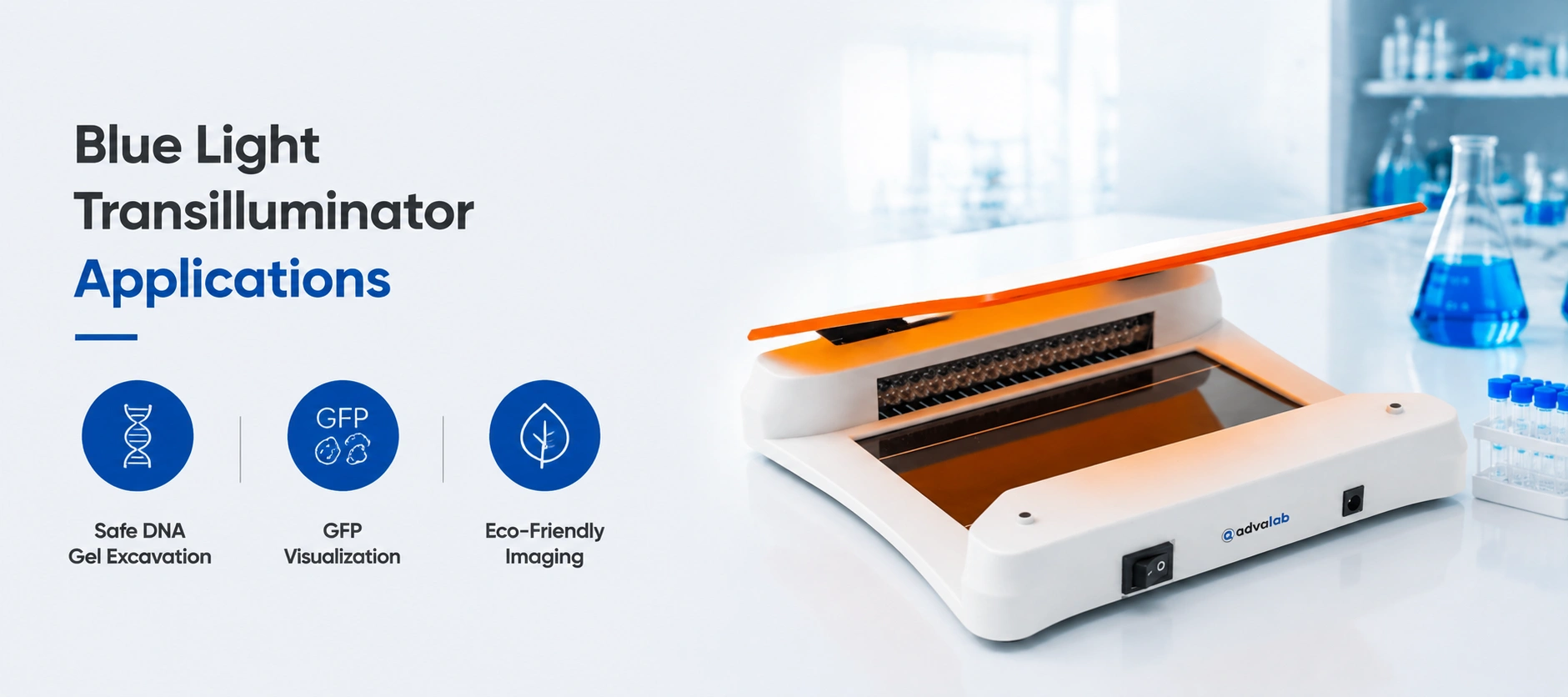
Transilluminator lights built around blue LED excitation support several recurring tasks across molecular biology and cell culture work.
Cutting a DNA band out of a gel for downstream cloning or sequencing avoids the DNA damage UV exposure can introduce during the extraction step.
Checking green fluorescent protein expression in live cells or organisms benefits from an excitation source that does not risk phototoxic damage to living material.
LED-based blue light sources draw less power and avoid the mercury-containing bulbs found in some older UV transilluminators, reducing disposal considerations over the unit's working life.
Photographing gels for lab records or publication figures works directly with a blue light setup paired with an appropriate camera filter.
Getting a clear, well-exposed view from a blue light setup comes down to a short sequence before viewing or excising a band.
Category spans excitation wavelength, viewing area, filter type, and light intensity.
Blue light transilluminators sit within a wider group of gel imaging and illumination equipment, alongside UV transilluminators and full gel documentation systems built for photography and quantification. Buyers comparing options in this category typically weigh excitation wavelength, viewing surface size, and filter or eyewear compatibility against the dyes and proteins routinely used in a lab. The full blue light transilluminator lineup outlines configurations for bench and shared-lab use, and sits alongside the broader laboratory equipment range on advalab's main website, where related gel imaging hardware can also be reviewed.
| Factor | Blue Light Transilluminator | UV Transilluminator |
|---|---|---|
| Exposure risk | Visible light source, no ionizing UV exposure to skin or eyes | UV exposure needs protective eyewear and skin covering during use |
| DNA integrity | Suited to excising bands intended for downstream cloning or sequencing | UV exposure can introduce DNA damage during extended viewing or excision |
| Compatible dyes | Works with dyes and proteins excited in the blue wavelength range | Works with dyes optimized for UV excitation, a broader traditional range |
| Typical use | Live sample imaging, DNA extraction work, routine gel viewing | General gel documentation where sample viability is not a concern |
Keep a matched set of viewing eyewear near the unit so staff are not tempted to skip protective glasses for a quick look.
Wipe the illuminated surface clean between gels to avoid residue affecting light transmission.
Store the unit away from direct sunlight, which can wash out faint bands if the surface is used near a bright window.
Check filter condition periodically, since a scratched or discoloured filter reduces viewing clarity over time.
Label the unit clearly as blue light rather than UV, so staff do not assume UV-specific safety steps are unnecessary elsewhere.
Train new staff on filter and eyewear matching, since an unmatched combination can make faint bands hard to see even with the light working normally.