
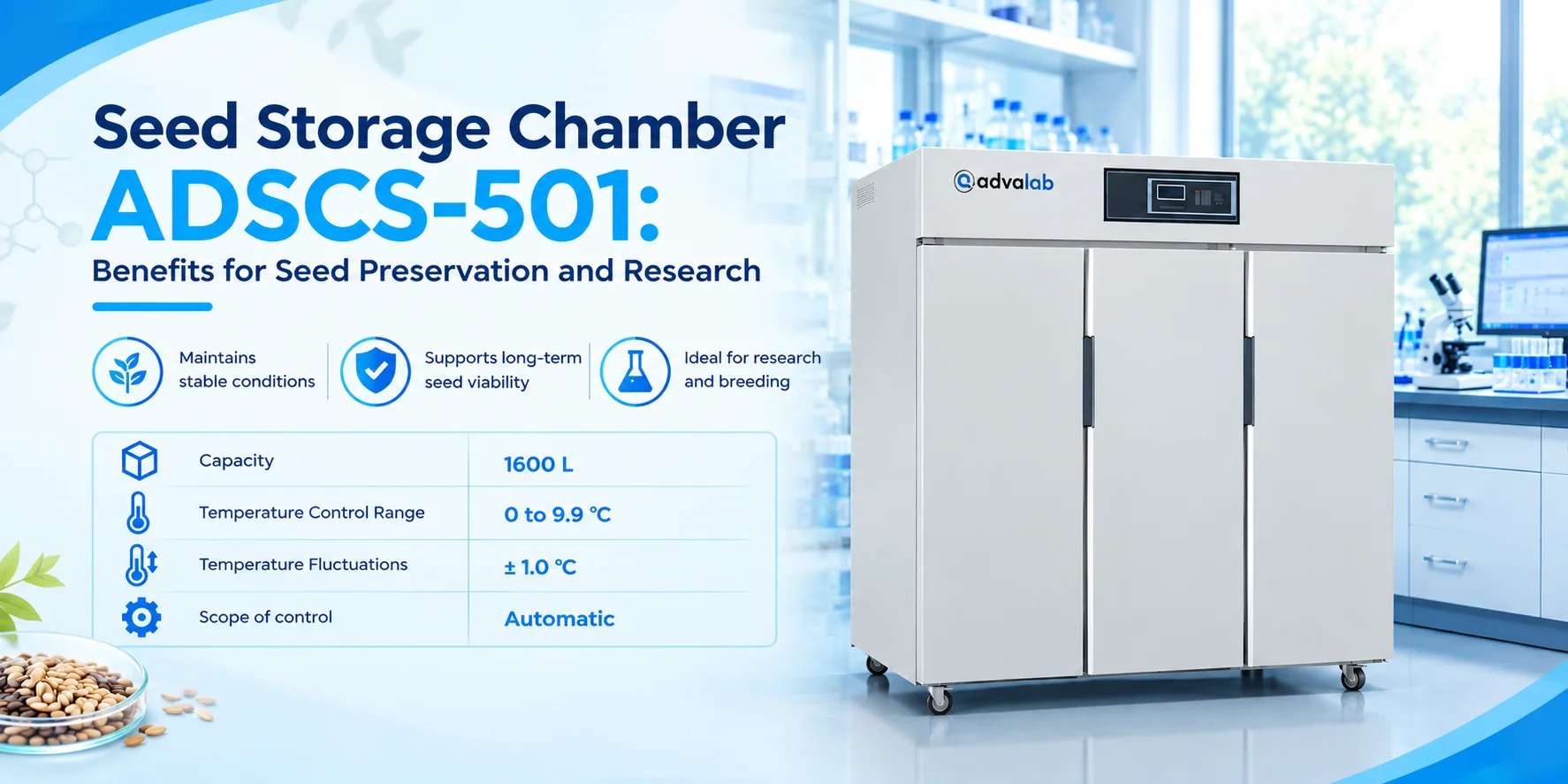
Seeds are living material, and warmth and moisture wear them down long before any visible damage appears. This article explains how a seed storage chamber slows that decline, where it is used, and which details to check before choosing a unit.
A seed in storage is alive, only paused. Warmth speeds its metabolism, and moisture invites mold, fungal growth and even premature germination. A shelf in an ordinary room may hold seeds for a season, but germplasm collections, breeding programs and seed banks need them viable for years, so the air around them has to be cold, dry and steady.
Seed cabinet storage in a controlled unit replaces guesswork with measured conditions, which is why research institutions treat it as basic infrastructure and not a convenience.
Decline chain: from warm, humid air to lost viability.
How Seed Storage Chambers work comes down to two controlled variables, temperature and humidity. A temperature sensor reports chamber conditions to a microcomputer, which compares them with the set point and switches refrigeration or heating to correct any drift; the ADSCS-501 holds 0 to 9.9 °C. A humidity system works alongside it, and when moisture rises above the set range, dehumidification runs until it falls back, keeping relative humidity between 30% and 60%.
A Seed Storage system of this kind also watches itself, with over-temperature protection and an alarm for sensor faults.
Temperature control
Humidity and protection
Eight Benefits in Detail
The worked example is the Seed Storage Chamber ADSCS-501 from Advalab, a 1600 L unit. Each card covers a different benefit, so you can weigh which ones your collection needs.
A 1600 liter interior accommodates medium to large collections, and three doors let staff open only the section they need.
The cold range slows seed metabolism, which is the basis of long term storage in this class of equipment.
Temperature stays within ±1.0 °C, so stored seeds do not cycle between warm and cold.
Dehumidification keeps relative humidity inside a set range, which lowers mold and decay risks.
A microcomputer-controlled interface with an LCD shows conditions in real time, and a sterilization timer switches off at its preset time.
Time, temperature and humidity gradients can be programmed to fit different storage or research needs.
Over-temperature protection and a sensor abnormal alarm guard both the seeds and the unit.
Power-down memory resumes settings after an outage, and the stainless-steel design supports easy cleaning.
Seed Storage Chamber use spans several kinds of institutions, and each one relies on the same stable conditions:
Together these sites protect breeding programs and genetic resource management by keeping seed quality from drifting between sampling dates. A seed storage chamber machine of this size is often installed beside germination and growth rooms, where seed storage chamber equipment also supports teaching collections and shared stores. Programs that need growth conditions instead of cold storage can explore the wider range of environmental chambers.
Proper handling is just as important as the storage chamber for preserving seeds over the long term. Seed storage containers long term should be moisture-resistant, easy to label and uniform in size, which keeps shelf space organized. A seed storage cabinet that is opened rarely holds its conditions more steadily, and storage can last from several months to many years relying on the seed type and conditions.
Operating window: the unit holds 0 to 9.9 °C.
Advalab lists seed-focused chambers in two lines. Capacity is the first filter, followed by temperature range.
| Model | Line | Capacity | Temperature |
|---|---|---|---|
| ADSP-501 | Seed preservation | 150 L | 4 to 60 °C without humidifying |
| ADSP-502 | Seed preservation | 250 L | 4 to 60 °C without humidifying |
| ADSP-503 | Seed preservation | 400 L | 4 to 60 °C without humidifying |
| ADSCS-502 | Seed storage | 450 L | 0 to 9.9 °C |
| ADSCS-501 | Seed storage | 1600 L | 0 to 9.9 °C |
Capacity chart: chamber volume in liters, by model.
The seed storage chamber range and seed preservation chamber range pages list all models, and the ADSCS-501 catalog carries the full specification sheet.
The ADSCS-501 sits inside Advalab's environmental chambers category, which groups equipment that holds temperature, humidity and light at set conditions to simulate real environments. The category covers humidity, plant growth, illuminating and climate chambers, and these lines belong to it:
The full specification table, features and application notes for the unit discussed above are on its product page.
Explore Seed Storage Chamber ADSCS-501