
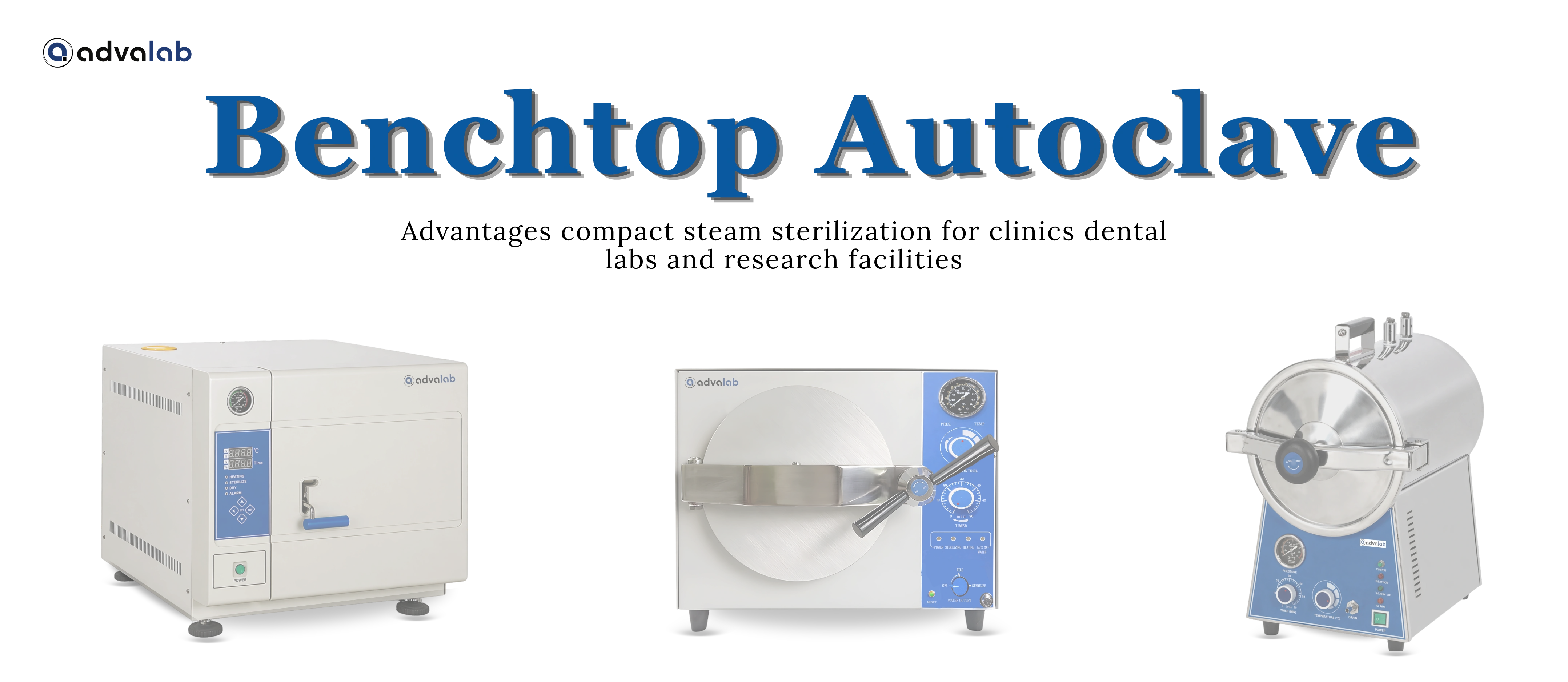
A Benchtop Autoclave machine achieves sterilization through saturated steam under pressure. When water is heated in a sealed pressure vessel, steam is generated at temperatures that exceed 100°C at atmospheric pressure. At the standard operating condition of 134°C and 2.1 bar (30.5 psi), saturated steam carries sufficient thermal energy to denature proteins, disrupt lipid membranes, and inactivate nucleic acids in bacterial endospores — the most heat-resistant biological entities used as sterilization reference organisms. This combination of temperature and moisture is far more effective than dry heat at the same temperature because steam transfers heat to the load surface at a much higher rate than air, and the condensation of steam on cooler surfaces releases the latent heat of vaporisation directly into the instrument or material being sterilized.
The sequence of operation in a benchtop autoclave sterilizer begins with an air removal phase. Residual air in the chamber must be eliminated before sterilization because air-steam mixtures produce lower temperatures than pure steam at the same pressure, and air pockets on wrapped instruments or inside lumens can prevent steam penetration entirely. A fractioned pre-vacuum cycle uses a vacuum pump to remove air in multiple alternating pulses before steam admission. Once the chamber is charged with saturated steam, the autoclave holds temperature and pressure for the defined sterilization hold time, followed by an exhaust and post-cycle vacuum drying phase that removes steam and dries the load before the door is opened.
The Advalab benchtop autoclave range covers sterilization cycles for dental clinics, research laboratories, and clinical settings. Laboratories comparing chamber volume, cycle parameters, and connectivity options can review the full range on the Advalab benchtop autoclave models page.
Fractioned pre-vacuum removes residual air from chamber, wrapped loads, and instrument lumens
Saturated steam fills the chamber; temperature rises to 121°C or 134°C at set pressure
Temperature and pressure maintained for defined hold time; all viable microorganisms inactivated
Steam exhausted; post-cycle vacuum drying removes condensate from instruments and packaging
A bench top sterilizer occupies a fraction of the floor space of a floor-standing or pass-through autoclave while providing the same sterilization conditions — 134°C, 2.1 bar, pre-vacuum air removal, and post-cycle drying — specified in EN 13060 for Class B instruments. Chamber volumes from 8 to 45 litres cover the instrument sets used in single-operatory dental clinics, small research groups, and hospital outpatient procedure rooms without requiring a dedicated utility room or floor drain connection.
The benchtop autoclave comes with pressure relief valves and door-locking mechanisms to ensure safe operation. The pressure relief valve prevents chamber over-pressurisation by venting steam if the pressure exceeds the set point. The door-locking interlock physically prevents the door from being opened while the chamber is pressurised, protecting the operator from steam ejection. Additional safety circuits monitor temperature sensor status, water level, and steam generator continuity, halting the cycle and displaying a fault code if any parameter deviates from the expected range during cycle execution.
These autoclaves support both 121°C / 1.05 bar and 134°C / 2.1 bar cycle programmes on the same instrument. Research laboratories processing heat-sensitive culture media use the 121°C cycle to preserve nutrient integrity; dental and surgical instruments require the 134°C cycle for sporicidal efficacy within the minimum hold time. Both programmes are selectable from the front-panel menu without any additional hardware or software licences, making the instrument directly applicable to both applications on the same day.
These systems feature simple controls and clear indicators for easy monitoring and operation. The LCD interface displays the current cycle phase, chamber temperature, chamber pressure, and elapsed hold time simultaneously. An audible and visible end-of-cycle signal indicates cycle completion. Cycle records including temperature, pressure, hold time start and end timestamps, and pass/fail status are stored in the instrument's memory or printed via an integrated or external printer for documentation requirements.
Compact and lightweight design makes these autoclaves easy to transport and store between locations. A benchtop autoclave in the 8–18 litre class typically weighs 15–30 kg and can be moved between laboratory rooms, clinic operatories, or field locations without disassembly or specialist assistance. This portability is advantageous in settings where centralised sterilization is not practical, such as satellite clinics, mobile dental units, or multi-room research facilities where the instrument is shared between groups.
Benchtop autoclaves intended for dental and clinical use are validated against EN 13060, and Class B cycle instruments must maintain records of daily Bowie-Dick tests and periodic validation runs with biological indicators. The benchtop autoclave machine supports these verification requirements through cycle logging, printer connectivity for cycle records, and compatibility with standard biological and chemical indicator systems. This infrastructure is a non-negotiable requirement for CQC registration in the dental practice, and process qualification in research and industrial settings.
Benchtop Autoclave sterilizers are used across a wide range of clinical, dental, and research settings where instrument volumes match the compact chamber capacity and where point-of-use sterilization is operationally preferable to central sterile supply.
Dental handpiece sterilization is the most regulated application for a benchtop autoclave dental use case. HTM 01-05 (England) and equivalent national guidelines in most EU member states specify that handpieces must be sterilized in a Class B autoclave between each patient use. A bench top sterilizer with pre-vacuum cycle and post-cycle drying, producing a printed cycle record per EN 13060, meets this requirement for single-chair and multi-chair dental practices. The compact footprint allows installation on an existing worksurface in the decontamination room without structural modification.
Minor surgery instruments, wound care kits, and procedure-specific trays used in GP surgeries, podiatry clinics, and outpatient procedure rooms require sterilization between patient contacts. A bench top steam sterilizer installed at point of use eliminates the delay and handling risks associated with transport to a central sterile services department for instrument volumes appropriate to the clinical setting. Cycle records from the on-board data logger or connected printer provide the audit trail required by infection prevention policies.
Research laboratories use benchtop autoclave laboratory configurations for sterilizing culture media, buffer preparations, glassware, plastic consumables, and biological waste before disposal. The 121°C cycle is the standard for autoclavable culture media and buffer preparations where heat-labile components are absent. The 134°C cycle is used for instruments and for the inactivation of biological waste from BSL-1 and BSL-2 work. The instrument's adjustable settings allow both cycle types to be stored as named programmes and selected by the operator for the specific load in each run.
Veterinary surgical instrument sterilization follows equivalent regulatory expectations to human medicine in most jurisdictions, with the additional consideration that veterinary practices handle a wide range of surgical instrument sizes across different species. Benchtop autoclaves with Class B cycles and adaptable rack configurations accommodate instrument sets ranging from avian microsurgery instruments to large animal soft-tissue procedure trays within the same compact instrument.
Dental schools, nursing schools, and biomedical laboratory training programmes use benchtop autoclave sterilizers to teach decontamination workflows in a controlled setting with instruments representative of clinical practice. The clear indicators and simple controls facilitate student operation under supervision, and the cycle log provides a verifiable record of student-performed sterilization for competency assessment purposes.
Industrial quality control laboratories, microbiology testing facilities, and food safety testing environments use benchtop autoclave machines to prepare sterile media, autoclave sampling equipment, and inactivate post-test biological material. The compact size of a benchtop autoclave laboratory instrument suits QC laboratory settings where space is limited and instrument turnaround speed is required, ensuring aseptic conditions throughout the analytical workflow.
Selecting a Benchtop Autoclave based on chamber volume or appearance alone without verifying that the instrument meets the regulatory and application requirements of the specific setting leads to gaps and operational limitations that are difficult to correct after procurement.
Specifications shown are representative of the Advalab Benchtop Autoclave series. For model-specific parameters, refer to each model's datasheet via the links below the table.
| Parameter | Specification |
|---|---|
| Sterilization Cycle | Class B (fractioned pre-vacuum — multiple alternating vacuum and steam pulses) |
| Standard Sterilization Temperatures | 121°C ± 1°C (media / liquid cycle); 134°C ± 1°C (instrument cycle) |
| Operating Pressure | 1.05 bar (121°C cycle); 2.10 bar (134°C cycle) |
| Hold Time Range | 3 min – 30 min (user-selectable per programme) |
| Chamber Volume Range | 8 L / 12 L / 18 L / 23 L / 30 L / 45 L (model-dependent) |
| Air Removal Method | Fractioned pre-vacuum (multiple alternating vacuum and steam pulses) |
| Drying Method | Post-cycle vacuum drying |
| Door Safety | Electromechanical door interlock; door cannot open during pressurised cycle |
| Pressure Relief | Calibrated spring-loaded safety valve; set pressure per EN 13060 annex |
| Water Quality Requirement | Distilled or deionised; conductivity <15 µS/cm; per EN 13060 feed water specification |
| Display & Interface | Backlit LCD; cycle phase, temperature, pressure, hold time displayed simultaneously |
| Data Logging | On-board cycle log: temperature, pressure, hold start/end, pass/fail; USB / RS-232 / printer output |
| Biological Indicator Compatibility | Geobacillus stearothermophilus spore strips / vials; compliant |
| Operating Environment | 15°C – 35°C ambient; 20–80% RH non-condensing |
| Power Supply | AC 220–240 V, 50 Hz; 1.5–3.5 kW (model-dependent) |
Sub-category: Benchtop Autoclaves & Bench Top Steam Sterilizers
The Advalab sterilization category covers Benchtop Autoclaves, steam sterilizers, and decontamination equipment for dental, clinical, research, and industrial laboratory applications. Within this range, the Benchtop Autoclaves sub-category addresses compact Class B steam sterilization for point-of-use instrument processing in dental clinics, medical practices, research groups, and teaching institutions.
Visit the Advalab home page for the complete laboratory instrument portfolio covering sterilization, cell analyzers, chromatography, freeze dryers, spectrophotometers, and thermal processing equipment.
Access complete specifications, details, and model options for the Advalab ADBA-501 through ADBA-506 benchtop autoclave series.